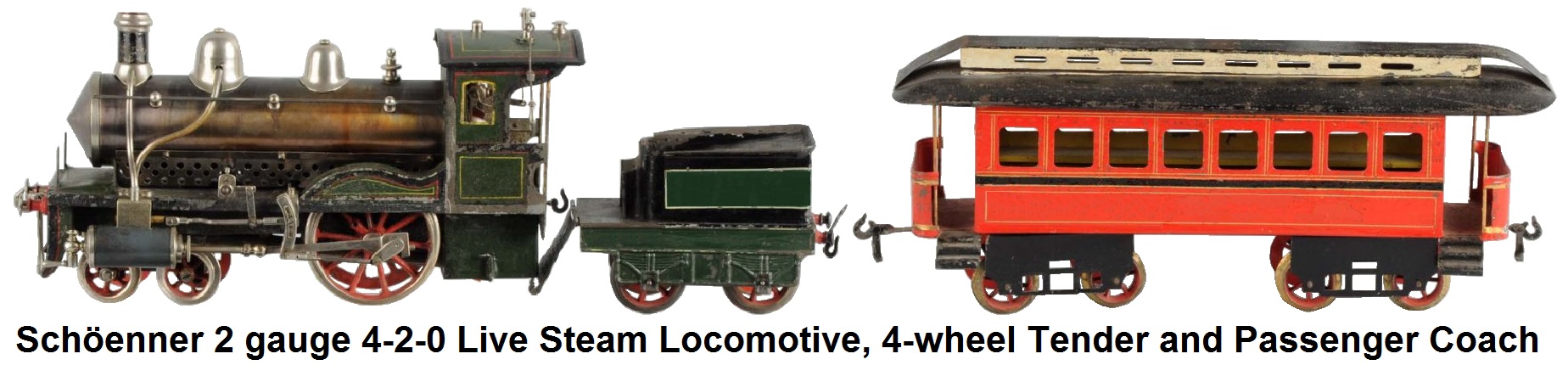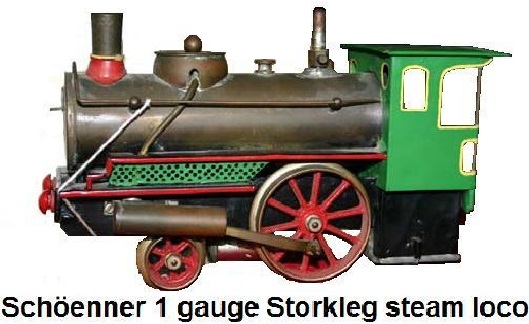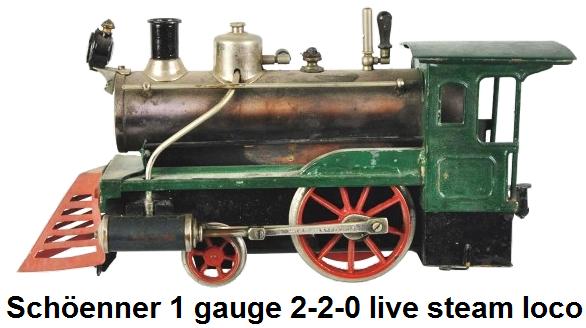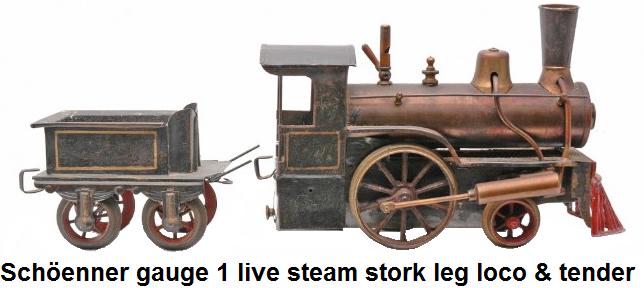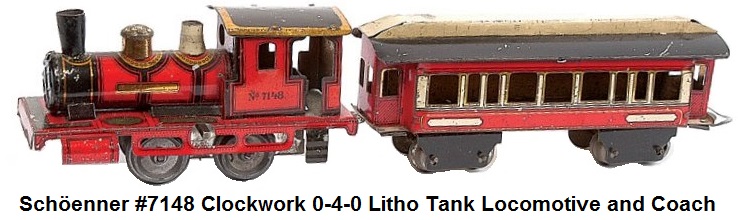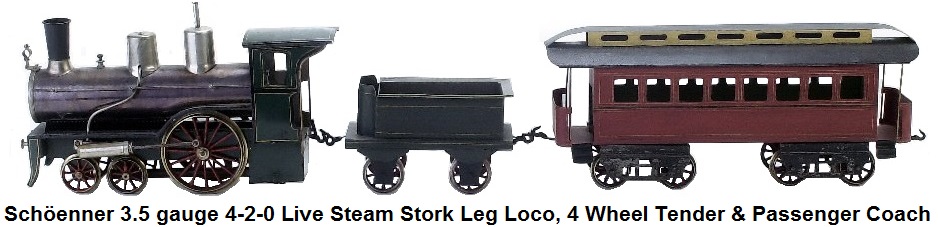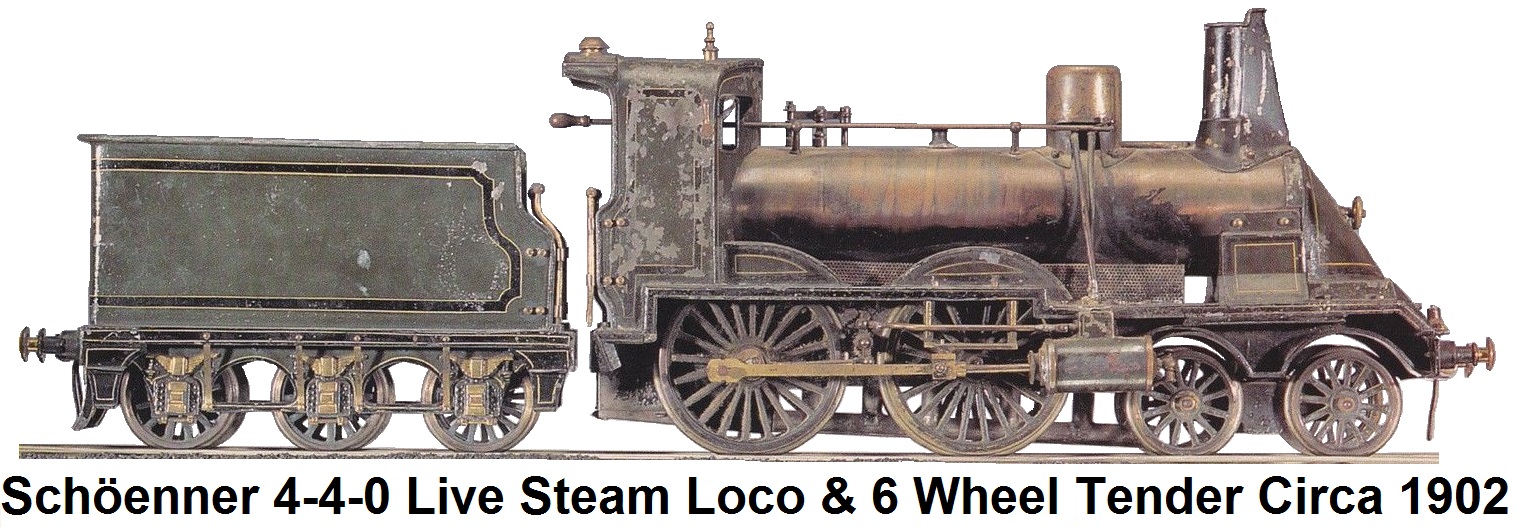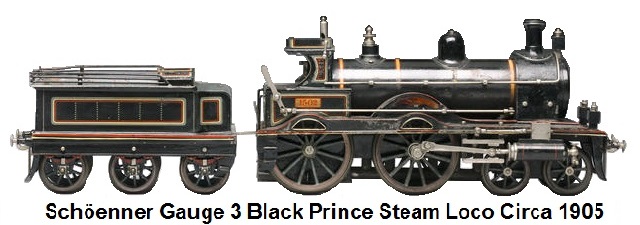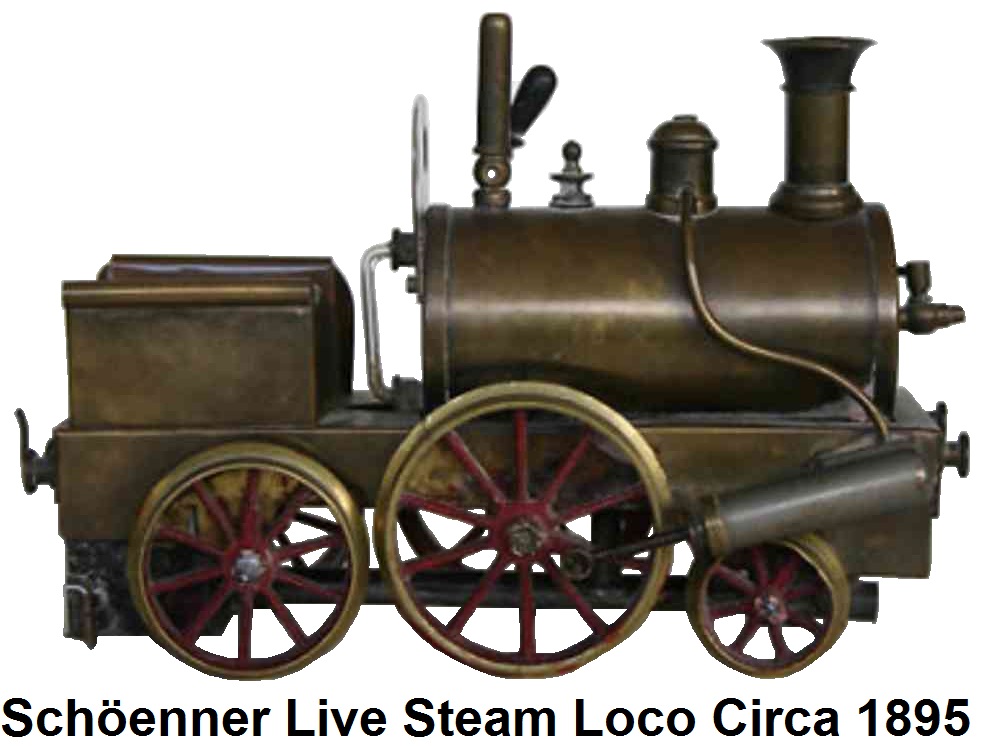
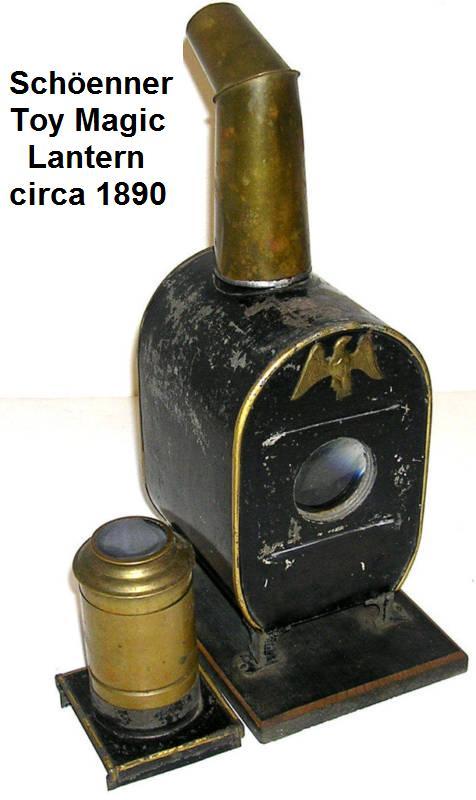
 Schöenner is a relatively obscure German toy company. The firm was started by Jean Schöenner
in 1875 in Nüremberg, with the production of magic lanterns and steam engines. Schöenner
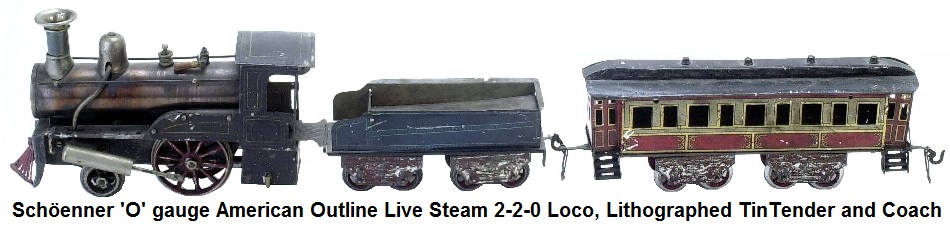
also made floor toy versions of trains in multiple gauges from approximately 'O' gauge up to
a 29” model.
Schöenner is a relatively obscure German toy company. The firm was started by Jean Schöenner
in 1875 in Nüremberg, with the production of magic lanterns and steam engines. Schöenner
also made floor toy versions of trains in multiple gauges from approximately 'O' gauge up to
a 29” model.
Jean Schöenner started out as an apprentice with the famous electrician, Sigmund Schuckert, who later
joined with Siemens to form the world-wide known firm Siemens-Schuckert-Werke. After having
worked on several other jobs, Schöenner started his company with three craftsmen and a
glass-painter, (for painting the glass slides of the laternae magicae).
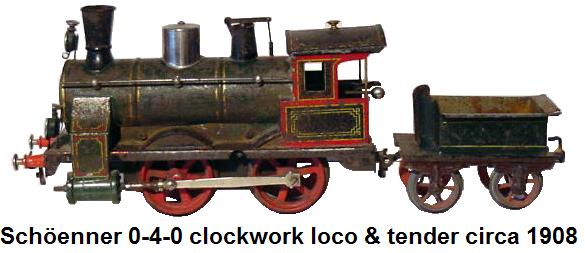
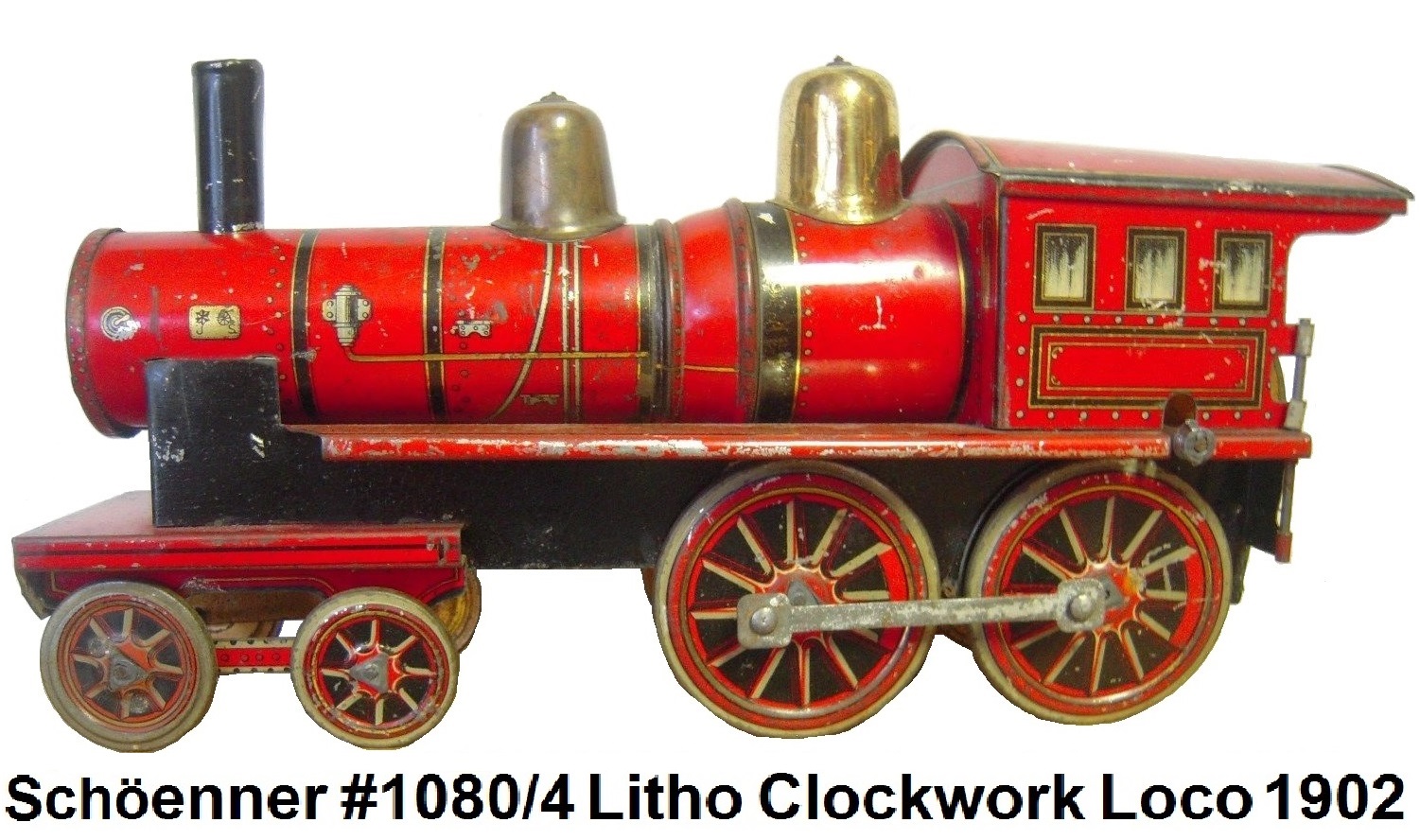
In 1887 the firm marketed their first toy train, a clockwork driven model. All Schöenner
clockwork models were fitted with speed governors, which was a mechanism that was not generally
found in other manufacturers' clockwork trains until the early 20th century. The finer
models were inspired by German prototypes of the epoch and were by far better proportioned than
any other make of that era. They were built in 0, 1 and 2 gauges. Early versions had no reversing
gear, but this feature was added in 1902.
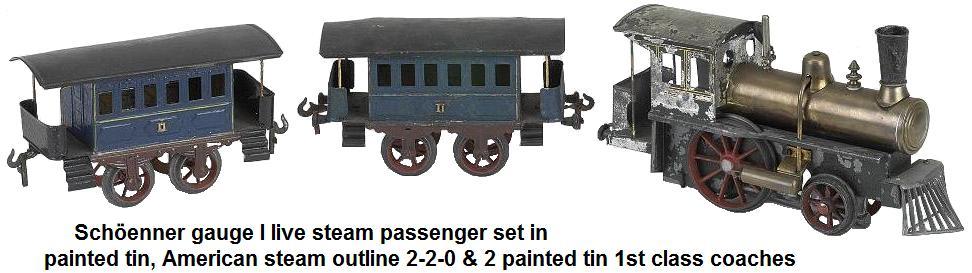
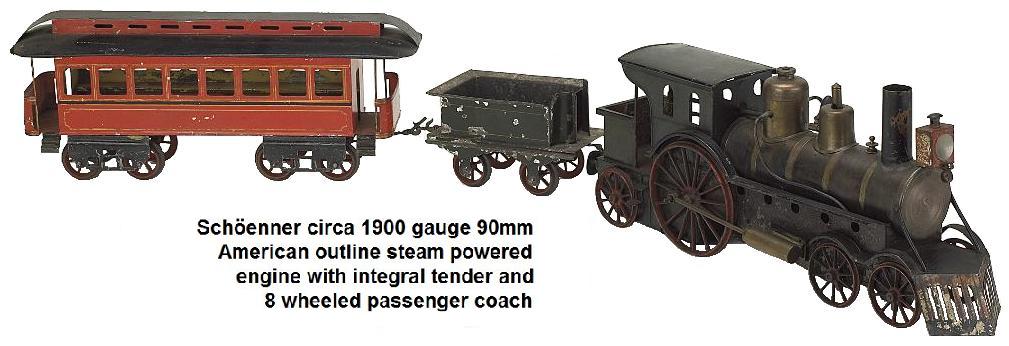
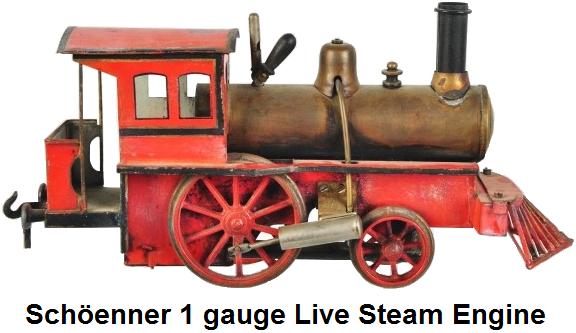
 Later in 1887, steam driven spirit fired model trains were also made. The designs evolved over time from crude styles to prototypical models.
Details such as nickel sand domes, buffers, headlamps, bells and whistles were added.
A forward and reversing gearing mechanism was also developed. A complete set consisting of a steam-powered locomotive with carriages and track
was offered in two gauges: 65 and 115 mm (2.5 inches and 4.5 inches). In 1891 the factory was destroyed by a fire
and had to be rebuilt. On January 3, 1899 Jean Schöenner was awarded a German patent for a water level indicator for toy steam boilers
(Wasserstandsanzeiger für Spielzeug-Dampfkessel). In 1900, Schöenner built the first locomotive
modelled after a German prototype in 75mm and 85mm (3 inches and 3.3 inches).
Many of the trains Schöenner manufactured were modelled after
Later in 1887, steam driven spirit fired model trains were also made. The designs evolved over time from crude styles to prototypical models.
Details such as nickel sand domes, buffers, headlamps, bells and whistles were added.
A forward and reversing gearing mechanism was also developed. A complete set consisting of a steam-powered locomotive with carriages and track
was offered in two gauges: 65 and 115 mm (2.5 inches and 4.5 inches). In 1891 the factory was destroyed by a fire
and had to be rebuilt. On January 3, 1899 Jean Schöenner was awarded a German patent for a water level indicator for toy steam boilers
(Wasserstandsanzeiger für Spielzeug-Dampfkessel). In 1900, Schöenner built the first locomotive
modelled after a German prototype in 75mm and 85mm (3 inches and 3.3 inches).
Many of the trains Schöenner manufactured were modelled after
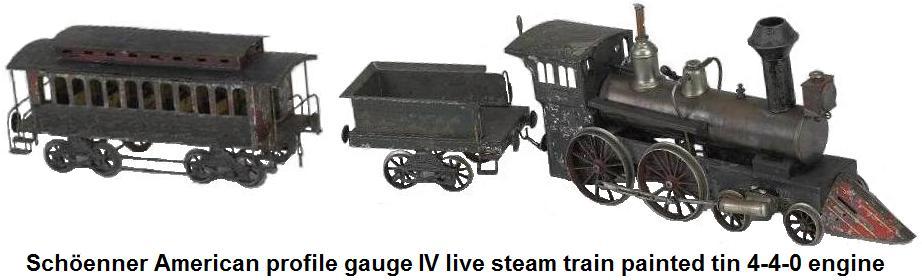
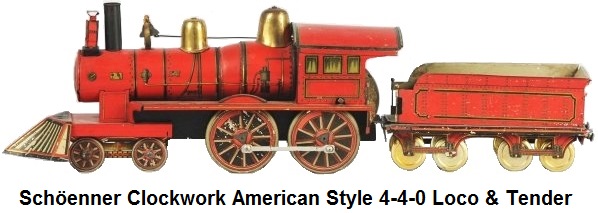
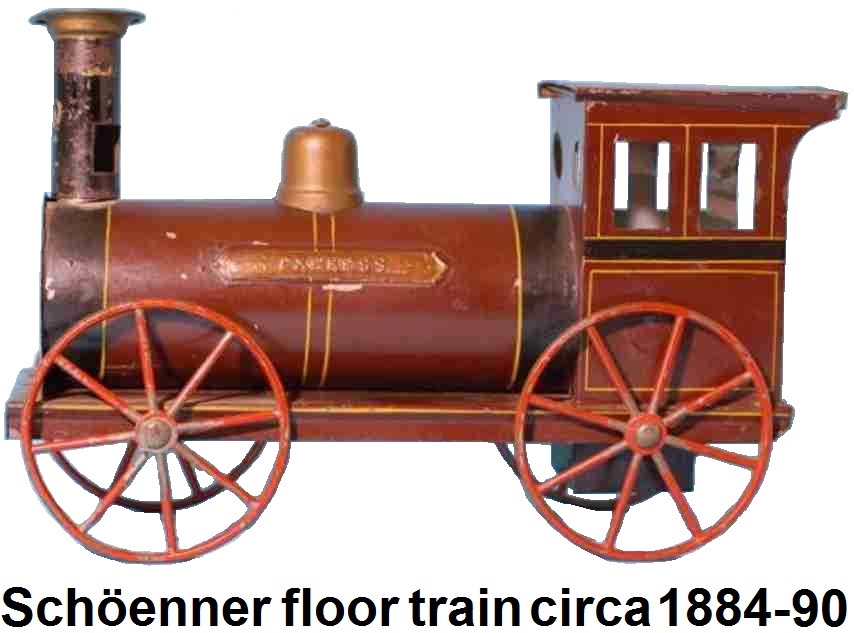 American prototypes. The 4-4-0 model introduced in 1902 was specially advertised as an "American
locomotive", indicating that Schöenner expected to have a big market in the United States. However,
the only features which justify this designation were the pilot and bell both also fitted to the
4-wheel engines to be sold in the USA. Otherwise, these "American" models were the same as the
standard ones made for the European market. Many of Schöenner's steam locomotives were made with
non-swiveling trucks which limited operation to straight tracks only or on the floor without tracks.
American prototypes. The 4-4-0 model introduced in 1902 was specially advertised as an "American
locomotive", indicating that Schöenner expected to have a big market in the United States. However,
the only features which justify this designation were the pilot and bell both also fitted to the
4-wheel engines to be sold in the USA. Otherwise, these "American" models were the same as the
standard ones made for the European market. Many of Schöenner's steam locomotives were made with
non-swiveling trucks which limited operation to straight tracks only or on the floor without tracks.
Schöenner built mostly steam toys from 1890 to 1910. In addition to the trains, a selection of boats and
fire engines were also made. Toy production reached over 300,000 units by 1892. This
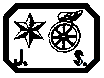
was a notable achievement. By 1894 the company employed 250 workers. Schöenner products can be identified by
embossed trademarks with either the initials 'SN' or 'JS'.

 Adolf Dihlmann became a partner in the firm in 1891. It is believed this was as a result of the fire that destroyed the
factory tools and necessitated investment in order to restart production. The name of the company was changed to Jean
Schöenner Mechanischoptische Spielwarenfabrik - Inhaber: Jean Schöenner & Adolf Dihlmann. Dihlmann's contribution
played a large part in the further successful development of the company. The company was later renamed to Nürnberger
Mechanischoptische Spielwarenfabrik Schöenner GmbH. A factory was established in Muggendorf, and about the turn of the
century the production of the toy boats and fire engines, mostly steam powered models, began. For an unknown reason,
business declined. The firm ended production in 1912. The business was sold to Josef Falk. Prior to this time, Schöenner
had produced steam engines for Falk as well as those sold under its own name. Falk began as
an employee of Georges Carette. He started his own company in 1895.
Adolf Dihlmann became a partner in the firm in 1891. It is believed this was as a result of the fire that destroyed the
factory tools and necessitated investment in order to restart production. The name of the company was changed to Jean
Schöenner Mechanischoptische Spielwarenfabrik - Inhaber: Jean Schöenner & Adolf Dihlmann. Dihlmann's contribution
played a large part in the further successful development of the company. The company was later renamed to Nürnberger
Mechanischoptische Spielwarenfabrik Schöenner GmbH. A factory was established in Muggendorf, and about the turn of the
century the production of the toy boats and fire engines, mostly steam powered models, began. For an unknown reason,
business declined. The firm ended production in 1912. The business was sold to Josef Falk. Prior to this time, Schöenner
had produced steam engines for Falk as well as those sold under its own name. Falk began as
an employee of Georges Carette. He started his own company in 1895.
Schöenner was famous for making beautiful trains, but today these toys are very hard to find
and expensive. Schöenner trains are often mistakenly identified as being built by other manufacturers
of that era such as Georges Carette or Ernst Plank. Owning a train
from Schöenner is probably the dream of every collector.
Schöenner is certainly a wonderful example of those firms completely forgotten and then
re-discovered recently by collectors.