 Tri-ang model railways had its early beginning in a small firm called Rovex Plastics Ltd. set up in 1946 just after World War
II by Alexander Venetzian in the United Kingdom. This firm was making plastic model cars initially, but after conflict with
Rover Cars over the use of the name Rovex, the company moved into the model railway field, making train sets for the
department store chain Marks and Spencers.
Tri-ang model railways had its early beginning in a small firm called Rovex Plastics Ltd. set up in 1946 just after World War
II by Alexander Venetzian in the United Kingdom. This firm was making plastic model cars initially, but after conflict with
Rover Cars over the use of the name Rovex, the company moved into the model railway field, making train sets for the
department store chain Marks and Spencers.
 Venetzian was first asked by Marks and Spencers to develop an electric toy train set in time for Christmas 1950. He
delivered the product on time, but only after finding adequate manufacturing facilities in a former Brewery in Richmond,
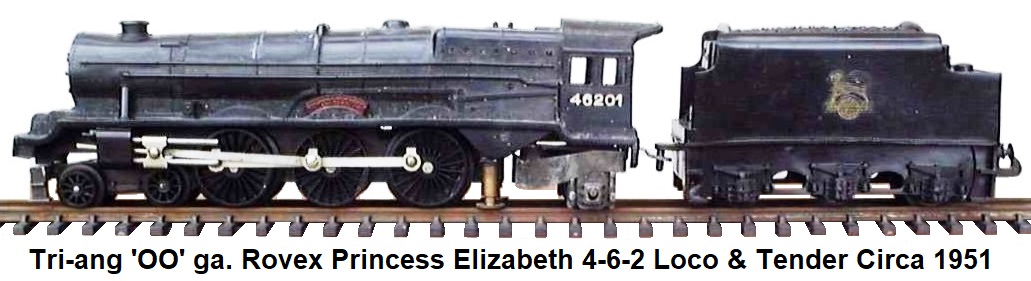
Surrey. Initial train production was in 'OO' gauge, producing an electric train set based on the LMS, Princess Elizabeth
Loco. The set, called the Rovex Princess Set, was launched in time for christmas 1950, consisting of the 4-6-2 battery
powered loco, two coaches and an oval of plastic track. The locomotive motor was supplied by Zenith Model Company. In early
1951 Rovex acquired Zenith to create their own motor division.
Venetzian was first asked by Marks and Spencers to develop an electric toy train set in time for Christmas 1950. He
delivered the product on time, but only after finding adequate manufacturing facilities in a former Brewery in Richmond,
Surrey. Initial train production was in 'OO' gauge, producing an electric train set based on the LMS, Princess Elizabeth
Loco. The set, called the Rovex Princess Set, was launched in time for christmas 1950, consisting of the 4-6-2 battery
powered loco, two coaches and an oval of plastic track. The locomotive motor was supplied by Zenith Model Company. In early
1951 Rovex acquired Zenith to create their own motor division.
 However, shortly thereafter, the company ran into some financial difficulties and there were some flaws
with the design of the locomotive's roller pickups, as well as some warping issues with the plastic chassis. In October 1951
Rovex was acquired by Lines Bros. Ltd, a manufacturer of Tri-ang baby prams and bicycles. Lines Bros. had been looking to
expand into toy train railway products. The trains would be sold under the Tri-ang Railways name. The problem with the
roller pick-up was addressed by changing to a plunger type pickup, and the issue with the warping chassis was corrected by
switching to a metal one. With the resources of the Lines Bros. group, great expansion was now possible. By 1952, the
Marks and Spencers contract was cancelled and this allowed Rovex the ability to sell its railway products wherever they
cared too. The planned lineup of offerings was introduced at the 1952 British Industries Trade Fair. By 1953 the outline
of the Tri-ang range was available in retail hobby shops. To make room for further product
development, Lines Bros. moved the Rovex Scale Models Ltd. company to a brand new factory built in Westwood, near Margate,
in Kent, in 1954.
However, shortly thereafter, the company ran into some financial difficulties and there were some flaws
with the design of the locomotive's roller pickups, as well as some warping issues with the plastic chassis. In October 1951
Rovex was acquired by Lines Bros. Ltd, a manufacturer of Tri-ang baby prams and bicycles. Lines Bros. had been looking to
expand into toy train railway products. The trains would be sold under the Tri-ang Railways name. The problem with the
roller pick-up was addressed by changing to a plunger type pickup, and the issue with the warping chassis was corrected by
switching to a metal one. With the resources of the Lines Bros. group, great expansion was now possible. By 1952, the
Marks and Spencers contract was cancelled and this allowed Rovex the ability to sell its railway products wherever they
cared too. The planned lineup of offerings was introduced at the 1952 British Industries Trade Fair. By 1953 the outline
of the Tri-ang range was available in retail hobby shops. To make room for further product
development, Lines Bros. moved the Rovex Scale Models Ltd. company to a brand new factory built in Westwood, near Margate,
in Kent, in 1954.
 The brothers George and Joseph Lines made wooden toys in the Victorian age, their company being G & J Lines Ltd. Joseph was
the active partner while George went into farming. Joseph (or Joe) had four sons. Three of these — William, Walter and Arthur
Edwin Lines — formed Lines Bros. Ltd soon after World War I. Three 'Lines' make a triangle, hence the origination of the name
Tri-ang. Arthur's son, Richard Lines, had been involved with the Lines Bros. firm International Model Aircraft Ltd. and was
largely responsible for the Tri-ang Railways system.
The brothers George and Joseph Lines made wooden toys in the Victorian age, their company being G & J Lines Ltd. Joseph was
the active partner while George went into farming. Joseph (or Joe) had four sons. Three of these — William, Walter and Arthur
Edwin Lines — formed Lines Bros. Ltd soon after World War I. Three 'Lines' make a triangle, hence the origination of the name
Tri-ang. Arthur's son, Richard Lines, had been involved with the Lines Bros. firm International Model Aircraft Ltd. and was
largely responsible for the Tri-ang Railways system.
 'OO' gauge was chosen at the
time because it was very popular in the UK after the war. Over time it became almost uniquely found in that country. 'OO'
gauge utilizes the same exact track (16.5mm or .625" width between the rails) as HO gauge trains, but the scale is different.
'OO' gauge is 1:72 scale, while HO is a bit smaller at 1:87. HO is actually more to scale for the 16.5mm track. It is widely
believed that 'OO' emerged only because in the early days of HO (½ 'O') production the trains were too small to fit
the clockwork, or later on, electric motors, that were availbale at the time, into the tiny bodies. Even the first trains
that were made by the famous German manufacturer Märklin to run on 16.5mm track in 1936 were 'OO'
gauge. Other UK model train manufacturers such as British Trix also starting in 1936, and
Hornby starting in 1938 with their Hornby Dublo trains, produced 'OO' scale. There are actually two
varieties of 'OO' scale model railroad trains - American and British. The American models (referred to as American 'OO') are
1/76 scale, 3/4 inch (19mm) gauge, sized about half way between HO scale and 'S' scale. The British models are made at a
track gauge of 16.5mm, so they're actually HO gauge but with bodies scaled to OO (sometimes referred to as HO/OO or OO/HO
gauge).
'OO' gauge was chosen at the
time because it was very popular in the UK after the war. Over time it became almost uniquely found in that country. 'OO'
gauge utilizes the same exact track (16.5mm or .625" width between the rails) as HO gauge trains, but the scale is different.
'OO' gauge is 1:72 scale, while HO is a bit smaller at 1:87. HO is actually more to scale for the 16.5mm track. It is widely
believed that 'OO' emerged only because in the early days of HO (½ 'O') production the trains were too small to fit
the clockwork, or later on, electric motors, that were availbale at the time, into the tiny bodies. Even the first trains
that were made by the famous German manufacturer Märklin to run on 16.5mm track in 1936 were 'OO'
gauge. Other UK model train manufacturers such as British Trix also starting in 1936, and
Hornby starting in 1938 with their Hornby Dublo trains, produced 'OO' scale. There are actually two
varieties of 'OO' scale model railroad trains - American and British. The American models (referred to as American 'OO') are
1/76 scale, 3/4 inch (19mm) gauge, sized about half way between HO scale and 'S' scale. The British models are made at a
track gauge of 16.5mm, so they're actually HO gauge but with bodies scaled to OO (sometimes referred to as HO/OO or OO/HO
gauge).
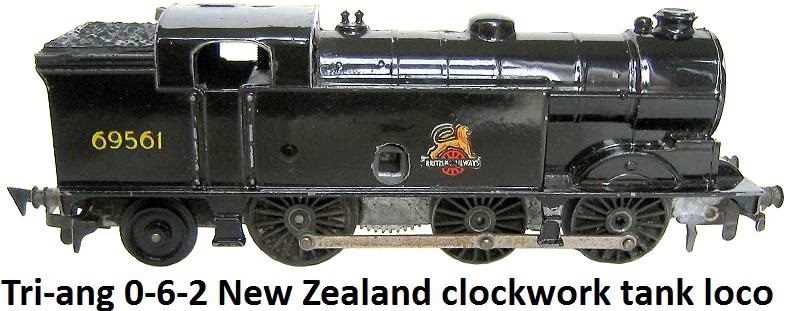
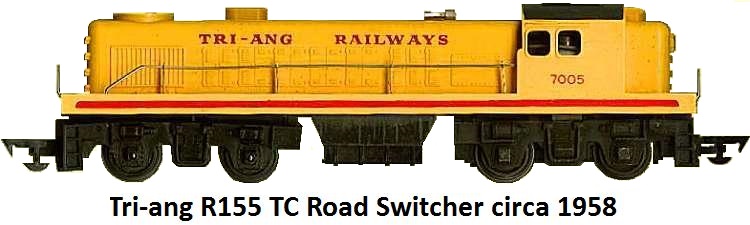 Pyramid Toys was a small company selling an 'OO' gauge clockwork driven 0-6-2 tank loco and wagons under the Trackmaster
brand, but was not doing well as a result of the Korean War hindering their ability to source raw materials. In December of
1951 Lines Bros. acquired Pyarmid and added their products to the Rovex lineup. The Tri-ang products represented a great step
forward in the manufacture of model trains. The use of plastic injection molding meant lower cost, cheap mass production, less
weight (less powerful motors required) and that greater detail could be reproduced. Tri-ang was the only manufacturer of
2-rail 'OO' gauge trains running on 12-volt DC power in the UK at this time. British Trix was still using 3-rail 14-volt AC
through the 1960's. And the Hornby Dublo trains were 12-volt DC running on 3-rail track. The first actual model to be issued
under the Tri-ang brand was an 0-6-0 Jinty tank loco. Over the the years this engine's chasis was the building block for many
Tri-ang locomotives. The Tri-ang range continued to grow throughout the fifties and early sixties. By 1964 Tri-ang dominated
the model train markets in the United Kingdom, and many of the colonial countries. The line included many British
prototypes as well as continental models, and sold at a lower price point than the competition.
Pyramid Toys was a small company selling an 'OO' gauge clockwork driven 0-6-2 tank loco and wagons under the Trackmaster
brand, but was not doing well as a result of the Korean War hindering their ability to source raw materials. In December of
1951 Lines Bros. acquired Pyarmid and added their products to the Rovex lineup. The Tri-ang products represented a great step
forward in the manufacture of model trains. The use of plastic injection molding meant lower cost, cheap mass production, less
weight (less powerful motors required) and that greater detail could be reproduced. Tri-ang was the only manufacturer of
2-rail 'OO' gauge trains running on 12-volt DC power in the UK at this time. British Trix was still using 3-rail 14-volt AC
through the 1960's. And the Hornby Dublo trains were 12-volt DC running on 3-rail track. The first actual model to be issued
under the Tri-ang brand was an 0-6-0 Jinty tank loco. Over the the years this engine's chasis was the building block for many
Tri-ang locomotives. The Tri-ang range continued to grow throughout the fifties and early sixties. By 1964 Tri-ang dominated
the model train markets in the United Kingdom, and many of the colonial countries. The line included many British
prototypes as well as continental models, and sold at a lower price point than the competition.
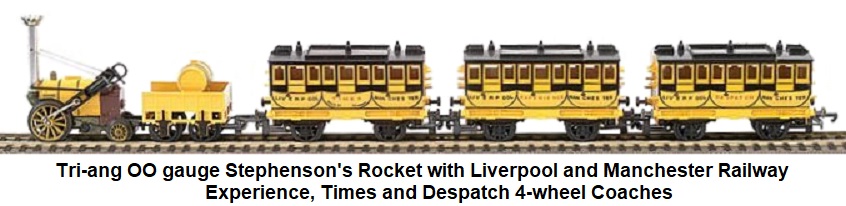
In 1954 the Tri-ang X04 electric motor was introduced. This was a 3-pole motor with removable brushes,
lubrication pads, and a commutator that was parallel to the rotor. These electric motors were small enough to fit quite
easily into the locomotives and were used in the 'OO' line through the 1970's. 1955 saw the first publication of a Tri-ang
Model Railways catalog. Around this time a switch was made from acetate plastic to polystyrene to eliminate issues with
warpage in the models.
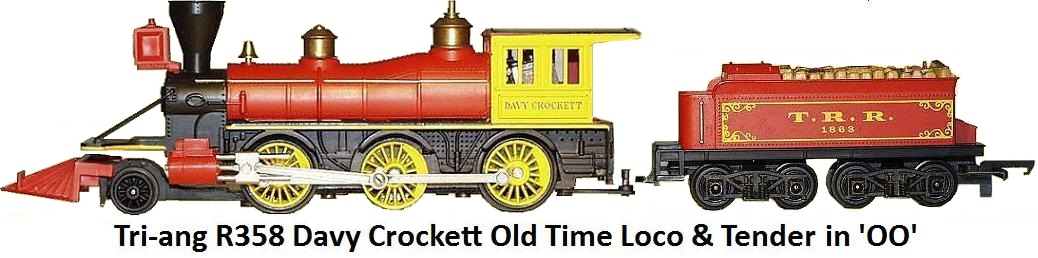
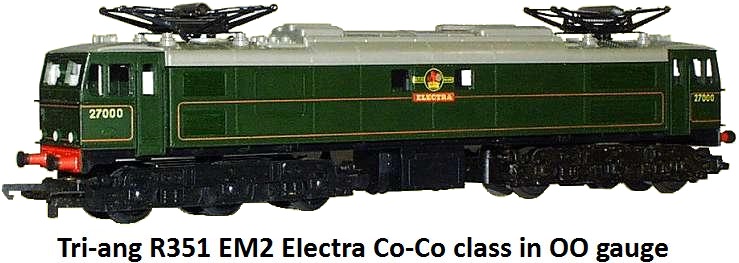 During the late 1950’s and early 1960’s there was a large production of Tri-ang products in Australia and New Zealand.
This was to overcome trade barriers in place because of massive trading deficits. There was a small production in South
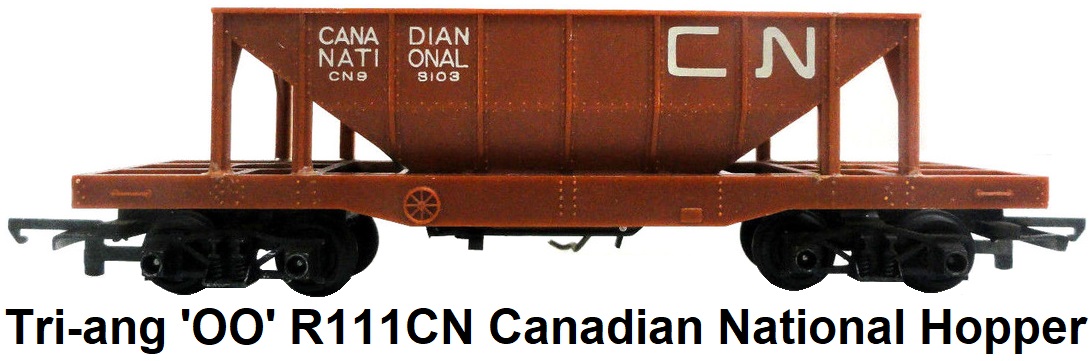
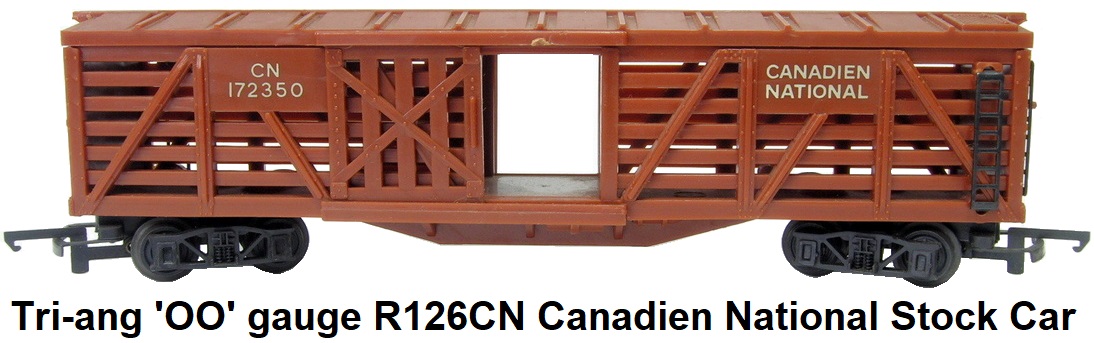
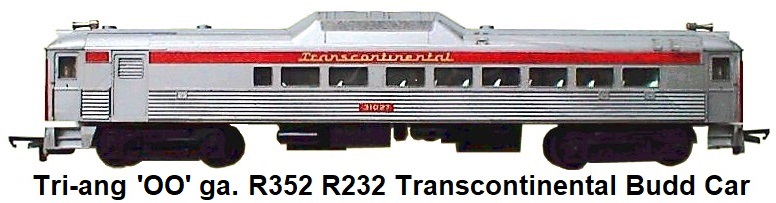
Africa. Models designed for the Canadian and American markets were made in England. Lines Brothers had a Canadian Subsidiary
called Thistle, that they used to distribute trains in the Tri-ang range that were decorated to look like the types of trains
that Canadian children were used to seeing in real life. At the end of 1960 Tri-ang acquired the
French HO train manufacturer VB (Vollon et Brun). This was an attempt to get a foothold for their TT
scale products on the continent, and at the same time also filled the gap in their own product line for HO scale products.
Lines Bros. built a factory in Calais, France. Tri-ang catalogs touting the VB HO line were issued. This endeavor was short
lived however, and by the summer of 1962 train production in France was halted completely and the Calais factory was sold.
During the late 1950’s and early 1960’s there was a large production of Tri-ang products in Australia and New Zealand.
This was to overcome trade barriers in place because of massive trading deficits. There was a small production in South
Africa. Models designed for the Canadian and American markets were made in England. Lines Brothers had a Canadian Subsidiary
called Thistle, that they used to distribute trains in the Tri-ang range that were decorated to look like the types of trains
that Canadian children were used to seeing in real life. At the end of 1960 Tri-ang acquired the
French HO train manufacturer VB (Vollon et Brun). This was an attempt to get a foothold for their TT
scale products on the continent, and at the same time also filled the gap in their own product line for HO scale products.
Lines Bros. built a factory in Calais, France. Tri-ang catalogs touting the VB HO line were issued. This endeavor was short
lived however, and by the summer of 1962 train production in France was halted completely and the Calais factory was sold.
In 1961 Tri-ang introduced 2 new features. One was a smoke unit in its locomotives. The initial design was
from a company named Seuthe, and consisted of a brass pipe and electric heating element. When a drop of 'smoke oil' was
placed in the unit, and the power applied to the track, puffs of smoke would come out of the loco stack. The other new
feature was called Magnadhesion. This was the simple placement of a small magnet on the chassis of the locomotive that
provided greater adhesion to the steel rails of the track. Around this time Tri-ang also began fitting the locomotives with
spoked wheels, replacing solid drivers and wheel-sets. By 1962 the Tri-ang range had expanded to 25 locos, as well as rolling
stock and a new range of buildings called Model Land was introduced in 1963.
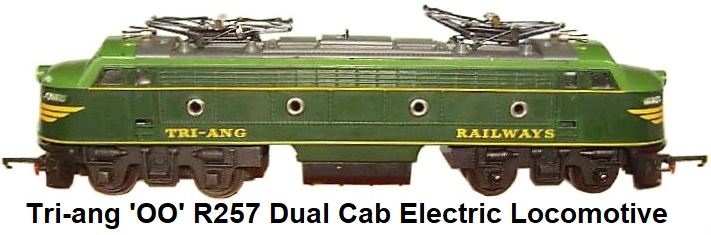
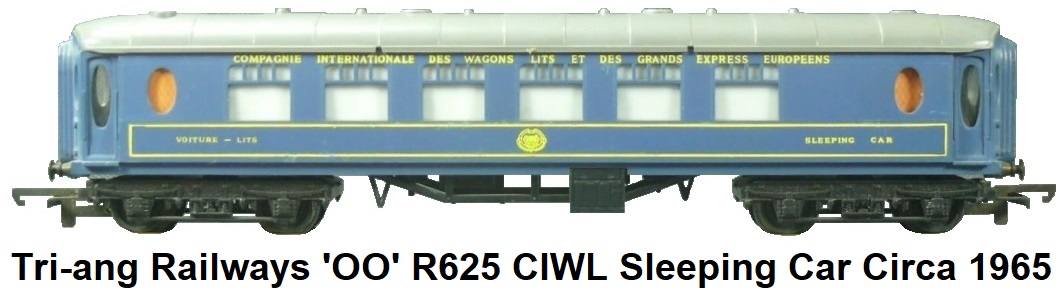 The success of Tri-ang Railways in England meant that British competitors Trix and
Hornby-Dublo were affected. The year 1964 saw the demise of Meccano and the Hornby Dublo range, which along with a large
amount of inventory was then acquired by Tri-ang's owner's Lines Bros. Ltd. The Tri-ang division's name was changed to
Tri-ang / Hornby which was to continue until 1969. The combined toy railways were marketed as Tri-ang / Hornby despite the
fact that the majority of the models issued were from the original Tri-ang Railways 2-rail line.
The success of Tri-ang Railways in England meant that British competitors Trix and
Hornby-Dublo were affected. The year 1964 saw the demise of Meccano and the Hornby Dublo range, which along with a large
amount of inventory was then acquired by Tri-ang's owner's Lines Bros. Ltd. The Tri-ang division's name was changed to
Tri-ang / Hornby which was to continue until 1969. The combined toy railways were marketed as Tri-ang / Hornby despite the
fact that the majority of the models issued were from the original Tri-ang Railways 2-rail line.
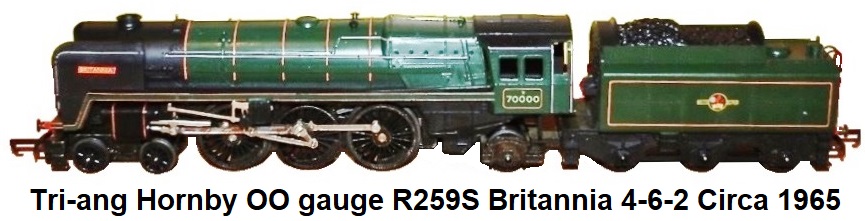
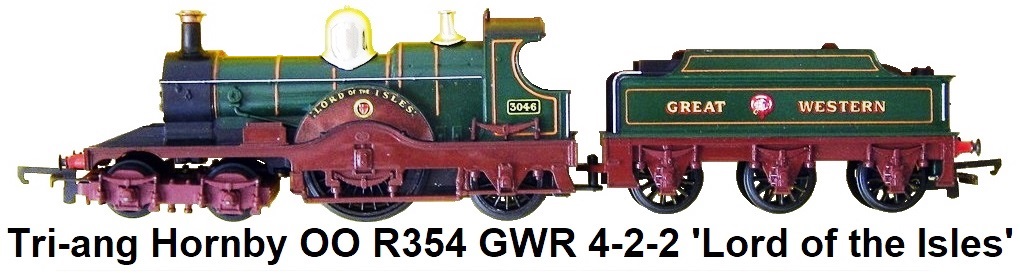 Tri-ang had initially continued offering some acquired Hornby-Dublo range, but in 1966 it was sold off to
G & R Wrenn Limited, as the 3-rail tooling did not fit with the modern plastic injection molding
techniques. Wrenn acquired the Dublo designs, machine tools and other equipment, and the existing unsold stocks of Hornby
Dublo items, and also the right to manufacture their own 'OO' gauge model railway equipment using those designs and tools,
as long as they didn't sell the results as 'Hornby Dublo'. Wrenn became an associated company of Lines Bros. Ltd (Lines Bros.
invested in, and maintained a 2/3 controlling interest). The one catch was that the Wrenn products had to be labeled and
sold as Tri-ang Wrenn. From Lines Brothers' point of view, they got rid of their remaining Dublo stock to a smaller company
that would be better able to sell it to the 'legacy Dublo' market and they off-loaded their now barely used Dublo tooling.
With Wrenn now catering to the 'disgruntled ex-Dublo owners' community Lines Brothers didn't have to worry about some
competing outside company stepping in to exploit the situation and if Wrenn did well with the new Dublo-derived business then
they owned two-thirds of it. As a comparatively small company catering to a specialized audience, Wrenn was able to run a
business based on the Dublo inheritance. The products appeared in Tri-ang's 1970, 1971 and 1972 catalogues, as Tri-ang Wrenn
'heavy die-cast metal locomotives' and 'Private Owner Wagons' alongside the Rovex-made products.
Tri-ang had initially continued offering some acquired Hornby-Dublo range, but in 1966 it was sold off to
G & R Wrenn Limited, as the 3-rail tooling did not fit with the modern plastic injection molding
techniques. Wrenn acquired the Dublo designs, machine tools and other equipment, and the existing unsold stocks of Hornby
Dublo items, and also the right to manufacture their own 'OO' gauge model railway equipment using those designs and tools,
as long as they didn't sell the results as 'Hornby Dublo'. Wrenn became an associated company of Lines Bros. Ltd (Lines Bros.
invested in, and maintained a 2/3 controlling interest). The one catch was that the Wrenn products had to be labeled and
sold as Tri-ang Wrenn. From Lines Brothers' point of view, they got rid of their remaining Dublo stock to a smaller company
that would be better able to sell it to the 'legacy Dublo' market and they off-loaded their now barely used Dublo tooling.
With Wrenn now catering to the 'disgruntled ex-Dublo owners' community Lines Brothers didn't have to worry about some
competing outside company stepping in to exploit the situation and if Wrenn did well with the new Dublo-derived business then
they owned two-thirds of it. As a comparatively small company catering to a specialized audience, Wrenn was able to run a
business based on the Dublo inheritance. The products appeared in Tri-ang's 1970, 1971 and 1972 catalogues, as Tri-ang Wrenn
'heavy die-cast metal locomotives' and 'Private Owner Wagons' alongside the Rovex-made products.

The trading name of Tri-ang Hornby continued even though there was no trace of
the original Hornby Dublo left. Finanacial troubles arose and in 1971 Lines Bros. Ltd called in the Official Reciever as a
result of severe losses overseas. When the Lines Group of companies was split up and sold, the Tri-ang name went with the
manufacture of prams (Tri-ang Pedigree). The new owners of the model train business which included the factories in Westwood
and Canterbury, was Dunbee-Combex-Marx Ltd. They changed the name to Hornby Railways, as they could
no longer use the Tri-ang name. Wrenn bought itself free and reverted their name back to Wrenn Railways.
Tri-ang Railways TT Scale

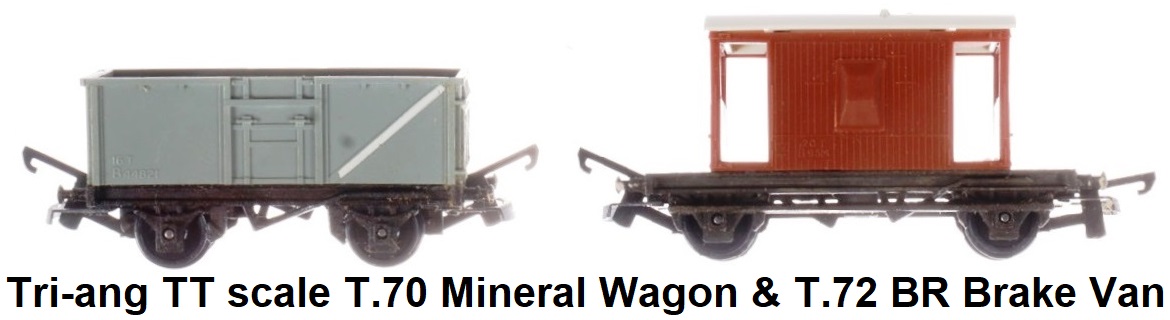
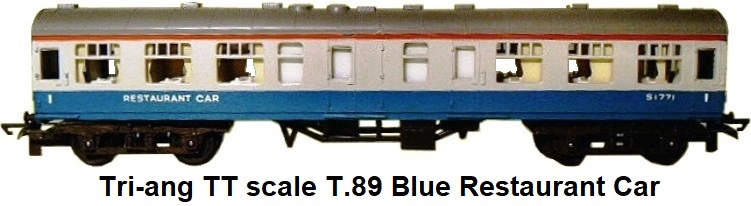
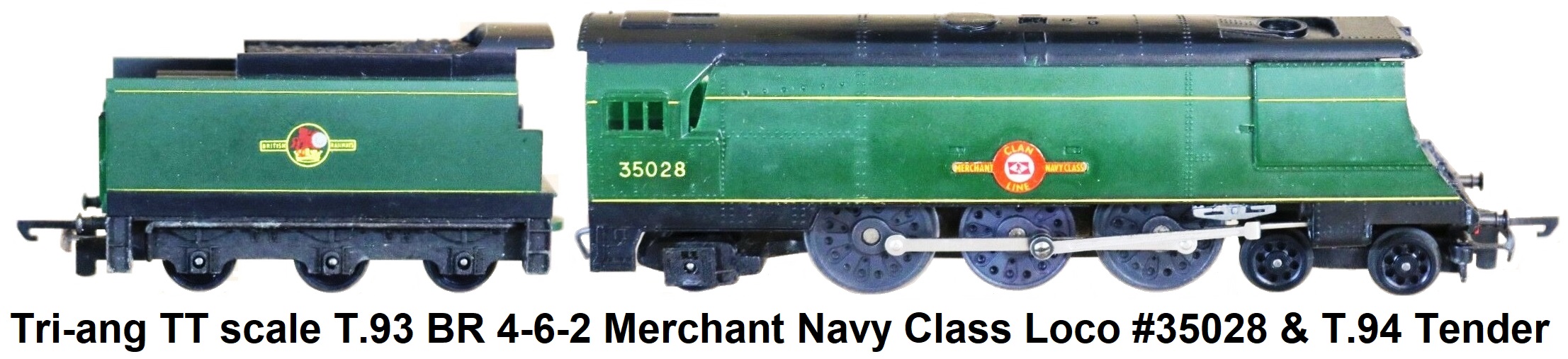 From 1957 to 1964 Tri-ang made TT scale models as well as its OO/HO gauge trains. TT or 3mm scale is smaller
than OO/HO which is 4mm scale. The name 'TT' came from the phrase used to describe this smaller scale, 'Table Top', which
describes what these trains were designed to operate on - a table top. TT track is two rail, with a distance of 12mm between
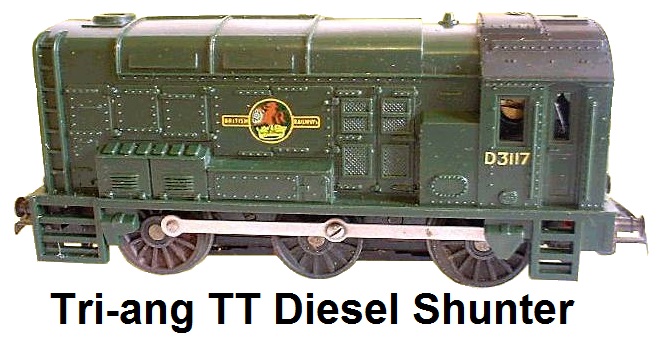
the inside edges of each rail. The first locomotive to be released by Tri-ang in TT scale was a Class 08 Shunter.
Tri-ang TT locomotives were equipped with an XT-60 motor which was the UK equivalent of a
Pittman DC-60 electric motor. Like the Tri-ang OO/HO models, the TT steam outline loco chassis
From 1957 to 1964 Tri-ang made TT scale models as well as its OO/HO gauge trains. TT or 3mm scale is smaller
than OO/HO which is 4mm scale. The name 'TT' came from the phrase used to describe this smaller scale, 'Table Top', which
describes what these trains were designed to operate on - a table top. TT track is two rail, with a distance of 12mm between
the inside edges of each rail. The first locomotive to be released by Tri-ang in TT scale was a Class 08 Shunter.
Tri-ang TT locomotives were equipped with an XT-60 motor which was the UK equivalent of a
Pittman DC-60 electric motor. Like the Tri-ang OO/HO models, the TT steam outline loco chassis
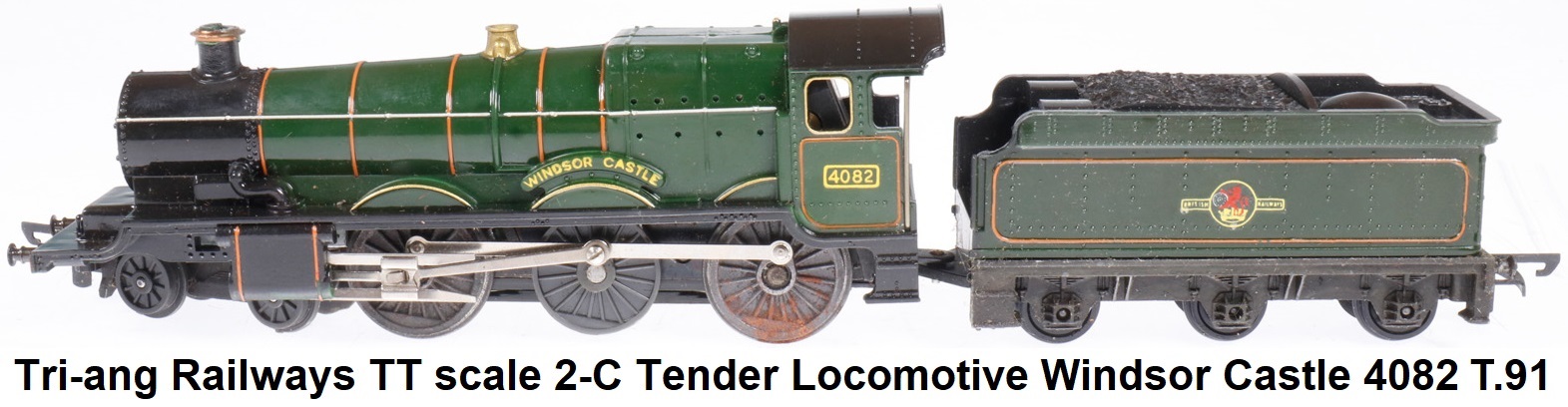 components were the same in most of the models. They utilized a generic 3-axle steam locomotive sub-assembly and running gear,
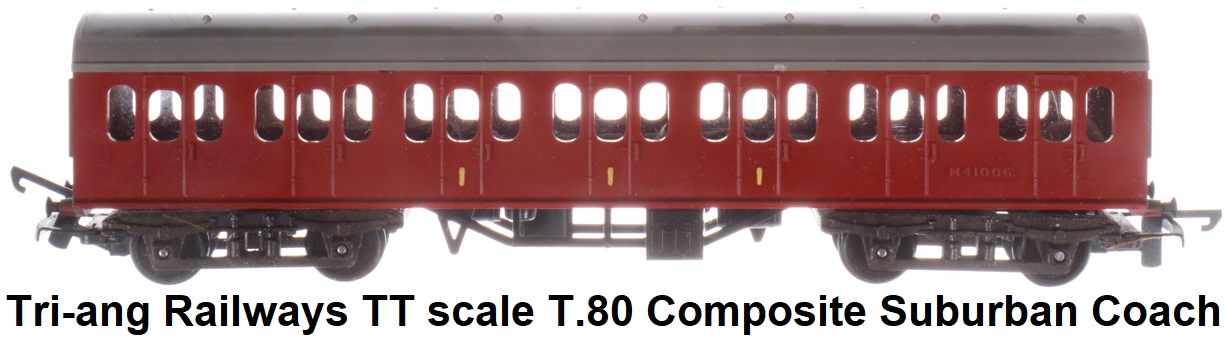
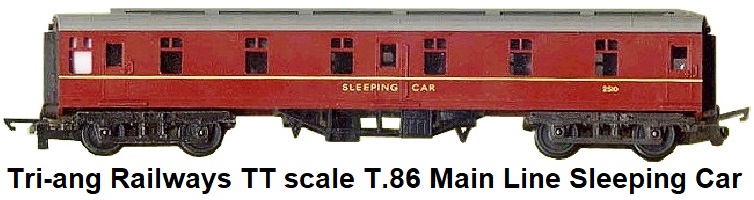
with some variances. Many of the locomotives, coaches and wagons issued by Tri-ang in TT scale were smaller versions of their
'OO' counterparts. However, there were also many new models created in the British outline range, including the GWR Castle
and Prairie locomotives as well as new wagons and structures.
components were the same in most of the models. They utilized a generic 3-axle steam locomotive sub-assembly and running gear,
with some variances. Many of the locomotives, coaches and wagons issued by Tri-ang in TT scale were smaller versions of their
'OO' counterparts. However, there were also many new models created in the British outline range, including the GWR Castle
and Prairie locomotives as well as new wagons and structures.
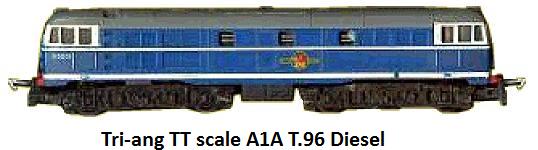
Tri-ang TT scale train bodies were made of polystyrene to ensure accuracy of detail and durability. Locos
operated on 12-volts DC power. Tri-ang introduced a new style coupling when it released it's TT scale models. This was
called the Mk3 coupling, and it is distinguished by its full 'D' shaped loop and a hook that had a return hook below its end
to securely attach the adjoining car. By the beginning of 1959 the Mk3 coupling was also the standard equipment found on
Tri-Ang 'OO' gauge trains as well. In 1969 Wrenn Railways ended up taking over Lines Brothers' TT scale model business when
Tri-ang ceased TT 3mm production, offering those products as Wrenn TT.
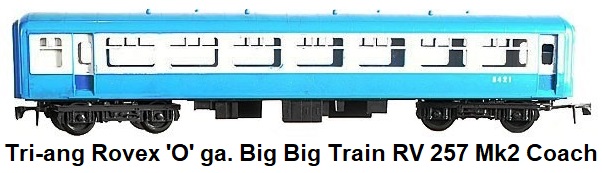
Big Big Trains was a brand manufactured by Rovex in the UK and introduced in 1966
under the Tri-ang label. This was an 'O' gauge (1:43 scale) system that used battery power instead of track power, and was
designed to run outdoors as well as indoors. These trains were targeted at a younger market, and thus were more toy-like.
Track was made entirely of plastic. The line was made up of 4 locomotive models, 2 coach styles, and 7 different freight
wagons. The loco models were an #RV256 Hymek bo-bo diesel locomotive, #RV262 Continental 0-6-0 tank locomotive, #RV272 0-4-0
diesel shunter, and #RV276 0-4-0 steam shunter. Passenger cars were an #RV257 BR Mk2 coach and #RV274 Continental coach.
 Freights were the #RV258 open wagon, #RV259 gondola, #RV273 side tipping wagon, #RV275 flat with steam roller, #RV277 flatcar
with trailer trucks, #RV283 Zoo car, and #RV298 caboose. 5 different accessories were offered, including an #RV296 semaphore,
#RV289 station, #RV308 bridge with signals, #RV 286 barrel loader, and #RV285 crossing. The Tri-ang/Rovex name appeared on
the end flap of the distinctive yellow boxes, but the manufacturer and brand was not obvious. 6 different sets were
catalogued. The range was produced until 1972 when it was discontinued. The molds were acquired by a Russian company who
produced some sets under the Novo brand. The concept was eventually sold to Lima in 1967, who
converted the 'O' gauge trains to run using track power.
Freights were the #RV258 open wagon, #RV259 gondola, #RV273 side tipping wagon, #RV275 flat with steam roller, #RV277 flatcar
with trailer trucks, #RV283 Zoo car, and #RV298 caboose. 5 different accessories were offered, including an #RV296 semaphore,
#RV289 station, #RV308 bridge with signals, #RV 286 barrel loader, and #RV285 crossing. The Tri-ang/Rovex name appeared on
the end flap of the distinctive yellow boxes, but the manufacturer and brand was not obvious. 6 different sets were
catalogued. The range was produced until 1972 when it was discontinued. The molds were acquired by a Russian company who
produced some sets under the Novo brand. The concept was eventually sold to Lima in 1967, who
converted the 'O' gauge trains to run using track power.
 Apart from a brief change to Hornby Models the Hornby name has remained to this day, even though the range of models owes far
more to the Tri-ang legacy, than it ever did to Hornby Dublo. The legacy of Tri-ang can still be seen in the current Hornby
range. The style of motors continues the Tri-ang basic design. (The Mark 7 motor is not far removed from the original Mark 1
model in 1950). Even some accessories are quite clearly the original Tri-ang designs, such as the over-bridges, viaducts,
station buildings etc. Even the Tri-ang church survives. The current track style is still called Series 6, which was
introduced by Tri-ang Hornby. Even the numbering of the catalogues follows the Tri-ang sequence, from the first in 1953.
The Westwood Tri-ang factory became the Hornby Visitor Center.
Apart from a brief change to Hornby Models the Hornby name has remained to this day, even though the range of models owes far
more to the Tri-ang legacy, than it ever did to Hornby Dublo. The legacy of Tri-ang can still be seen in the current Hornby
range. The style of motors continues the Tri-ang basic design. (The Mark 7 motor is not far removed from the original Mark 1
model in 1950). Even some accessories are quite clearly the original Tri-ang designs, such as the over-bridges, viaducts,
station buildings etc. Even the Tri-ang church survives. The current track style is still called Series 6, which was
introduced by Tri-ang Hornby. Even the numbering of the catalogues follows the Tri-ang sequence, from the first in 1953.
The Westwood Tri-ang factory became the Hornby Visitor Center.
Tri-ang is probably best known for its model railways, but also produced model ships and tin toys.