 G & R Wrenn Limited was a British firm founded by brothers George Raymond and Cyril Richard Wrenn
in 1950. George and Richard were engineers by profession and both had served apprenticeships with Vickers-Armstrong Ltd.
A third brother, Cedric John, joined the company in the late 1950's after selling his antiques business. The family
business continued until 1992 with the exception of a few years in the late 1960's when
G & R Wrenn lost its independence and became
part of the Lines Brothers Group. In late November 1992 ‘G & R Wrenn Limited’ ceased trading and
the name and assets of the company were later bought by David Boyle of Dapol Model Railways.
G & R Wrenn Limited was a British firm founded by brothers George Raymond and Cyril Richard Wrenn
in 1950. George and Richard were engineers by profession and both had served apprenticeships with Vickers-Armstrong Ltd.
A third brother, Cedric John, joined the company in the late 1950's after selling his antiques business. The family
business continued until 1992 with the exception of a few years in the late 1960's when
G & R Wrenn lost its independence and became
part of the Lines Brothers Group. In late November 1992 ‘G & R Wrenn Limited’ ceased trading and
the name and assets of the company were later bought by David Boyle of Dapol Model Railways.
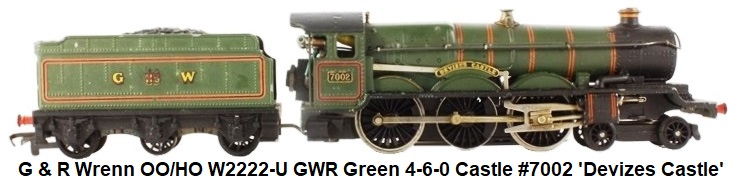 Before forming Wrenn with his brother, Richard had worked for a time in developing a track system
for toy maker Graham Farish, which was then based in Bromley, Kent. He eventually became works manager there. Farish
had entered the OO market in 1949 and was the first to offer a ready-to-run mass-produced two-rail model locomotive,
rolling stock and track work. At the time the two major manufacturers (Hornby Dublo and Trix) used three-rail systems.
Richard had also worked for toy company Victory Industries.
Before forming Wrenn with his brother, Richard had worked for a time in developing a track system
for toy maker Graham Farish, which was then based in Bromley, Kent. He eventually became works manager there. Farish
had entered the OO market in 1949 and was the first to offer a ready-to-run mass-produced two-rail model locomotive,
rolling stock and track work. At the time the two major manufacturers (Hornby Dublo and Trix) used three-rail systems.
Richard had also worked for toy company Victory Industries.
 The first Wrenn products manufactured were high quality 2 and 3 rail track-work,
diamond crossings, insulated crossovers and points for OO gauge model railways. OO gauge or OO scale model railways are the most popular
model gauge railway tracks in the United Kingdom. This track gauge is one of several 4 mm-scale standards (4 mm to 1 foot or 1:76.2).
Wrenn OO gauge flexible track was made of galvanized steel and nickel silver. It was supplied in 36" long straight sections.
Subsequently, Wrenn started manufacturing two rail track for TT gauge model railways. TT scale is a niche model railroading scale, whose name evolved from table top railways.
British TT is 3 mm scale; that is, 1:101.6. In the US its 1:120 scale, and in Russia and the former USSR its 1:130. In gauge sizes it is approximately
halfway between HO scale (1:87) and N scale (1:160). Its original purpose, like the name suggests, was to make a train small enough to be able to assemble
and operate on a tabletop.
The first Wrenn products manufactured were high quality 2 and 3 rail track-work,
diamond crossings, insulated crossovers and points for OO gauge model railways. OO gauge or OO scale model railways are the most popular
model gauge railway tracks in the United Kingdom. This track gauge is one of several 4 mm-scale standards (4 mm to 1 foot or 1:76.2).
Wrenn OO gauge flexible track was made of galvanized steel and nickel silver. It was supplied in 36" long straight sections.
Subsequently, Wrenn started manufacturing two rail track for TT gauge model railways. TT scale is a niche model railroading scale, whose name evolved from table top railways.
British TT is 3 mm scale; that is, 1:101.6. In the US its 1:120 scale, and in Russia and the former USSR its 1:130. In gauge sizes it is approximately
halfway between HO scale (1:87) and N scale (1:160). Its original purpose, like the name suggests, was to make a train small enough to be able to assemble
and operate on a tabletop.
 The company was initially located at #123 Lee Road, Lee Green, Blackheath,
London S.E.3. Track was produced for both 2 and 3 rail operation compatible for use with
Farish, Hornby, Tri-ang, Trix,
Märklin, Rivarossi and Universal pattern trains.
By 1952 extra staff was hired as the business grew quickly. In March 1955,
the company moved across London to Unit 9, Bowlers Croft which was located in Honeywood Road, Basildon as
a result of an increase in business and to expand the work-space. Continued expansion led to
the addition of Bowlers Croft Units Nos. 7 and 11. In 1956, George married a secretary at the firm named Audrey, and
they went on to raise a family. By 1966 Audrey was a company director and continued in that role through 1992.
The company was initially located at #123 Lee Road, Lee Green, Blackheath,
London S.E.3. Track was produced for both 2 and 3 rail operation compatible for use with
Farish, Hornby, Tri-ang, Trix,
Märklin, Rivarossi and Universal pattern trains.
By 1952 extra staff was hired as the business grew quickly. In March 1955,
the company moved across London to Unit 9, Bowlers Croft which was located in Honeywood Road, Basildon as
a result of an increase in business and to expand the work-space. Continued expansion led to
the addition of Bowlers Croft Units Nos. 7 and 11. In 1956, George married a secretary at the firm named Audrey, and
they went on to raise a family. By 1966 Audrey was a company director and continued in that role through 1992.
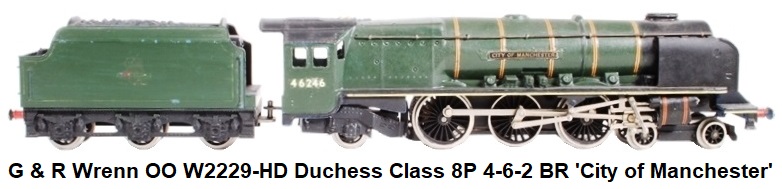
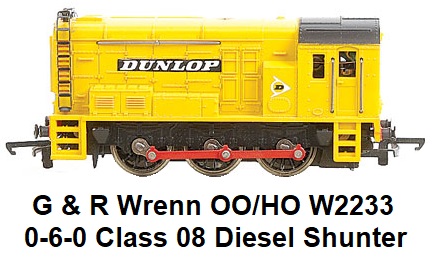 In October 1957 the ‘Partnership’ became a Limited Company, G & R Wrenn Limited.
In 1960 the Wrenn 152 Series (1:52 scale) Triple Electric Model Motor Racing Car system was introduced at the Brighton Toy Fair.
The word ‘triple’ was in reference to the fact that 3 cars could race on each track and also
change lanes. 152 series was somewhat smaller in scale but still the
major competitor to the 1:32 scale ‘Scalextric’ system owned and at that time being developed by the Lines Bros.
Group, via their Tri-ang brand. The Wrenn 152 system started life as an ‘AC’ control system, but by 1965
sets and accessories were available for either ‘AC’ or ‘DC’ control systems. Both brothers' extensive engineering backgrounds
helped to design and produce this system. The 3 inch long racing cars were able to produce scale speeds of over 200mph.
George was responsible for the conception and development and Richard concentrated on the tooling and mass production.
After joining the company, Cedric Wrenn became responsible, as Sales Manager, for the marketing and sales of all of the products
being produced at Bowlers Croft. G & R Wrenn Limited,
also made model boats, including the Master Mariner Set, the Wrenn Wonder Boat, battery operated
motor boats such as the RAF Twin Screw Crash Tender and a Vosper Triple Screw Yacht, Mighty Midget 3-6 volt motors, a baby alarm,
Doodle Disc, and the Pull Back ‘n’ Go Mini.
Marketing became an important area for G & R Wrenn, with such a diverse product range.
Cedric was often seen at Trade Exhibitions in Brighton and London.
In October 1957 the ‘Partnership’ became a Limited Company, G & R Wrenn Limited.
In 1960 the Wrenn 152 Series (1:52 scale) Triple Electric Model Motor Racing Car system was introduced at the Brighton Toy Fair.
The word ‘triple’ was in reference to the fact that 3 cars could race on each track and also
change lanes. 152 series was somewhat smaller in scale but still the
major competitor to the 1:32 scale ‘Scalextric’ system owned and at that time being developed by the Lines Bros.
Group, via their Tri-ang brand. The Wrenn 152 system started life as an ‘AC’ control system, but by 1965
sets and accessories were available for either ‘AC’ or ‘DC’ control systems. Both brothers' extensive engineering backgrounds
helped to design and produce this system. The 3 inch long racing cars were able to produce scale speeds of over 200mph.
George was responsible for the conception and development and Richard concentrated on the tooling and mass production.
After joining the company, Cedric Wrenn became responsible, as Sales Manager, for the marketing and sales of all of the products
being produced at Bowlers Croft. G & R Wrenn Limited,
also made model boats, including the Master Mariner Set, the Wrenn Wonder Boat, battery operated
motor boats such as the RAF Twin Screw Crash Tender and a Vosper Triple Screw Yacht, Mighty Midget 3-6 volt motors, a baby alarm,
Doodle Disc, and the Pull Back ‘n’ Go Mini.
Marketing became an important area for G & R Wrenn, with such a diverse product range.
Cedric was often seen at Trade Exhibitions in Brighton and London.
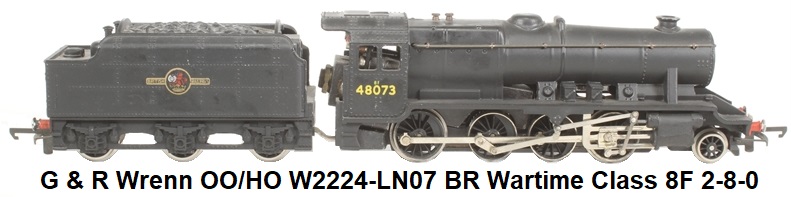 By the early sixties, G & R Wrenn Ltd. was producing over 120 items of precision-built model railway trackwork.
On June 1st, 1964, an agreement was announced between Trix Railways and
G & R Wrenn Limited. British Trix Ltd. would market and sell Wrenn products in England. On January
1st, 1966 Lines Bros. Ltd. purchased a 66% controlling interest in G & R Wrenn Ltd. Two years prior,
on February 14th, 1964, the Lines Bros. Group had taken over Meccano Ltd. of Binns
Road, Liverpool when Meccano had gone into bankruptcy. Meccano Ltd. were the producers of Meccano, Dinky Toys,
Hornby ‘O’ gauge trains and Hornby Dublo die-cast model railways. Lines Bros. Ltd. was a British toy manufacturer of the 20th century,
operating under the Tri-ang Toys brand name, and at its peak in 1947 was one of the largest toy makers in the world.
Lines Bros. had its own railway system, the Rovex system, marketed as Tri-ang Railways.
By the early sixties, G & R Wrenn Ltd. was producing over 120 items of precision-built model railway trackwork.
On June 1st, 1964, an agreement was announced between Trix Railways and
G & R Wrenn Limited. British Trix Ltd. would market and sell Wrenn products in England. On January
1st, 1966 Lines Bros. Ltd. purchased a 66% controlling interest in G & R Wrenn Ltd. Two years prior,
on February 14th, 1964, the Lines Bros. Group had taken over Meccano Ltd. of Binns
Road, Liverpool when Meccano had gone into bankruptcy. Meccano Ltd. were the producers of Meccano, Dinky Toys,
Hornby ‘O’ gauge trains and Hornby Dublo die-cast model railways. Lines Bros. Ltd. was a British toy manufacturer of the 20th century,
operating under the Tri-ang Toys brand name, and at its peak in 1947 was one of the largest toy makers in the world.
Lines Bros. had its own railway system, the Rovex system, marketed as Tri-ang Railways.
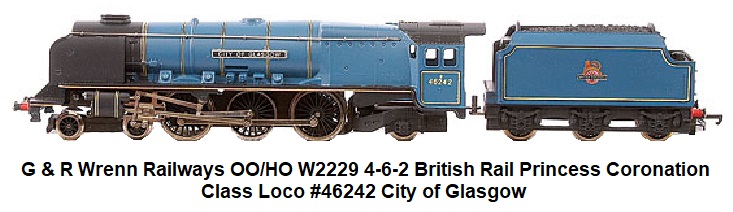
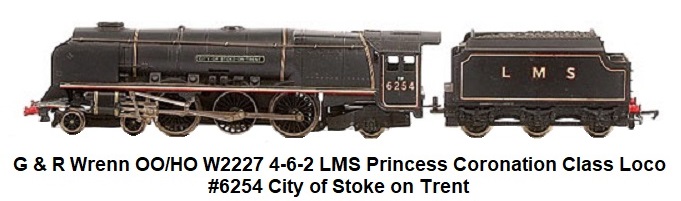
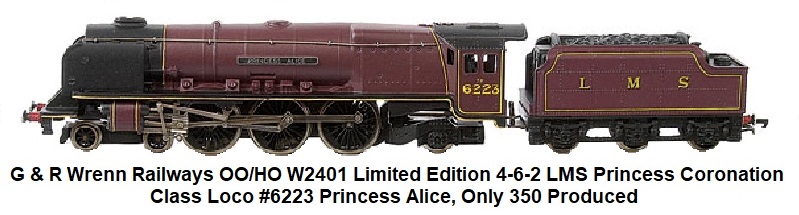
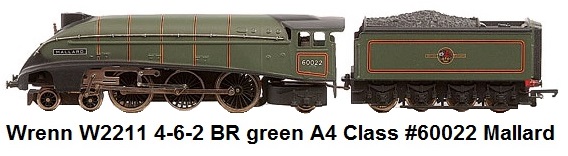 Original plans were to quickly sell leftover inventory of Hornby Dublo 3-rail items through
various retail outlets. During the winter of 1964/65 strategies were developed on how the products
of the two companies would be amalgamated. Dinky Toys and Meccano would be useful additions to the
product lines, but maintaining two competing railway product lines - Tri-ang & Hornby - was not viable.
On May 1st, 1965 it was announced that the two systems would merge under the brand name
Tri-ang Hornby. However, the Tri-ang Railways 2-rail system became the dominant product line, and Hornby
Dublo production was closed down.
Original plans were to quickly sell leftover inventory of Hornby Dublo 3-rail items through
various retail outlets. During the winter of 1964/65 strategies were developed on how the products
of the two companies would be amalgamated. Dinky Toys and Meccano would be useful additions to the
product lines, but maintaining two competing railway product lines - Tri-ang & Hornby - was not viable.
On May 1st, 1965 it was announced that the two systems would merge under the brand name
Tri-ang Hornby. However, the Tri-ang Railways 2-rail system became the dominant product line, and Hornby
Dublo production was closed down.
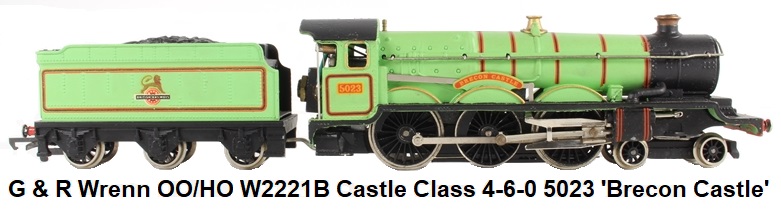 At some point, George Wrenn approached the Board of Lines Bros. and asked
whether his company, working within the Group, could use the Hornby Dublo tools and assemble the
models and sell them under his own name (Wrenn). The request was granted and most of the original
molds and tools were transferred to the site at Basildon. The first Wrenn produced locomotive, the
Cardiff Castle was advertised for sale in December 1966, less than 12 months after Wrenn was
taken into the Lines Bros. Group. The Castle locomotive was one of the original Hornby Dublo products.
Molds were altered and updated to imprint the name G & R Wrenn Ltd. onto the under body of the
locomotive and the first of the many G & R Wrenn Locomotives was born. The goal was to carry on the manufacture of the
superb models in OO/HO 2-rail and maintain the reputation for design, quality, and reliability for which Hornby Dublo became famous.
G & R Wrenn Ltd. was also used by Lines Bros. as a way to market and sell the still remaining inventory of
Hornby Dublo stock, which included complete locomotives, wagons and coaches, and Hornby Dublo parts
and spares. The range of new Wrenn versions of ex-Hornby Dublo locomotives was expanded in 1967
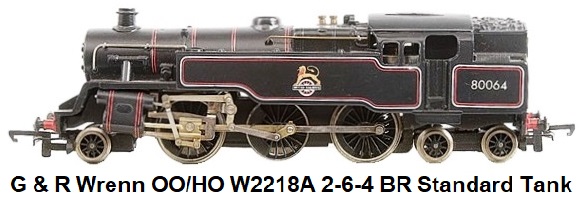
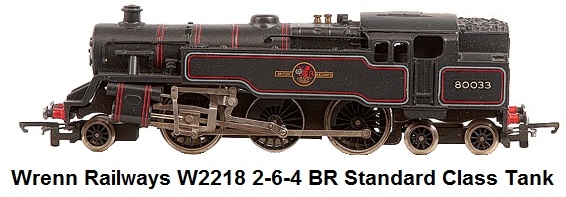
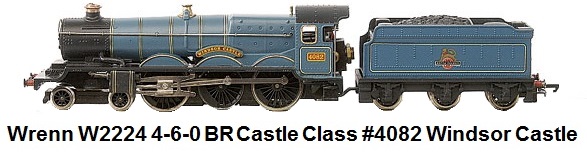
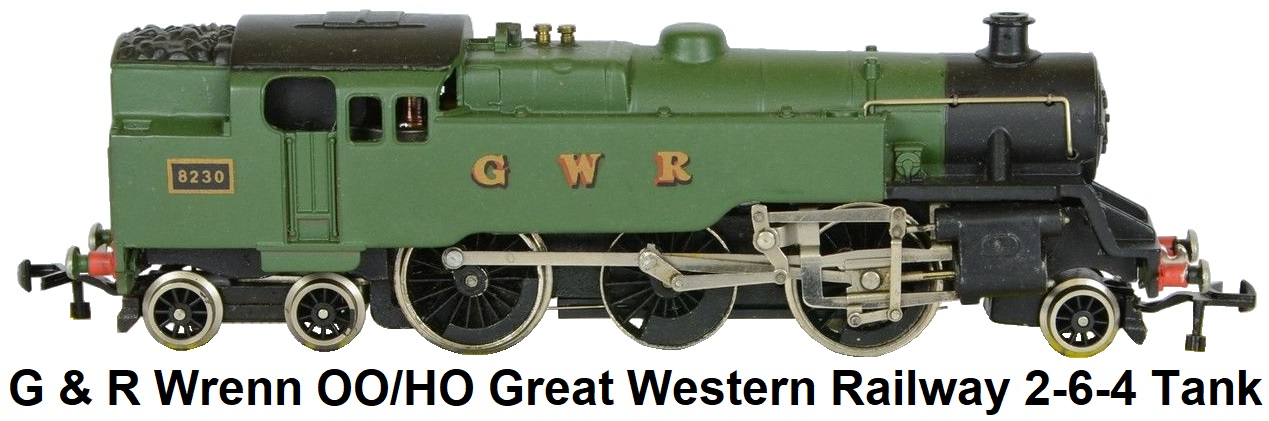
to include the Stanier War Department Standard 8F Class Freight 2-8-0 and the 2-6-4 Tank locomotive.
The 8F locomotive is one of the few which spanned all four periods of production that Wrenn undertook at
Basildon Essex. Around this same time the Wrenn 152 Racing system, which directly competed with Lines Bros.
owned Scalextric, disappeared.
At some point, George Wrenn approached the Board of Lines Bros. and asked
whether his company, working within the Group, could use the Hornby Dublo tools and assemble the
models and sell them under his own name (Wrenn). The request was granted and most of the original
molds and tools were transferred to the site at Basildon. The first Wrenn produced locomotive, the
Cardiff Castle was advertised for sale in December 1966, less than 12 months after Wrenn was
taken into the Lines Bros. Group. The Castle locomotive was one of the original Hornby Dublo products.
Molds were altered and updated to imprint the name G & R Wrenn Ltd. onto the under body of the
locomotive and the first of the many G & R Wrenn Locomotives was born. The goal was to carry on the manufacture of the
superb models in OO/HO 2-rail and maintain the reputation for design, quality, and reliability for which Hornby Dublo became famous.
G & R Wrenn Ltd. was also used by Lines Bros. as a way to market and sell the still remaining inventory of
Hornby Dublo stock, which included complete locomotives, wagons and coaches, and Hornby Dublo parts
and spares. The range of new Wrenn versions of ex-Hornby Dublo locomotives was expanded in 1967
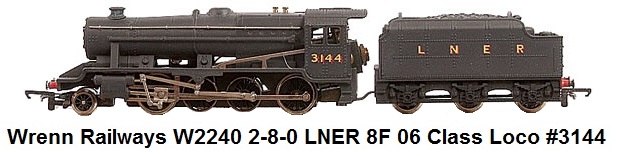
to include the Stanier War Department Standard 8F Class Freight 2-8-0 and the 2-6-4 Tank locomotive.
The 8F locomotive is one of the few which spanned all four periods of production that Wrenn undertook at
Basildon Essex. Around this same time the Wrenn 152 Racing system, which directly competed with Lines Bros.
owned Scalextric, disappeared.
 In 1969 the Lines Bros. Group decided to brand and market the new Wrenn products
under the joint name of Tri-ang Wrenn. An advertisement for Tri-ang Wrenn items appeared in the October 1969
Railway Modeller magazine. By 1968 the remaining stocks of Tri-ang ‘TT’ (Table Top) 3 mm scale model railways
were being sold under the name of Wrenn Table Top products. Tri-ang tension-lock Mark 4 couplings were
now also being fitted to all Wrenn products, rather than the original Hornby Dublo type couplings. The
Tri-ang Wrenn locomotives and wagons were sold in newly designed boxes to mark the change in brand name.
1969 saw the release of plastic molded Pullman coaches in OO/HO.
In 1969 the Lines Bros. Group decided to brand and market the new Wrenn products
under the joint name of Tri-ang Wrenn. An advertisement for Tri-ang Wrenn items appeared in the October 1969
Railway Modeller magazine. By 1968 the remaining stocks of Tri-ang ‘TT’ (Table Top) 3 mm scale model railways
were being sold under the name of Wrenn Table Top products. Tri-ang tension-lock Mark 4 couplings were
now also being fitted to all Wrenn products, rather than the original Hornby Dublo type couplings. The
Tri-ang Wrenn locomotives and wagons were sold in newly designed boxes to mark the change in brand name.
1969 saw the release of plastic molded Pullman coaches in OO/HO.
 In 1972 G & R Wrenn separated from the Lines Bros. Group and Tri-ang, after
they collapsed into receivership, and once
again became an independent family owned company. Tri-ang Hornby continued to advertise
Wrenn products in their catalogue that year. Once again the company became G & R Wrenn Limited,
selling mostly die-cast products from the former Hornby Dublo line. They obtained some of the
manufacturing tools, including those for the grain wagon, mineral wagon and steel sided wagon, but,
other tooling had been lost. Wrenn retooled to compensate for these missing components.
In 1972 G & R Wrenn separated from the Lines Bros. Group and Tri-ang, after
they collapsed into receivership, and once
again became an independent family owned company. Tri-ang Hornby continued to advertise
Wrenn products in their catalogue that year. Once again the company became G & R Wrenn Limited,
selling mostly die-cast products from the former Hornby Dublo line. They obtained some of the
manufacturing tools, including those for the grain wagon, mineral wagon and steel sided wagon, but,
other tooling had been lost. Wrenn retooled to compensate for these missing components.
 The majority of Wrenn locomotives were hand built in limited quantities in exclusive heavy
pressure die-cast metal, just like their Hornby Dublo predecessors. They were fitted with custom built
5 pole motors equipped with adjustable bearings and direct worm drive armatures
to provide ample pulling power, operational stability and quiet smooth running. Wrenn employed not one, but
six different motor types, each designed to meet the specific requirement of the class concerned. All Wrenn locos ran on standard 12 volt D.C. power.
Metal nickel plated wheels were fitted throughout and metal bodies painted and stove enamelled. They were adorned with
full working valve gear, separate wire hand rails, brass whistles, copper capped chimneys and formed metal ladders.
All locos and rolling stock were fitted with couplings compatible with most other
proprietary systems, and in addition, provision was made for conversion to alternative
Hornby Dublo couplings, using set W7304. Wrenn coaches and most rolling stock had heavy diecast metal underframes for
strength and stability and were fitted with brass nickel plated wheel rims, and steel pin-point axles running in nylon bearings
to enable smooth free running and longer trains. Petrol and milk tank wagons were fitted with wire tie-bars and Utility Vans and Horse Boxes
featured opening doors.
The majority of Wrenn locomotives were hand built in limited quantities in exclusive heavy
pressure die-cast metal, just like their Hornby Dublo predecessors. They were fitted with custom built
5 pole motors equipped with adjustable bearings and direct worm drive armatures
to provide ample pulling power, operational stability and quiet smooth running. Wrenn employed not one, but
six different motor types, each designed to meet the specific requirement of the class concerned. All Wrenn locos ran on standard 12 volt D.C. power.
Metal nickel plated wheels were fitted throughout and metal bodies painted and stove enamelled. They were adorned with
full working valve gear, separate wire hand rails, brass whistles, copper capped chimneys and formed metal ladders.
All locos and rolling stock were fitted with couplings compatible with most other
proprietary systems, and in addition, provision was made for conversion to alternative
Hornby Dublo couplings, using set W7304. Wrenn coaches and most rolling stock had heavy diecast metal underframes for
strength and stability and were fitted with brass nickel plated wheel rims, and steel pin-point axles running in nylon bearings
to enable smooth free running and longer trains. Petrol and milk tank wagons were fitted with wire tie-bars and Utility Vans and Horse Boxes
featured opening doors.
 Although they obtained rights
to many of the Hornby Dublo models, Wrenn did not acquire the Hornby brandname. Lines Bros. had
obtained this name as a result of buying up Hornby Dublo and used it as part of the name
'Tri-ang Hornby'. The Hornby name was subsequently sold to Rovex Ltd. The Wrenn brand image and logo was
updated with the introduction of the now famous guard blowing his whistle and waving a Union Jack in 1973.
That year, although some items were still issued in Tri-ang Wrenn boxes, to use up existing stocks, the new
name of Wrenn Railways was used on all new packaging. The highest model catalogue number to be issued in
a Tri-ang Wrenn box was W5010-the 12Ton Robertsons Ventilated Van. 1972 had seen the production of loco variations
to the 0-6-0, 0-6-2 and 2-6-4 tanks, but for 1973, 7 further locomotives were to burst on to the Wrenn dealer's shelves.
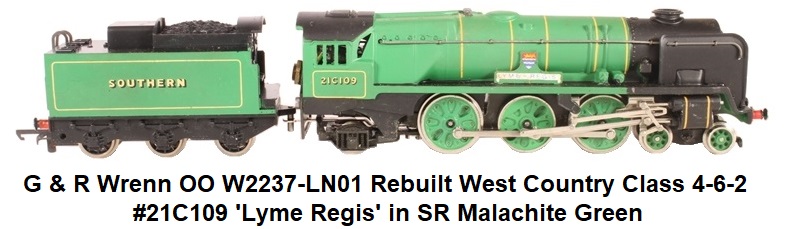
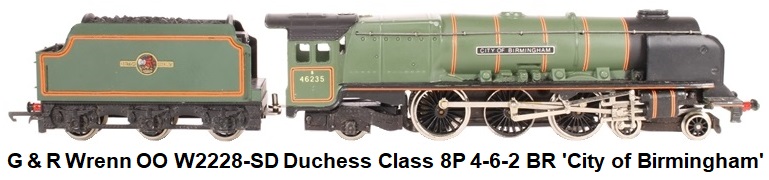
These were the W2220 GWR 2-6-4 Tank, W2228 BR City of Birmingham, W2229 BR City of Glasgow, W2230 BR 1000 B H P Bo-Bo,
W2231 BR Diesel Electric Shunter-Green, W2232 BR Diesel Electric Shunter-Blue, and W2237 SR Lyme Regis. The 0-6-0 locomotives featured molded plastic body shells.
Loco tenders were also in plastic. A range of Standard super detail wagons were introduced as well as 7 new ex-livery wagons. These had an 'X' suffix after
the number - e.g. W4318X. G & R Wrenn also had a sideline reselling Lima N
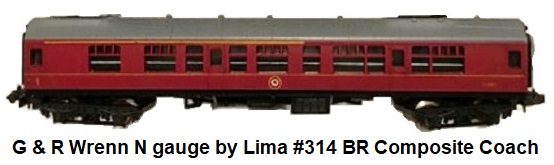
scale models in the United Kingdom under the name 'Wrenn Micro-models'. They also marketed the Lima 'O' gauge range.
Although they obtained rights
to many of the Hornby Dublo models, Wrenn did not acquire the Hornby brandname. Lines Bros. had
obtained this name as a result of buying up Hornby Dublo and used it as part of the name
'Tri-ang Hornby'. The Hornby name was subsequently sold to Rovex Ltd. The Wrenn brand image and logo was
updated with the introduction of the now famous guard blowing his whistle and waving a Union Jack in 1973.
That year, although some items were still issued in Tri-ang Wrenn boxes, to use up existing stocks, the new
name of Wrenn Railways was used on all new packaging. The highest model catalogue number to be issued in
a Tri-ang Wrenn box was W5010-the 12Ton Robertsons Ventilated Van. 1972 had seen the production of loco variations
to the 0-6-0, 0-6-2 and 2-6-4 tanks, but for 1973, 7 further locomotives were to burst on to the Wrenn dealer's shelves.
These were the W2220 GWR 2-6-4 Tank, W2228 BR City of Birmingham, W2229 BR City of Glasgow, W2230 BR 1000 B H P Bo-Bo,
W2231 BR Diesel Electric Shunter-Green, W2232 BR Diesel Electric Shunter-Blue, and W2237 SR Lyme Regis. The 0-6-0 locomotives featured molded plastic body shells.
Loco tenders were also in plastic. A range of Standard super detail wagons were introduced as well as 7 new ex-livery wagons. These had an 'X' suffix after
the number - e.g. W4318X. G & R Wrenn also had a sideline reselling Lima N
scale models in the United Kingdom under the name 'Wrenn Micro-models'. They also marketed the Lima 'O' gauge range.
Wrenn OO gauge Brighton Belle W3006/7 2 Car Set

 Over the next several years the company managed to maintain a huge following with hobbyists despite offering
little in the way of new products beyond new liveries and numbering for the models they made previously plus the introduction of the Royal
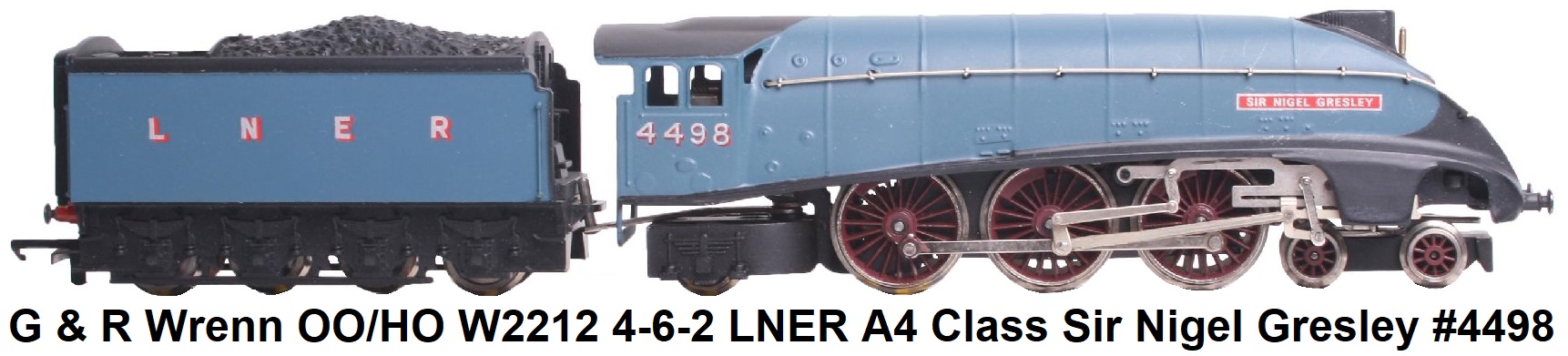
Scot and Merchant Navy class locomotives. Beginning in the 1980's selected locomotives were offered as limited editions, supplied
with a wooden display plinth, track section, numbered authenticity certificate and adhesive nameplate.
Between 1980 and 1992 70 new wagons were introduced. Locos and coaches were released in new paint
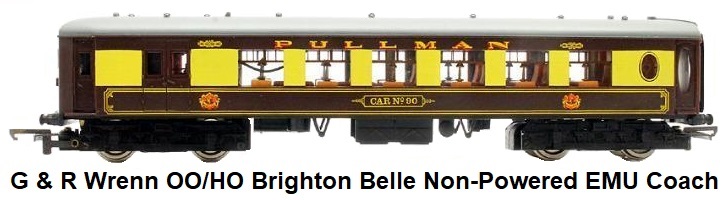
schemes, numbers and liveries. Wrenn also released plastic-cast 2 car Brighton Belle multiple-unit Pullman sets featuring
a powered motor brake 2nd coach and a matching non powered version. Car interiors were fitted out with seats, tables and table lamps.
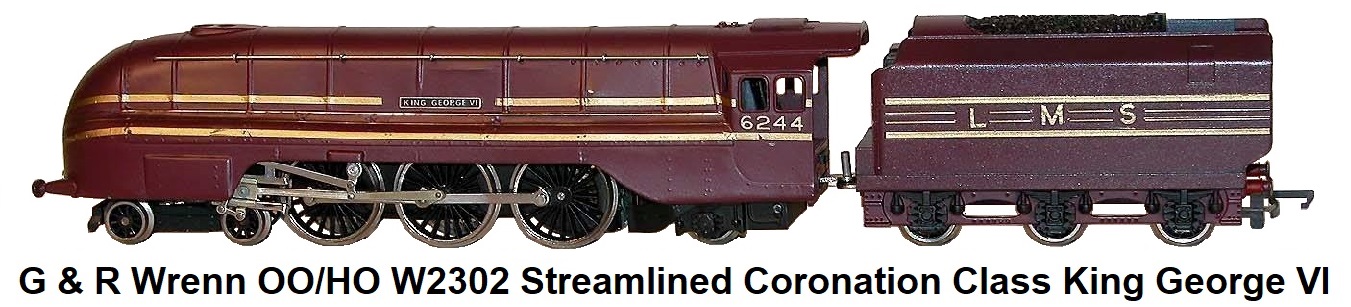
The Wrenn Streamlined Coronation Class W2302 King George VI 4-6-2 in maroon LMS livery first produced in late 1985 was different
from normal production as it used white metal cast bodies acquired from Keyser Models instead of the typical zamac die-cast bodies utilized on all the
other Wrenn issued locos. The King George VI's used 3 Pole motors and a City class chassis with shaved valve boxes to fit the Keyser body shell.
Only 194 of these locos were made between 1985 and 1987 so they are quite rare and sought after by collectors.
Over the next several years the company managed to maintain a huge following with hobbyists despite offering
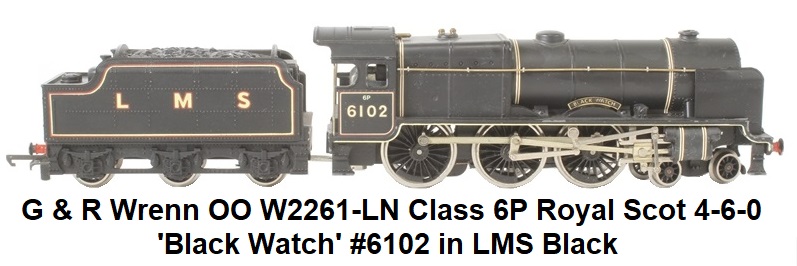
little in the way of new products beyond new liveries and numbering for the models they made previously plus the introduction of the Royal
Scot and Merchant Navy class locomotives. Beginning in the 1980's selected locomotives were offered as limited editions, supplied
with a wooden display plinth, track section, numbered authenticity certificate and adhesive nameplate.
Between 1980 and 1992 70 new wagons were introduced. Locos and coaches were released in new paint
schemes, numbers and liveries. Wrenn also released plastic-cast 2 car Brighton Belle multiple-unit Pullman sets featuring
a powered motor brake 2nd coach and a matching non powered version. Car interiors were fitted out with seats, tables and table lamps.
The Wrenn Streamlined Coronation Class W2302 King George VI 4-6-2 in maroon LMS livery first produced in late 1985 was different
from normal production as it used white metal cast bodies acquired from Keyser Models instead of the typical zamac die-cast bodies utilized on all the
other Wrenn issued locos. The King George VI's used 3 Pole motors and a City class chassis with shaved valve boxes to fit the Keyser body shell.
Only 194 of these locos were made between 1985 and 1987 so they are quite rare and sought after by collectors.
 Despite a good following among hobbyists, sales of products began to taper off in the late 1980's. G & R Wrenn Ltd. sustained
a loss of £34,000 in 1987 on sales of £201,000 and in 1988 increased sales to £252,000 while making a small profit of £1,133.
Wrenn Railways was put up for sale as a going concern in 1989 and advertised in the Financial Times in November of that year.
Managing Director George Wrenn attempted to sell the company but it ultimately closed down without
a buyer being found. In October 1992 as a result of the company falling on hard times, manufacturing ceased and
inventory liquidation began. This was not to be the end however. Even as the closedown took place, Dapol was busy purchasing
the remaining materials. In August 1993 Dapol took control. All molds, presses, parts, spares and remaining completed
items were transported to the Dapol factory in Winsford, along with the paper records of the company. David Boyle
and his staff began the initial process of sorting out what they had.
Despite a good following among hobbyists, sales of products began to taper off in the late 1980's. G & R Wrenn Ltd. sustained
a loss of £34,000 in 1987 on sales of £201,000 and in 1988 increased sales to £252,000 while making a small profit of £1,133.
Wrenn Railways was put up for sale as a going concern in 1989 and advertised in the Financial Times in November of that year.
Managing Director George Wrenn attempted to sell the company but it ultimately closed down without
a buyer being found. In October 1992 as a result of the company falling on hard times, manufacturing ceased and
inventory liquidation began. This was not to be the end however. Even as the closedown took place, Dapol was busy purchasing
the remaining materials. In August 1993 Dapol took control. All molds, presses, parts, spares and remaining completed
items were transported to the Dapol factory in Winsford, along with the paper records of the company. David Boyle
and his staff began the initial process of sorting out what they had.
 Between August 1993 and April 1994, Dapol attempted to dump original Wrenn wagons
in Wrenn boxes at very cheap prices. These 58 wagons are now catalogued as 'The Winsford Wagons' and
are highly sought after by collectors as a complete and different set. Dapol concentrated efforts on
moving the company from Winsford in Cheshire, to its new home at The Lower Dee Mill in Llangollen,
Denbighshire. Manufacturing of Wrenn railways locomotive and coach products ceased completely during
this time.
Between August 1993 and April 1994, Dapol attempted to dump original Wrenn wagons
in Wrenn boxes at very cheap prices. These 58 wagons are now catalogued as 'The Winsford Wagons' and
are highly sought after by collectors as a complete and different set. Dapol concentrated efforts on
moving the company from Winsford in Cheshire, to its new home at The Lower Dee Mill in Llangollen,
Denbighshire. Manufacturing of Wrenn railways locomotive and coach products ceased completely during
this time.
 Manufacturing at the new location resumed in late 1994, However, Dapol made little
use of the Wrenn material, selling a few wagons and reusing some of the designs in N gauge.
In January 1995, a massive fire
occurred at the Winsford site, where a large amount of inventory remained. Fortunately, the majority
of the Wrenn items had already been moved to the new site, but the fire destroyed a large part of
the G & R Wrenn history of art-work and records.
Manufacturing at the new location resumed in late 1994, However, Dapol made little
use of the Wrenn material, selling a few wagons and reusing some of the designs in N gauge.
In January 1995, a massive fire
occurred at the Winsford site, where a large amount of inventory remained. Fortunately, the majority
of the Wrenn items had already been moved to the new site, but the fire destroyed a large part of
the G & R Wrenn history of art-work and records.
 In November 1997 Dapol announced that they were to start the sale of two new
catalogues of previous Wrenn wagons, which they introduced as their 'WR1' and 'WR2' ranges.
The WR1 Range consisted of original Wrenn wagon bodies mounted on original Wrenn wagon die-cast
chassis, but fitted with Dapol couplings and Dapol pin-point axle wheels. These wagons were sold
in Dapol boxes. The WR2 range consisted of original Wrenn wagon bodies mounted on Dapol chassis,
with Dapol wheels and couplings and were also sold in Dapol boxes. They also introduced a new WR3
range which consisted of entirely new Dapol-made wagon bodies on Dapol chassis and Dapol boxes,
but made using the original Wrenn wagon body molds, now refurbished and taken into the Dapol
production system.
In November 1997 Dapol announced that they were to start the sale of two new
catalogues of previous Wrenn wagons, which they introduced as their 'WR1' and 'WR2' ranges.
The WR1 Range consisted of original Wrenn wagon bodies mounted on original Wrenn wagon die-cast
chassis, but fitted with Dapol couplings and Dapol pin-point axle wheels. These wagons were sold
in Dapol boxes. The WR2 range consisted of original Wrenn wagon bodies mounted on Dapol chassis,
with Dapol wheels and couplings and were also sold in Dapol boxes. They also introduced a new WR3
range which consisted of entirely new Dapol-made wagon bodies on Dapol chassis and Dapol boxes,
but made using the original Wrenn wagon body molds, now refurbished and taken into the Dapol
production system.
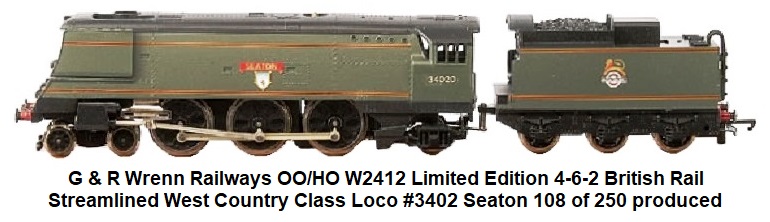
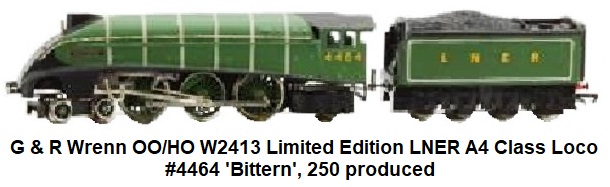
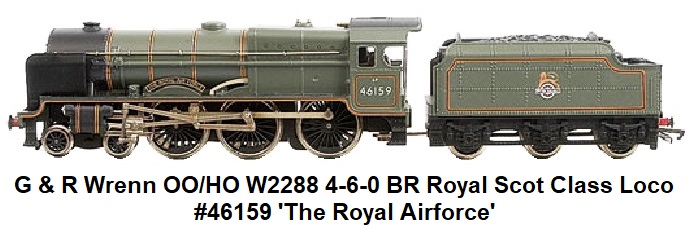
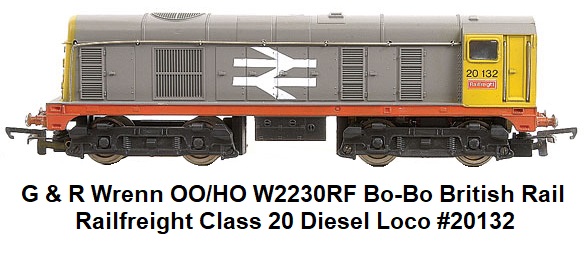
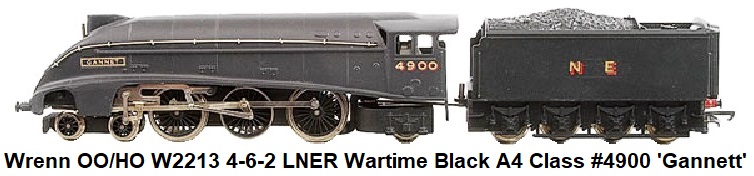
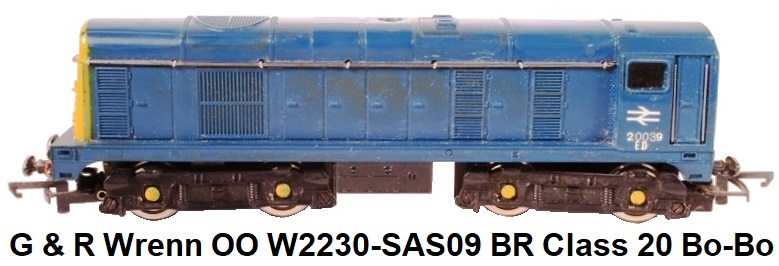 The Wrenn Railways Collectors Club OO wagon range was started by the Wrenn Railways Collectors Club in 1999.
The idea was started to both help raise funds for the club and to give members the opportunity to add new items to either their
layouts or their collections. It was started as a trial but proved very popular and to date 30 wagons were commissioned and released
on an ongoing basis over time. Issues have included 5-Plank Coal Wagons, Salt Vans, Banana Vans, Gunpowder Vans & Ventilated Vans.
The 1st wagon issued was the J. Bly of Barnsley coal wagon. Originally to save cost, the wagons
supplied were simply a body (with a chassis screw) packaged in a Dapol box. This was to allow buyers to provide their own chassis,
be it Dapol, Hornby Dublo or Wrenn to suit their own requirements. To authenticate the limited nature of each issue and to act as
provenance, a pair of limited edition labels were supplied with each wagon. These were designed either to remain as is, within the
body of the box, or used to be applied to each end of the box. Some collectors transferred the wagon, suitably re-homed onto a spare
Wrenn chassis, to a spare Wrenn Railways box. The Limited Label was also designed to cater for this requirement as it was the right
size to apply and cover over the existing box stamp. The limited edition certificate was in the form of a peelable label stating the
name of the wagon, the WRCC number and the limited edition number e.g. 45/100. The first 8 wagons issued by the WRCC used the Wrenn
numbering system but starting with issue 9, they were all numbered as WRCC9 etc.
The Wrenn Railways Collectors Club OO wagon range was started by the Wrenn Railways Collectors Club in 1999.
The idea was started to both help raise funds for the club and to give members the opportunity to add new items to either their
layouts or their collections. It was started as a trial but proved very popular and to date 30 wagons were commissioned and released
on an ongoing basis over time. Issues have included 5-Plank Coal Wagons, Salt Vans, Banana Vans, Gunpowder Vans & Ventilated Vans.
The 1st wagon issued was the J. Bly of Barnsley coal wagon. Originally to save cost, the wagons
supplied were simply a body (with a chassis screw) packaged in a Dapol box. This was to allow buyers to provide their own chassis,
be it Dapol, Hornby Dublo or Wrenn to suit their own requirements. To authenticate the limited nature of each issue and to act as
provenance, a pair of limited edition labels were supplied with each wagon. These were designed either to remain as is, within the
body of the box, or used to be applied to each end of the box. Some collectors transferred the wagon, suitably re-homed onto a spare
Wrenn chassis, to a spare Wrenn Railways box. The Limited Label was also designed to cater for this requirement as it was the right
size to apply and cover over the existing box stamp. The limited edition certificate was in the form of a peelable label stating the
name of the wagon, the WRCC number and the limited edition number e.g. 45/100. The first 8 wagons issued by the WRCC used the Wrenn
numbering system but starting with issue 9, they were all numbered as WRCC9 etc.
G & R Wrenn OO gauge Rolling Stock
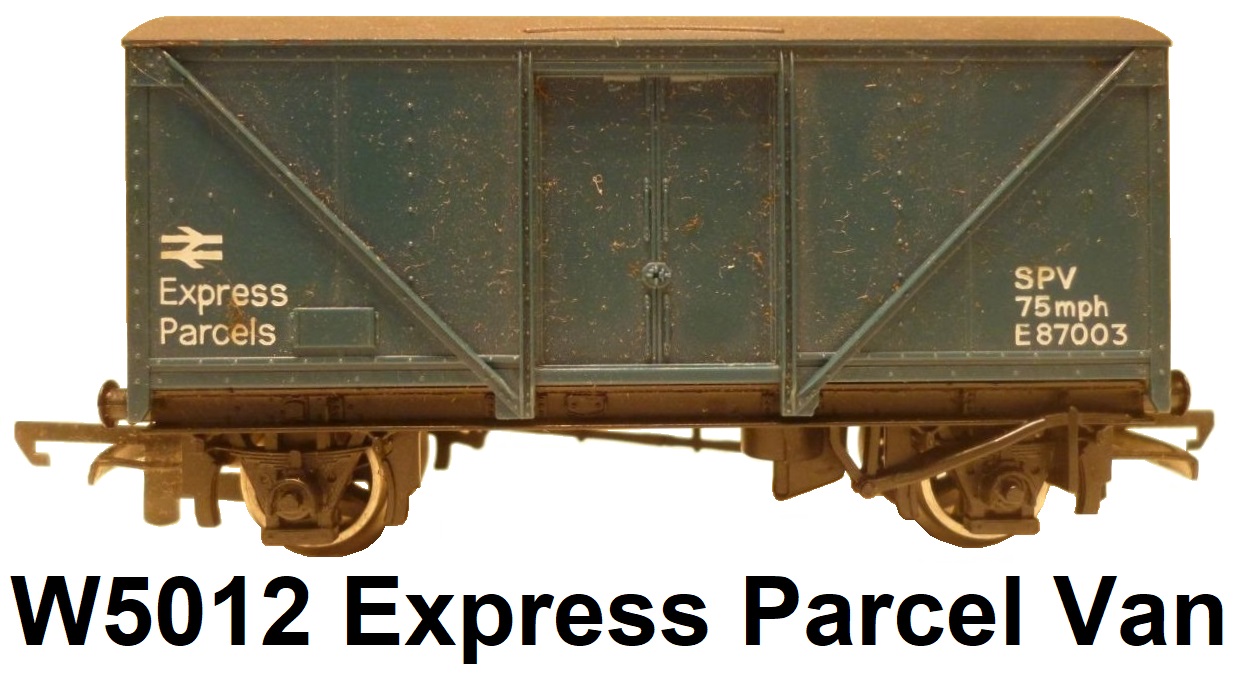
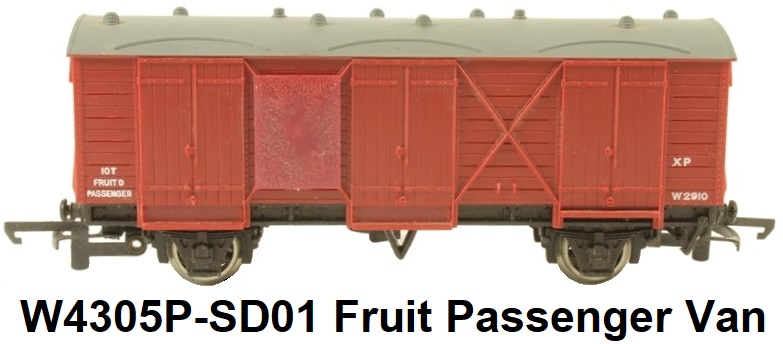
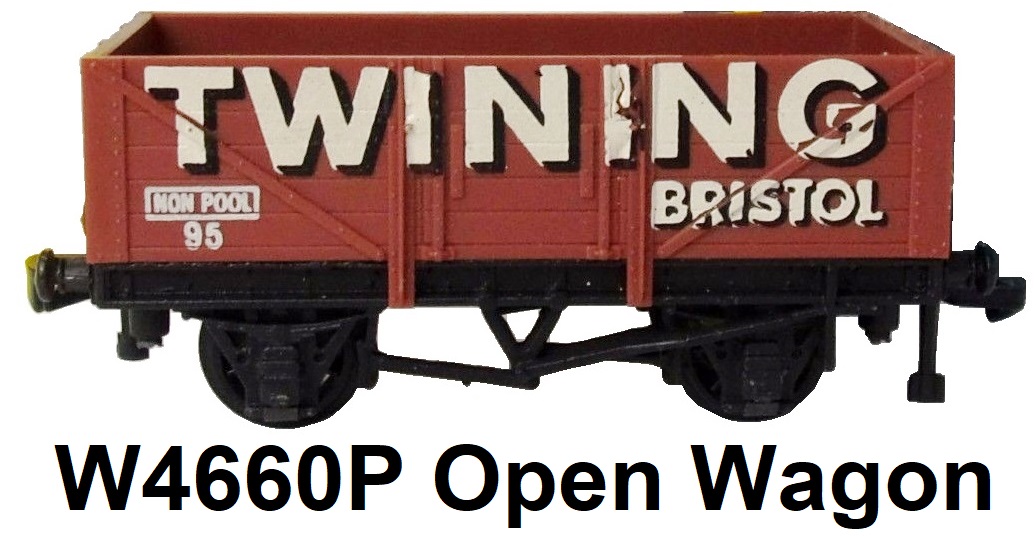
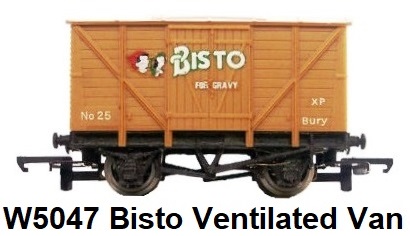
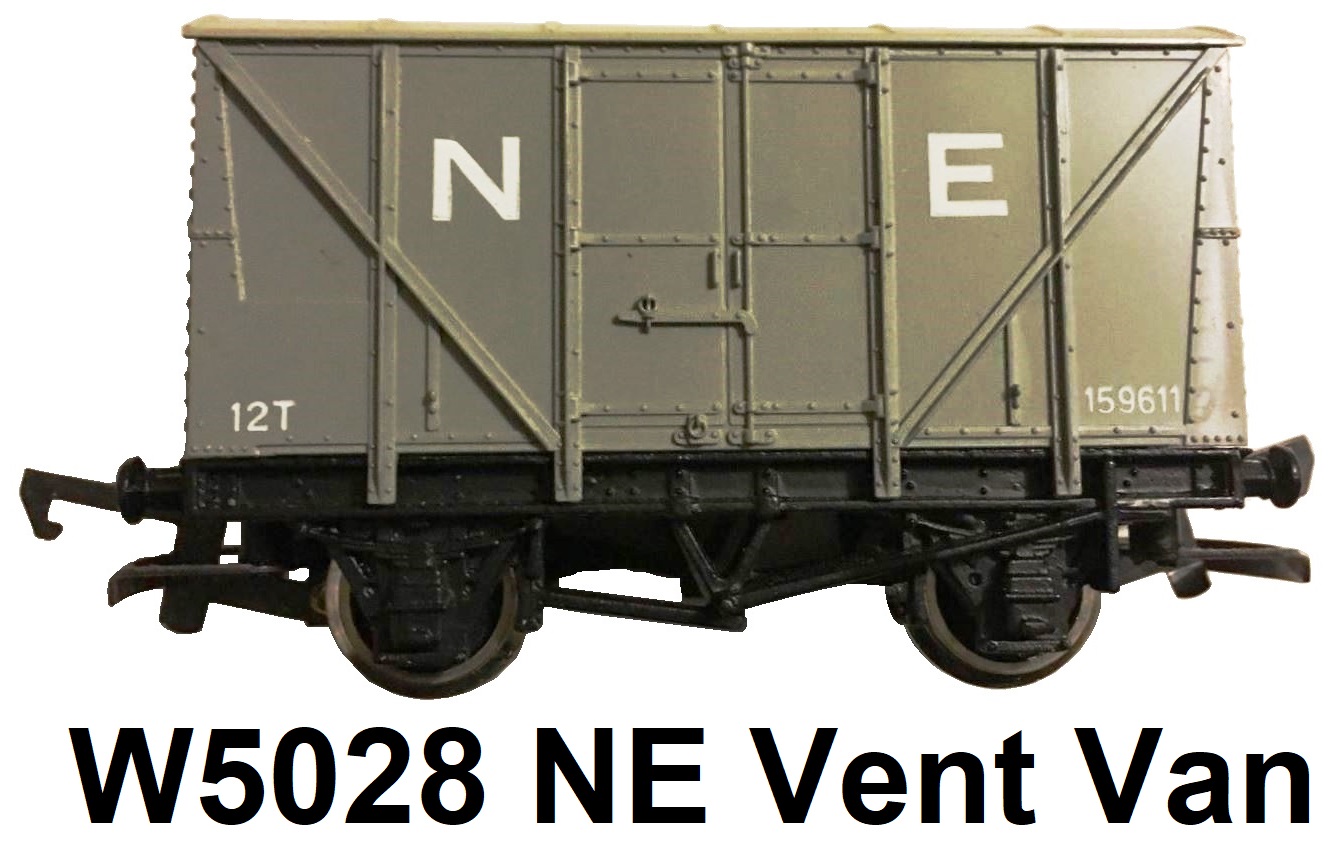
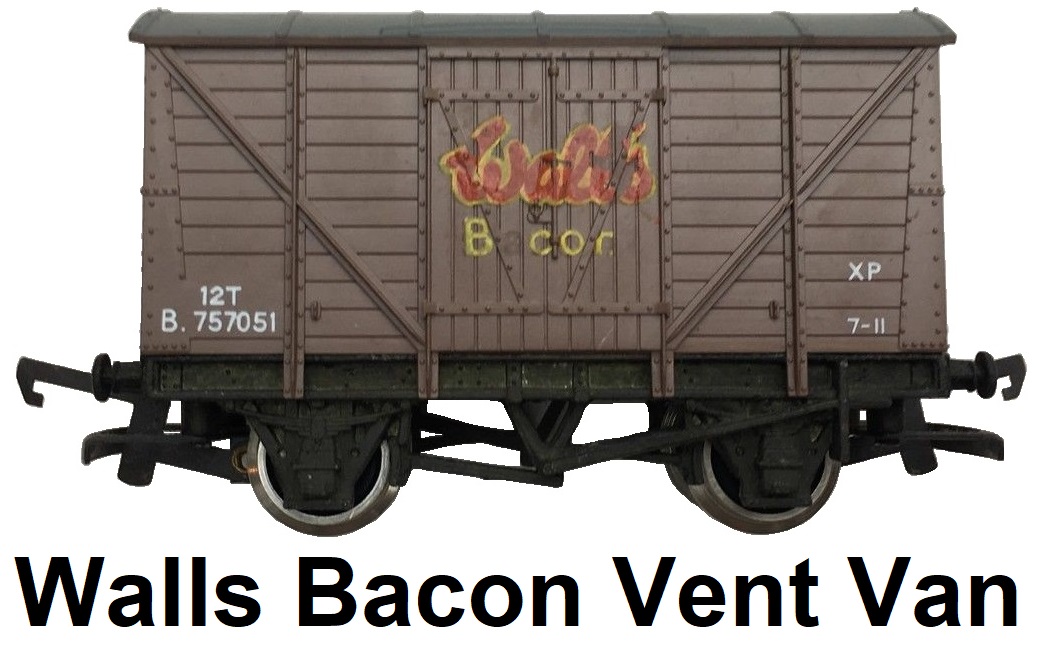
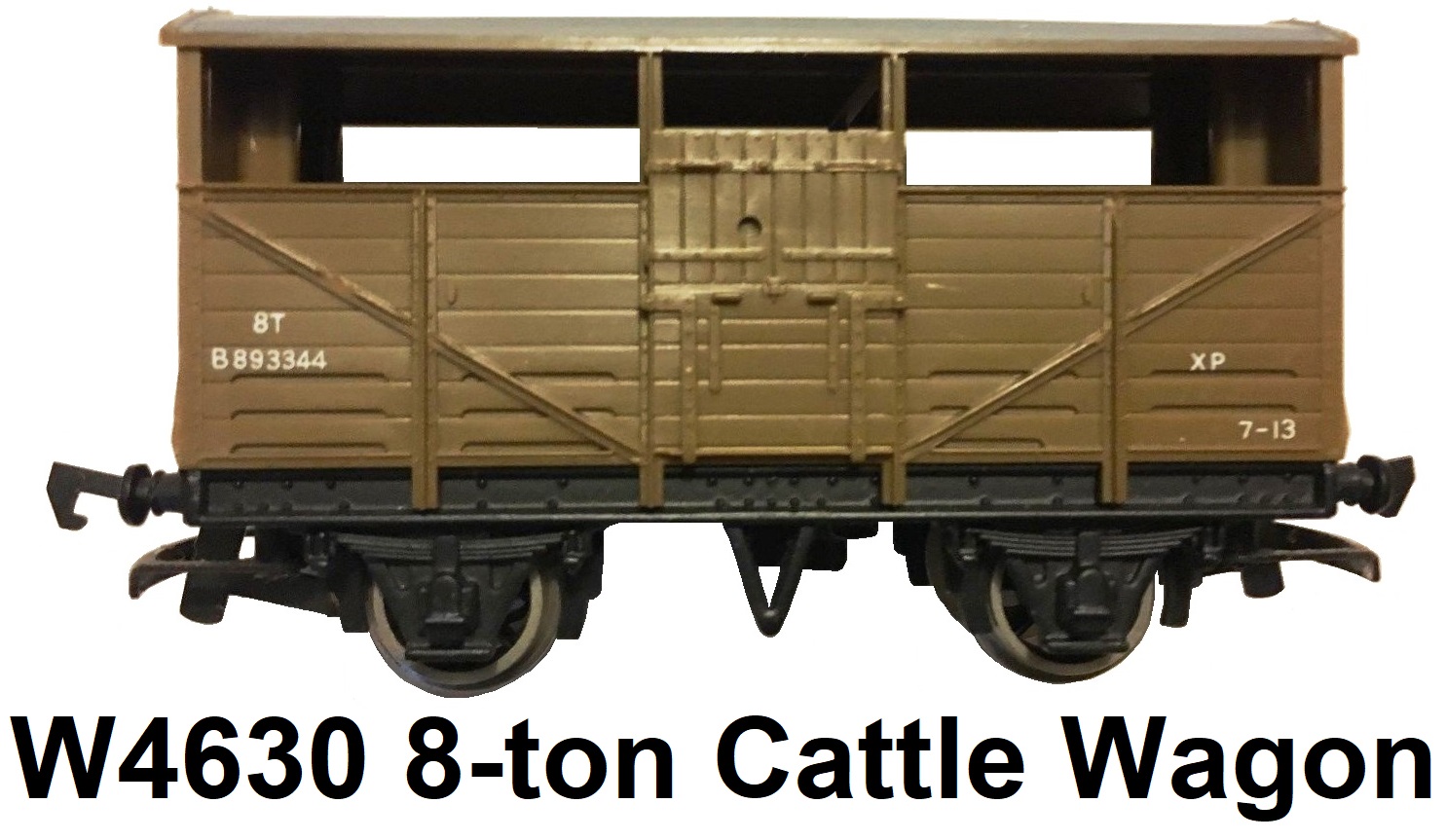
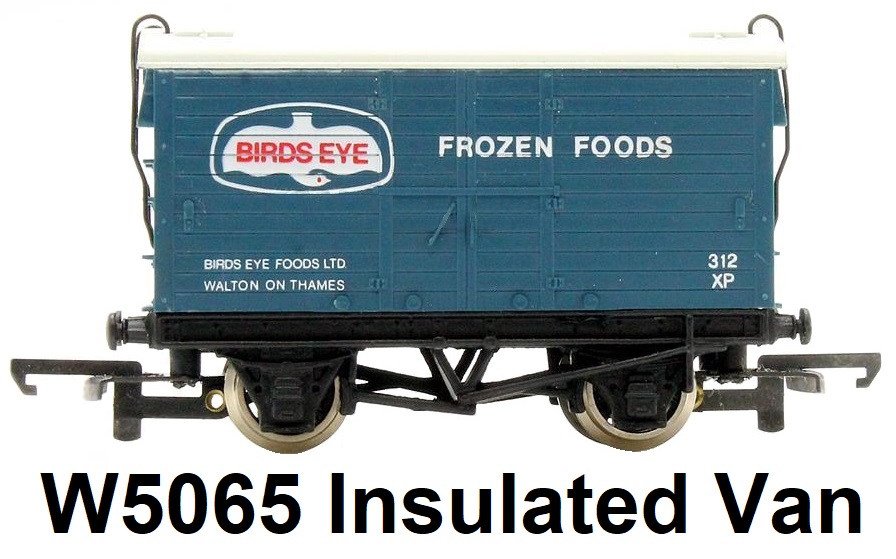
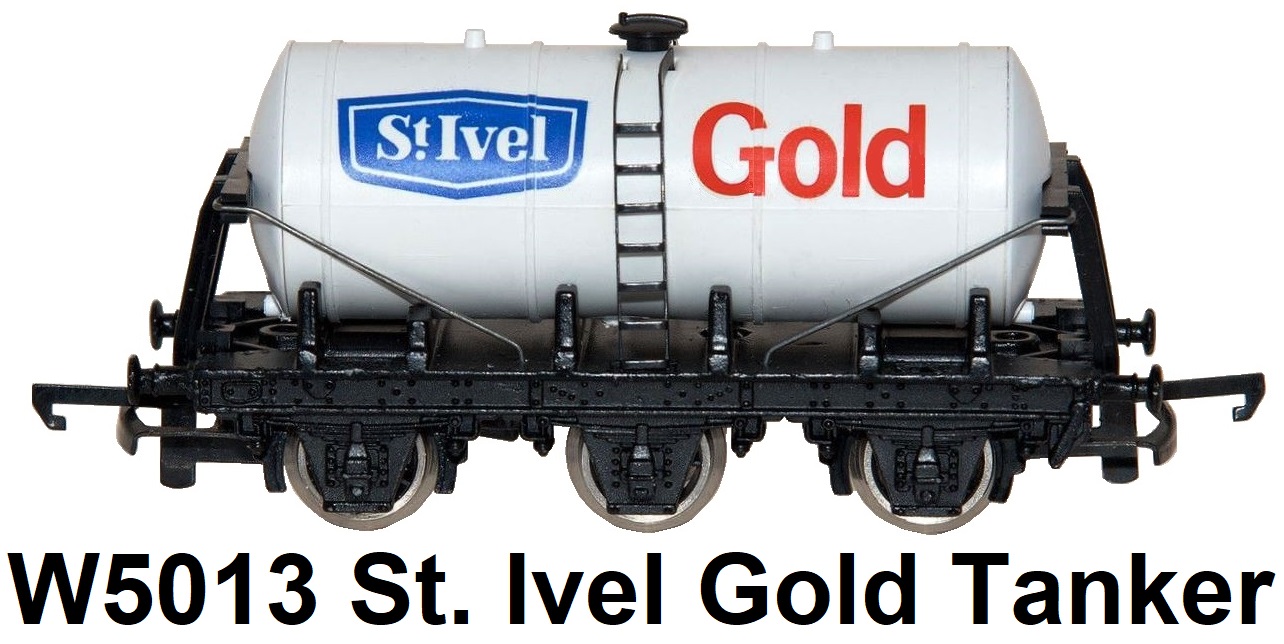
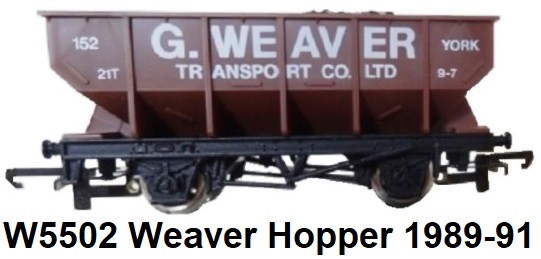
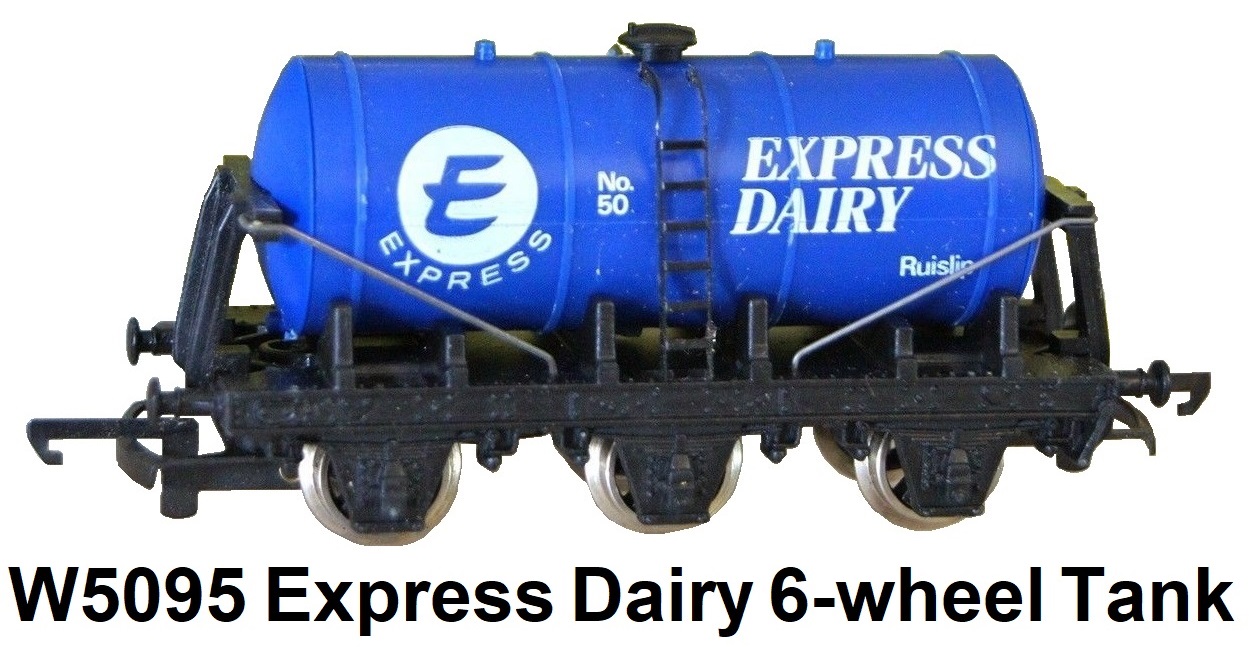
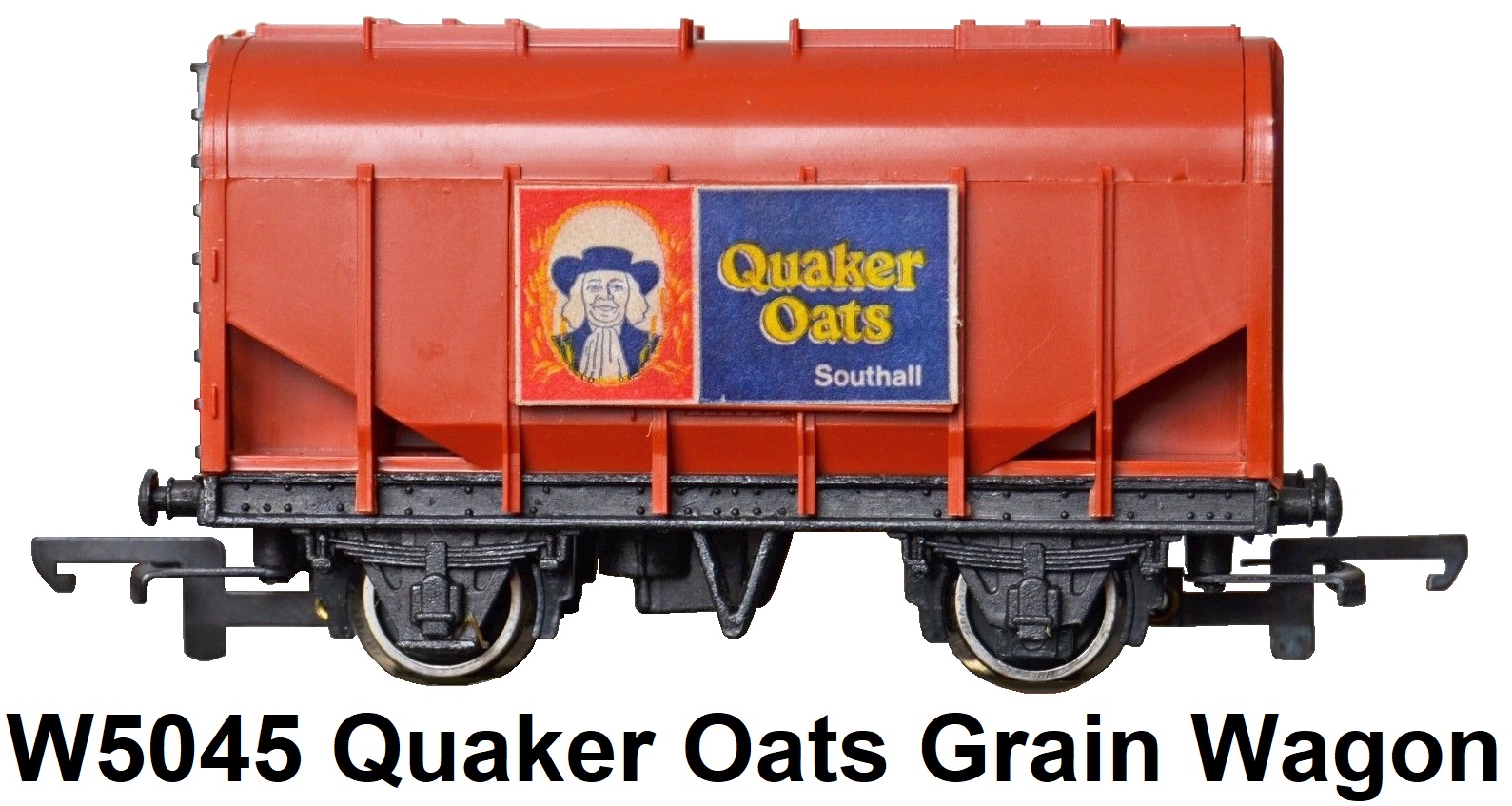
 The WRCC rolling stock was a series of wagons and vans produced for the Wrenn Railways Collectors Club from molds
retained by Dapol Ltd. All of the bodies for the wagons came from the original Hornby Dublo molds, which were taken over by G & R Wrenn
in 1972, some of them having been refaced and therefore improved by Dapol Ltd. All the wagons were produced in limited runs (normally of 100).
The later issue bodies were all mounted on a Dapol chassis with metal wheels and packaged in a Dapol box. Most of the earlier wagons such as
the J. Bly Coal Wagon, the Geest Banana Vans and the Salt Vans simply used existing Wrenn printing plates and were printed on a different
liveried body. For example: G & R Wrenn of Basildon produced a J. Bly Coal Wagon in dark green livery whereas the WRCC version was produced
in black. Some of the wagons/vans used new printing plates, such as the Standard Fireworks Van produced in the late 1960's by G & R Wrenn of
Basildon (the Wrenn original used transfers). Others, such as the Brocks Fireworks Van, the Camerons Brewery Van and the Rebellion Beer Company
Van are completely new issues and were never sold by Wrenn.
The WRCC rolling stock was a series of wagons and vans produced for the Wrenn Railways Collectors Club from molds
retained by Dapol Ltd. All of the bodies for the wagons came from the original Hornby Dublo molds, which were taken over by G & R Wrenn
in 1972, some of them having been refaced and therefore improved by Dapol Ltd. All the wagons were produced in limited runs (normally of 100).
The later issue bodies were all mounted on a Dapol chassis with metal wheels and packaged in a Dapol box. Most of the earlier wagons such as
the J. Bly Coal Wagon, the Geest Banana Vans and the Salt Vans simply used existing Wrenn printing plates and were printed on a different
liveried body. For example: G & R Wrenn of Basildon produced a J. Bly Coal Wagon in dark green livery whereas the WRCC version was produced
in black. Some of the wagons/vans used new printing plates, such as the Standard Fireworks Van produced in the late 1960's by G & R Wrenn of
Basildon (the Wrenn original used transfers). Others, such as the Brocks Fireworks Van, the Camerons Brewery Van and the Rebellion Beer Company
Van are completely new issues and were never sold by Wrenn.
 In November 2001, three avid Wrenn collectors, including Maurice Gunter, came together and bought the G & R
Wrenn Company from Dapol Ltd. They acquired the company name, the registered trademarks, most of the
original tools and presses (with the exception of the wagon tools that had been absorbed into
the Dapol production lines and have been used to make the commemorative special releases for the Wrenn collectors club.)
and all of the remaining parts and spares. There was never any
intention on the part of the new owners to re-open a fully functional production line factory for Wrenn products. The purchase
was an attempt to preserve the identity of the original company and to prevent any
other prospective purchaser from acquiring and moving it, and production, abroad.
In November 2001, three avid Wrenn collectors, including Maurice Gunter, came together and bought the G & R
Wrenn Company from Dapol Ltd. They acquired the company name, the registered trademarks, most of the
original tools and presses (with the exception of the wagon tools that had been absorbed into
the Dapol production lines and have been used to make the commemorative special releases for the Wrenn collectors club.)
and all of the remaining parts and spares. There was never any
intention on the part of the new owners to re-open a fully functional production line factory for Wrenn products. The purchase
was an attempt to preserve the identity of the original company and to prevent any
other prospective purchaser from acquiring and moving it, and production, abroad.
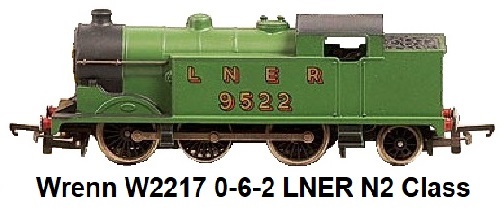 Under the new ownership the company produced limited edition runs of new wagons, Pullman coaches, 6 and 4 wheel
tankers, a Lowmac Wagon with Racing Car Load, a Guards Van, mineral wagons, coal wagons, ventilated vans,
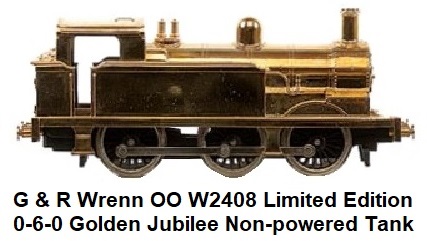
passenger fruit vans, a horse wagon, a hopper, and a Golden Jubilee wagon to celebrate 50 years
of production in OO/HO gauge. They also produced R1 Loco bodies, finished 0-8 Shunter Bodies, and finished
Class 20 Bo-Bo bodies in OO/HO gauge. A book, entitled "The Story of Wrenn - From Binns Road to Basildon" covering
the history of the company and the production of all OO/HO gauge model railway engines, wagons and coaches between
1966 and 2003, written by Maurice Gunter, was published by Irwell Press in early 2004. The book contained full catalogue
number details of all Wrenn products together with estimates of prices for ‘Mint’ examples. In October 2007 Wrenn
celebrated its Golden Jubilee - 50 years since the formation of the Limited Company. The Jubilee was marked with a special
event held at Stafford Showground in conjunction with Barry Potter Toy fairs, and a Golden Jubilee wagon (W5515) was launched
along with the Official Wrenn Collectors Club.
Under the new ownership the company produced limited edition runs of new wagons, Pullman coaches, 6 and 4 wheel
tankers, a Lowmac Wagon with Racing Car Load, a Guards Van, mineral wagons, coal wagons, ventilated vans,
passenger fruit vans, a horse wagon, a hopper, and a Golden Jubilee wagon to celebrate 50 years
of production in OO/HO gauge. They also produced R1 Loco bodies, finished 0-8 Shunter Bodies, and finished
Class 20 Bo-Bo bodies in OO/HO gauge. A book, entitled "The Story of Wrenn - From Binns Road to Basildon" covering
the history of the company and the production of all OO/HO gauge model railway engines, wagons and coaches between
1966 and 2003, written by Maurice Gunter, was published by Irwell Press in early 2004. The book contained full catalogue
number details of all Wrenn products together with estimates of prices for ‘Mint’ examples. In October 2007 Wrenn
celebrated its Golden Jubilee - 50 years since the formation of the Limited Company. The Jubilee was marked with a special
event held at Stafford Showground in conjunction with Barry Potter Toy fairs, and a Golden Jubilee wagon (W5515) was launched
along with the Official Wrenn Collectors Club.
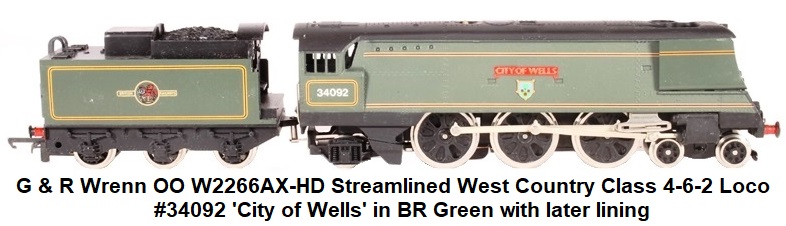
 In 2009 Wrenn ran a new 'hot metal' production run of the most popular Wrenn loco body - the Bulleid 'Spam Can'.
The company ceased trading completely in October 2015. Maurice Gunter followed up with a new series of publications on Wrenn starting in 2011 with part 1.
The new issue contained details of box packaging, company production periods, the history of the company and a collectors
list of catalogue numbers. Part 2, published in December 2011 contained details of everything to do with Wrenn Locos, class by class
rather than by time period. Part 3 of the Series covered everything to do with Wrenn Wagons in a similar way and was published in April
2014. Maurice was working on Part 4 which will cover Wrenn coaches, Brighton Belles and train sets and should be ready in 2017.
In 2009 Wrenn ran a new 'hot metal' production run of the most popular Wrenn loco body - the Bulleid 'Spam Can'.
The company ceased trading completely in October 2015. Maurice Gunter followed up with a new series of publications on Wrenn starting in 2011 with part 1.
The new issue contained details of box packaging, company production periods, the history of the company and a collectors
list of catalogue numbers. Part 2, published in December 2011 contained details of everything to do with Wrenn Locos, class by class
rather than by time period. Part 3 of the Series covered everything to do with Wrenn Wagons in a similar way and was published in April
2014. Maurice was working on Part 4 which will cover Wrenn coaches, Brighton Belles and train sets and should be ready in 2017.
Due to the lower production numbers of Wrenn Railways products they have become very rare today. Some of the rarest locomotives are the
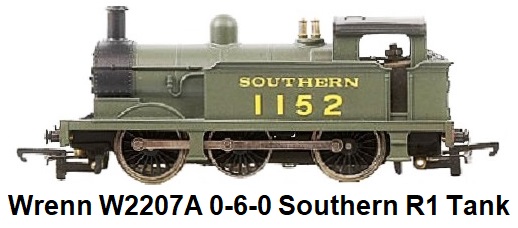
Khaki colored locomotives produced by Wrenn, Basildon between 1984-5, the Wrenn W2207 R1 0-6-0 Southern Region tank locomotive, the W2264 Duchess of Hamilton
in BR Maroon, and the later-produced W2266 'Plymouth' Spam Can Bullied, West Country Class Locomotive in Southern Region Green.
The Wrenn W2282 A4 Class Locomotive 'Sparrow Hawk' in North Eastern Region Wartime Black running number 4463, is one of the most difficult to find today for
collectors and runners alike. Only 98 were produced by Wrenn, Basildon between 1989-92 when Basildon closed.