 Mantua (pronounced Man-chew-ah) Metal Products was a metalworks business
founded in 1926 by John Tyler and family. In the 1930's, Mantua was one of the leaders in the development and promotion of
the model railroading HO scale in the United States. In the 1950's, Mantua pioneered ready-to-run HO-scale model railroad
kits under the Tyco (for Tyler Company) brand. Many early Tyco and Mantua die-cast products, primarily the steam locomotives,
have become valuable collector's items. By the late 20th Century the company became the 3rd largest toy manufacturer in
the United States producing over a 1000 different toys.
Mantua (pronounced Man-chew-ah) Metal Products was a metalworks business
founded in 1926 by John Tyler and family. In the 1930's, Mantua was one of the leaders in the development and promotion of
the model railroading HO scale in the United States. In the 1950's, Mantua pioneered ready-to-run HO-scale model railroad
kits under the Tyco (for Tyler Company) brand. Many early Tyco and Mantua die-cast products, primarily the steam locomotives,
have become valuable collector's items. By the late 20th Century the company became the 3rd largest toy manufacturer in
the United States producing over a 1000 different toys.
 John Tyler had been interested in model railroading since his boyhood in England where the hobby developed much earlier than
in the United States. John was an electrician by trade and emigrated to the US from England in 1925. Tyler and his friend
James P. Thomas formed a partnership with the purpose of manufacturing wood and
metal sailboats in their Mantua, New Jersey shop on Third Ave. Thomas had been trained as a tool and die maker at the Socony
Vacuum Oil Company (Mobil) in Paulsboro, NJ before he left to devote his attention to creating toys and models. He had
started a company called Triple-T Toys in 1925 located in Woodbury, NJ. In 1927 the partners
had built a 3' long model of a cabin cruiser they jointly owned. The unique aspect of this sheet metal and brass model was
a small electric motor designed by Jim Thomas that powered the boat using dry cell batteries. Fellow boat owners admired the
electrically powered model and encouraged them to build more boats to sell. With all this encouragement, the partners decided
to produce the battery-powered boat in quantity. The model boat proved to be popular but as the orders for the boats
increased, finding enough good quality motors became a big problem. To solve this problem the partners decided to design
their own motor. The result was a dandy - being both rugged and inexpensive to build.
John Tyler had been interested in model railroading since his boyhood in England where the hobby developed much earlier than
in the United States. John was an electrician by trade and emigrated to the US from England in 1925. Tyler and his friend
James P. Thomas formed a partnership with the purpose of manufacturing wood and
metal sailboats in their Mantua, New Jersey shop on Third Ave. Thomas had been trained as a tool and die maker at the Socony
Vacuum Oil Company (Mobil) in Paulsboro, NJ before he left to devote his attention to creating toys and models. He had
started a company called Triple-T Toys in 1925 located in Woodbury, NJ. In 1927 the partners
had built a 3' long model of a cabin cruiser they jointly owned. The unique aspect of this sheet metal and brass model was
a small electric motor designed by Jim Thomas that powered the boat using dry cell batteries. Fellow boat owners admired the
electrically powered model and encouraged them to build more boats to sell. With all this encouragement, the partners decided
to produce the battery-powered boat in quantity. The model boat proved to be popular but as the orders for the boats
increased, finding enough good quality motors became a big problem. To solve this problem the partners decided to design
their own motor. The result was a dandy - being both rugged and inexpensive to build.
 The model boat and the new motor helped launch Triple-T Electrical Toys manufactured by the Mantua
Toy Co. The 'Triple-T' stood for Thomas, Tyler, and Tyler. The second Tyler was John Tyler's wife (James
Thomas' sister Pauline) who was also active in the business. Mantua's first project was to produce Triple-T Electrical
Toys of Distinction. The Woodbury Heights, New Jersey Mantua factory began
making items for the first time in 1933. With the new 6-volt motor, the Triple-T line was expanded to
include accessory items youngsters could drive with the motors. These Items included a miniature drill press,
grinding wheel, and trip hammer. The partners continued to work at improving the motor. The result of this was
the Number 100 motor, offered either open or enclosed. The motor was quite large, measuring 2¾ x 2½ x 1¾
inches.
The model boat and the new motor helped launch Triple-T Electrical Toys manufactured by the Mantua
Toy Co. The 'Triple-T' stood for Thomas, Tyler, and Tyler. The second Tyler was John Tyler's wife (James
Thomas' sister Pauline) who was also active in the business. Mantua's first project was to produce Triple-T Electrical
Toys of Distinction. The Woodbury Heights, New Jersey Mantua factory began
making items for the first time in 1933. With the new 6-volt motor, the Triple-T line was expanded to
include accessory items youngsters could drive with the motors. These Items included a miniature drill press,
grinding wheel, and trip hammer. The partners continued to work at improving the motor. The result of this was
the Number 100 motor, offered either open or enclosed. The motor was quite large, measuring 2¾ x 2½ x 1¾
inches.
 In 1932, a friend from England showed John Tyler a British-made HO scale locomotive.
He informed John that British model railroaders were going crazy over these small-scale model trains made
by the likes of Bassett-Lowke. However, there was a problem. The
current motors available were only powerful enough to haul short trains. This started John and Jim thinking and they
immediately began experimenting with a motor for HO scale engines. It would be some time before an actual product
was announced.
In 1932, a friend from England showed John Tyler a British-made HO scale locomotive.
He informed John that British model railroaders were going crazy over these small-scale model trains made
by the likes of Bassett-Lowke. However, there was a problem. The
current motors available were only powerful enough to haul short trains. This started John and Jim thinking and they
immediately began experimenting with a motor for HO scale engines. It would be some time before an actual product
was announced.
 Mantua's motor development led to a motor small enough for use in 'OO' scale locomotives. The team had been
aware of the growing interest in 'OO' and HO scales in England and the US so they placed a small ad for this motor,
dubbed the 'Midget Motor', in the March 1930 issue of The Modelmaker magazine. The number of orders received
was a pleasant surprise so they continued to run the ad. The Midget motor measured only
1½ x 1¼ x 15⁄16
inches. Soon a second small motor was added to the line - The Midget
Senior. It was more powerful and only ¼ inch longer. In a June 1931 article on building an 'OO' scale locomotive
that appeared in The Modelmaker magazine, F. D. Grimke wrote, "The only motor worth considering is the one
manufactured by Mantua Toy Co. Either the Midget or Midget Senior can be used."
Mantua's motor development led to a motor small enough for use in 'OO' scale locomotives. The team had been
aware of the growing interest in 'OO' and HO scales in England and the US so they placed a small ad for this motor,
dubbed the 'Midget Motor', in the March 1930 issue of The Modelmaker magazine. The number of orders received
was a pleasant surprise so they continued to run the ad. The Midget motor measured only
1½ x 1¼ x 15⁄16
inches. Soon a second small motor was added to the line - The Midget
Senior. It was more powerful and only ¼ inch longer. In a June 1931 article on building an 'OO' scale locomotive
that appeared in The Modelmaker magazine, F. D. Grimke wrote, "The only motor worth considering is the one
manufactured by Mantua Toy Co. Either the Midget or Midget Senior can be used."
Sales of Midget motors to the 'OO' scale model railroad market continued to grow and Tyler and Thomas
directed more effort towards products for this market. Early American 'OO' gauge models built by Howard Winther employed
Mantua electric motors. In 1933, increased business prompted a move from
the town of Mantua to a new, small shop the partners built in Woodbury Heights. By 1935, when Mantua's
first ad appeared in Model Railroader, they had an additional new line of motors for 'O', and larger scale
locomotives called 'Right of Way'. The July 1935 ad was directed at model supply houses. Mantua stated they
had a complete machine shop and were interested in manufacturing model railroad parts in all scales. They also
announced that a permanent magnet DC motor for HO scale would be ready in the fall. Up to this time, all
of Mantua's motors were the universal type with a field winding that could be operated from either AC or DC.
The announcement proved to be a little optimistic. It was not until spring of 1936 that the new DC motor was
in production.
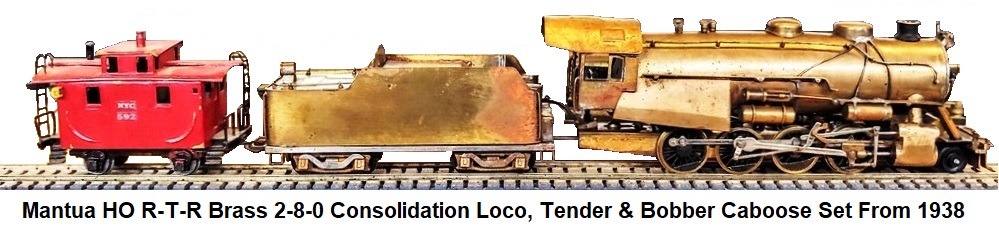
For most of 1937 it looked like the folks at Mantua had finally run out of steam. Ads for their mechanisms
indicated they planned to offer a complete locomotive later on but no product was introduced. Finally, in
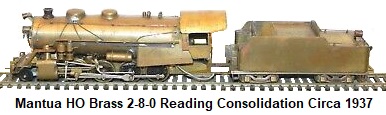
December 1937, a full page ad appeared in Model Railroader announcing their new Reading 2-8-0 Consolidation built
for two or three rail operation. This was Mantua's first full-page ad. The banner read "First Time Ever Offered".
The Consolidation was offered ready-to-run for $49.50 or in kit form for $28.50. To encourage beginners, the company
announced a complete ready-to-run freight train consisting of the Consolidation, two gondolas, and a caboose. A track kit with
21 feet of track was included. The special Christmas price was $59.50. The HO scale model
trains were made of die-cast metal, and became very popular. All this was taking place at the same time that
Lionel was introducing its 'O' scale 700E scale Hudson locomotive.
Mantua was on its way to becoming the leading hobbyist brand in the HO gauge. The prices for Mantua's cars and locomotives
must have seemed high to the average working man as the average weekly pay for a railroader in 1937 was $34.15. Mantua and
Varney would go head to head promoting the new HO gauge. A year later, in 1938,
A.C. Gilbert/American Flyer would introduce their first HO offerings, and now the force of these 3
entities would push HO ahead of 'O' gauge as the preferred gauge in the 1941 Model Railroader poll.
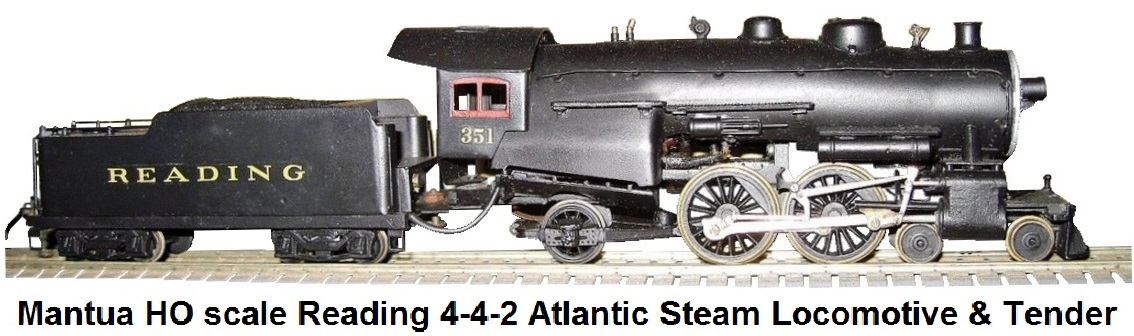 In 1938 Mantua introduced a much more affordable kit for a Reading Camelback 4-4-2 Atlantic switcher - only $15. Soon
the Reading Atlantic with a Belpaire firebox was added. It was priced at $37.50 ready-to-run or $25 for the kit. Also
introduced in 1938 was Mantua's patented HO 'Ready-Laid Track', available in straight and flexible 18 inch sections.
By the end of 1938, the line included locomotives, cars, couplers, and track - everything needed to get started
in HO scale. The word 'Toy' was dropped from the company name and it became Mantua Metal Products Co. The Pre-war era
also saw Mantua release a sheet metal Reading 4-6-2 Pacific and a sheet metal 0-4-0 Mighty Mite Switcher (1949). Mantua
not only helped to pioneer the introduction of HO gauge trains in the United States, but also introduced several innovations
to the hobby in the 1930's that were later adopted as standards. These included developing die-cast drivers with brass
rims insulated with sheet fibre, design of automatic couplers, creation of flexible 'Ready-Laid' track products,
bridge kit offerings, switches and accessories. Other innovations from Jim Thomas included the use of Scalite to
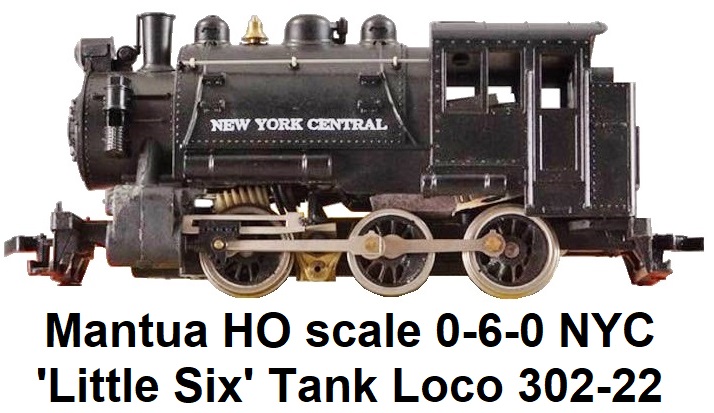
provide the wiring setup and bulbs for the Mantua 0-4-0/0-6-0 Booster (1948-52), Little Six, Mikado and Pacific
locomotives.
In 1938 Mantua introduced a much more affordable kit for a Reading Camelback 4-4-2 Atlantic switcher - only $15. Soon
the Reading Atlantic with a Belpaire firebox was added. It was priced at $37.50 ready-to-run or $25 for the kit. Also
introduced in 1938 was Mantua's patented HO 'Ready-Laid Track', available in straight and flexible 18 inch sections.
By the end of 1938, the line included locomotives, cars, couplers, and track - everything needed to get started
in HO scale. The word 'Toy' was dropped from the company name and it became Mantua Metal Products Co. The Pre-war era
also saw Mantua release a sheet metal Reading 4-6-2 Pacific and a sheet metal 0-4-0 Mighty Mite Switcher (1949). Mantua
not only helped to pioneer the introduction of HO gauge trains in the United States, but also introduced several innovations
to the hobby in the 1930's that were later adopted as standards. These included developing die-cast drivers with brass
rims insulated with sheet fibre, design of automatic couplers, creation of flexible 'Ready-Laid' track products,
bridge kit offerings, switches and accessories. Other innovations from Jim Thomas included the use of Scalite to
provide the wiring setup and bulbs for the Mantua 0-4-0/0-6-0 Booster (1948-52), Little Six, Mikado and Pacific
locomotives.
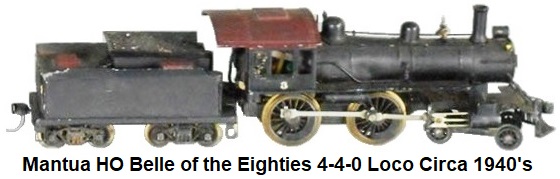
 Up until 1940 Tyler and Thomas had operated the business as partners on a handshake agreement. A new
formal arrangement defined specific areas of responsibilities with Jim Thomas handling all production, tool and product
design and John Tyler managing the business and financial aspects. In the early 1940's Mantua introduced the first
HO all-metal passenger and freight car kits and a brass kit for the old-time Belle of the Eighties 4-4-0 HO locomotive. A
Roundhouse Goat and a Reading Pacific were in development phase but production had to be delayed because of the impending
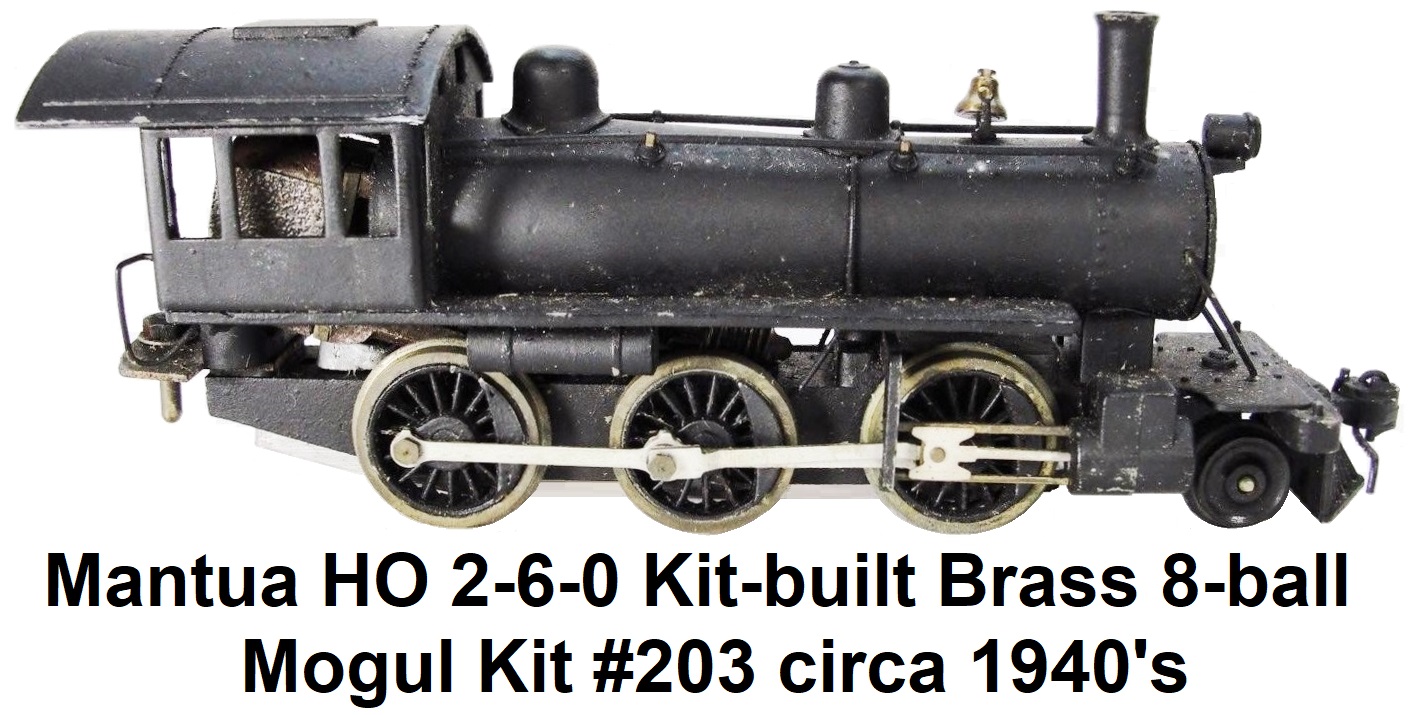
World War. 1941 saw the introduction of the Mantua 8-Ball Mogul 2-6-0 loco sheet metal kit.
Up until 1940 Tyler and Thomas had operated the business as partners on a handshake agreement. A new
formal arrangement defined specific areas of responsibilities with Jim Thomas handling all production, tool and product
design and John Tyler managing the business and financial aspects. In the early 1940's Mantua introduced the first
HO all-metal passenger and freight car kits and a brass kit for the old-time Belle of the Eighties 4-4-0 HO locomotive. A
Roundhouse Goat and a Reading Pacific were in development phase but production had to be delayed because of the impending
World War. 1941 saw the introduction of the Mantua 8-Ball Mogul 2-6-0 loco sheet metal kit.
 Mantua also produced some 'OO' gauge trains in the pre-war period. They sold a version of their
4-4-0 Belle of the Eighties regauged for 'OO' along with their matching stamped brass old time passenger cars. These kits were
simply HO cars with the trucks regauged for 'OO'. The 2-6-0 loco was also regauged for 'OO' and Mantua marketed tin printed
box car sides and sold a line of 'OO' flex track and turnouts. Unfortunately, Mantua's 'OO' track used HO sized rail (code
100) and the deep flanges on some 'OO' equipment would strike the spike heads. Mantua also marketed their HO loop-and-hook
couplers for 'OO' as well.
Mantua also produced some 'OO' gauge trains in the pre-war period. They sold a version of their
4-4-0 Belle of the Eighties regauged for 'OO' along with their matching stamped brass old time passenger cars. These kits were
simply HO cars with the trucks regauged for 'OO'. The 2-6-0 loco was also regauged for 'OO' and Mantua marketed tin printed
box car sides and sold a line of 'OO' flex track and turnouts. Unfortunately, Mantua's 'OO' track used HO sized rail (code
100) and the deep flanges on some 'OO' equipment would strike the spike heads. Mantua also marketed their HO loop-and-hook
couplers for 'OO' as well.
During the war years many companies discontinued their normal products to make war materials. Mantua was
one of these companies. From 1942 through 1945, production of Mantua model railroad products was suspended.
Mantua's manufacturing facility was used to make precision measuring and mapping equipment for the war effort.
Mantua's machines were operated twenty-four hours a day by three shifts of workers to turn out stainless steel
scale map-reading rules and protractors for the Army and Navy and beam compasses for the Army Air Corps.
Although production of model railroad products was suspended, Mantua continued to stay in touch with the
public by running ads in Model Railroader. The June 1945 back cover of the Model Railroader featured a black and
white photo of the Bell of the Eighties and a 'Mantua Family Album' graphic, along with text "...Remember when you
modelled the Belle of the Eighties? It won't be long now before you can be back on your model pike!" In 1945,
Mantua received the Army-Navy "E" Flag award for its war-time production efforts. Something they were quite proud of.
 After the War, Mantua began the task of converting their plant back to producing model railroad products for hobbyists.
This was not an easy task but by mid-1946 Mantua announced that it was back in production. An all-metal
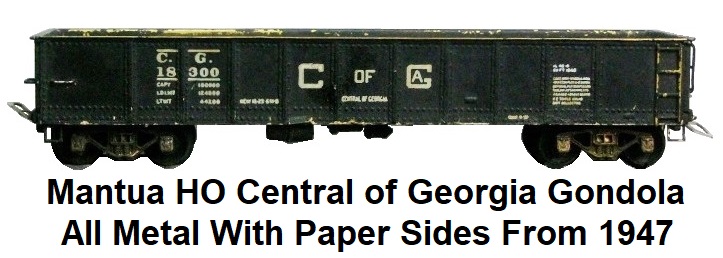
HO gauge model of a 50 ton, 42' gondola was the first new Mantua offering of the post-war era. Next came the Belle of
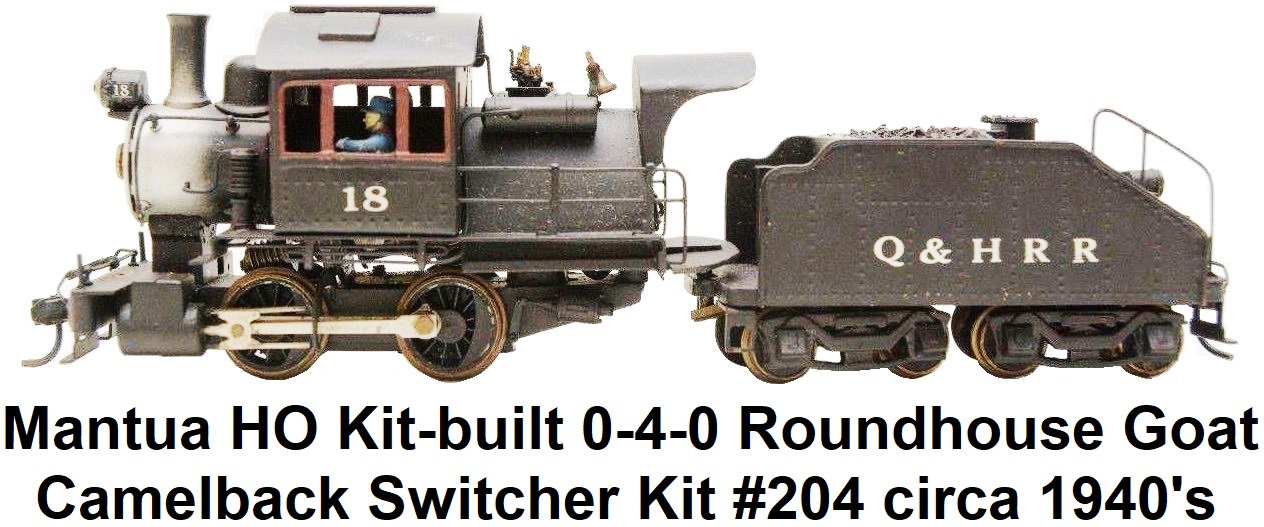
the Eighties and the Roundhouse Goat locomotives promised before the war. Mantua issued a 52 page catalog in 1947, the first
since 1942. In the catalogue, John Tyler wrote that the war-time experience at Mantua producing precision instruments
had given them greater skills to facilitate improving the model trains. The entire line was brought back with some additions
and changes. The biggest change was a new motor voltage. 12 Volts DC had become the standard voltage instead of 6 volts. In an
ironic twist, the 12V, 6-pole motors were the only part of the line not made by Mantua. The company that got its start making
motors was now buying them from Pittman. Later Mantua went back to making its own motors. During
the 1930's and 1940's Mantua was producing the die-cast Zamak parts for Pittman's line of 'O' gauge Trolley cars.
After the War, Mantua began the task of converting their plant back to producing model railroad products for hobbyists.
This was not an easy task but by mid-1946 Mantua announced that it was back in production. An all-metal
HO gauge model of a 50 ton, 42' gondola was the first new Mantua offering of the post-war era. Next came the Belle of
the Eighties and the Roundhouse Goat locomotives promised before the war. Mantua issued a 52 page catalog in 1947, the first
since 1942. In the catalogue, John Tyler wrote that the war-time experience at Mantua producing precision instruments
had given them greater skills to facilitate improving the model trains. The entire line was brought back with some additions
and changes. The biggest change was a new motor voltage. 12 Volts DC had become the standard voltage instead of 6 volts. In an
ironic twist, the 12V, 6-pole motors were the only part of the line not made by Mantua. The company that got its start making
motors was now buying them from Pittman. Later Mantua went back to making its own motors. During
the 1930's and 1940's Mantua was producing the die-cast Zamak parts for Pittman's line of 'O' gauge Trolley cars.
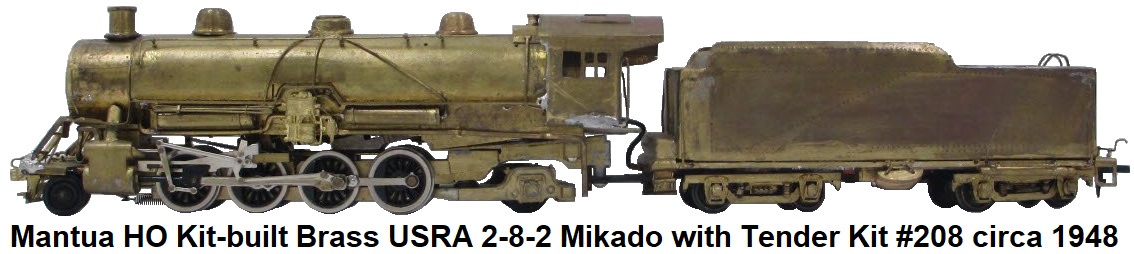
The 1948 Mantua catalogue announced the 'Big 2-8-2 Mikado' locomotive kit. The complete kit with tender
was priced at $29.95. Or the hobbyist could acquire any Mantua locomotive kit by itself, and choose any of the 5
separate tender kits offered. The Mikado featured the Pittman DC71 motor, a silent flexible drive, insulated automatic rear
coupler, a heavy trailer truck and brass axle bearings. The boiler, cab and frame were all die-cast. The ad copy stated that
the Mikado was simple to assemble, and that no drilling, soldering or hole tapping was required. The loco ran on 18" radius
track.
 In the ensuing years, changes taking place at Mantua included the conversion of brass and sheet metal parts over to zinc
alloy die-cast. Updated locomotive kits for the 8-Ball Mogul and Belle of the Eighties now had a frame, tender, and cab roof
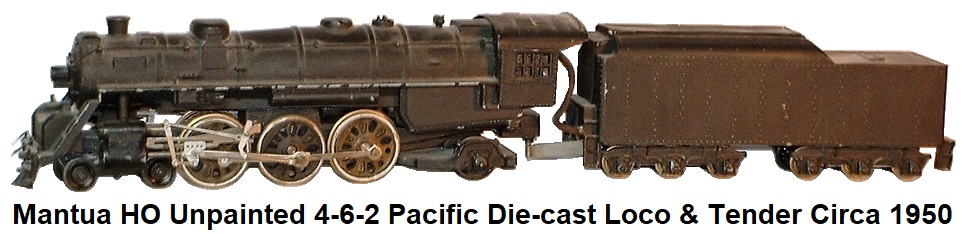
that were made of die-cast while the boiler was still made of brass. Other locomotives in the line, such as the new 4-6-2
Pacific kit, were re-designed to be all die-cast in 1952. The Pacific model was introduced shortly after the 0-4-0 shifter
and it appears Mantua simply used the shifter's cab. The time immediately after the war was a time of rebuilding as Mantua
and other model railroad companies struggled to get back into production and overcome critical materials shortages that
kept them from fulfilling a growing demand. However, once the production problems and material shortages
were overcome, the post war boom accelerated model railroad business like never before. Between 1945 and 1950,
the circulation of Model Railroader grew from 20,000 in 1945 to over 100,000. The majority of model railroad
In the ensuing years, changes taking place at Mantua included the conversion of brass and sheet metal parts over to zinc
alloy die-cast. Updated locomotive kits for the 8-Ball Mogul and Belle of the Eighties now had a frame, tender, and cab roof
that were made of die-cast while the boiler was still made of brass. Other locomotives in the line, such as the new 4-6-2
Pacific kit, were re-designed to be all die-cast in 1952. The Pacific model was introduced shortly after the 0-4-0 shifter
and it appears Mantua simply used the shifter's cab. The time immediately after the war was a time of rebuilding as Mantua
and other model railroad companies struggled to get back into production and overcome critical materials shortages that
kept them from fulfilling a growing demand. However, once the production problems and material shortages
were overcome, the post war boom accelerated model railroad business like never before. Between 1945 and 1950,
the circulation of Model Railroader grew from 20,000 in 1945 to over 100,000. The majority of model railroad
 hobbyists (69%) were working in HO scale by 1950. In a 1953 Popular Science article on model railroad
manufacturers, the author reported that Mantua had 50 employees and sales of over $1 million annually.
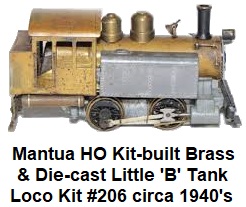
In 1952 sales of the little 0-4-0T 'Little B' switcher kits, introduced in 1949, exceeded 20,000. It was
priced at $19.95 (kit #206). The small workhorse switcher featured a Mantua PM-1 electric motor with positive power pick-up.
The catalogue copy stated that it could pull a string of 15 all-metal Mantua cars with ease. In 1949 Mantua was placing
full page ads on the back cover of every issue of Model Railroader magazine. During this period the trains were packaged in
green cardboard boxes and marketed as 'Little Trains'.
hobbyists (69%) were working in HO scale by 1950. In a 1953 Popular Science article on model railroad
manufacturers, the author reported that Mantua had 50 employees and sales of over $1 million annually.
In 1952 sales of the little 0-4-0T 'Little B' switcher kits, introduced in 1949, exceeded 20,000. It was
priced at $19.95 (kit #206). The small workhorse switcher featured a Mantua PM-1 electric motor with positive power pick-up.
The catalogue copy stated that it could pull a string of 15 all-metal Mantua cars with ease. In 1949 Mantua was placing
full page ads on the back cover of every issue of Model Railroader magazine. During this period the trains were packaged in
green cardboard boxes and marketed as 'Little Trains'.
 On April 30, 1947 the partnership of Jim Thomas and John Tyler was dissolved. Thomas sold his interest
to Tyler who took control of Mantua while Thomas pursued other business interests. Wilbur Brazier, husband of Jim Thomas'
sister Jean, worked at Mantua at the time and he took over Jim Thomas' position as designer and was placed in charge of
production. Jim's brother David was also working at Mantua and continued in his role after Jim's departure. In 1947
Jim Thomas created Thomas Industries, and by 1948 started to put out a line of 'O' gauge tinplate
trains. He had signed an agreement with his brother-in-law that prohibited him from going into HO gauge until 1955.
On April 30, 1947 the partnership of Jim Thomas and John Tyler was dissolved. Thomas sold his interest
to Tyler who took control of Mantua while Thomas pursued other business interests. Wilbur Brazier, husband of Jim Thomas'
sister Jean, worked at Mantua at the time and he took over Jim Thomas' position as designer and was placed in charge of
production. Jim's brother David was also working at Mantua and continued in his role after Jim's departure. In 1947
Jim Thomas created Thomas Industries, and by 1948 started to put out a line of 'O' gauge tinplate
trains. He had signed an agreement with his brother-in-law that prohibited him from going into HO gauge until 1955.
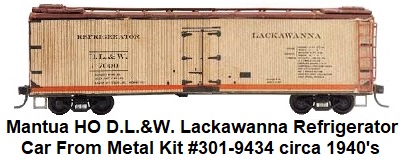
Mantua HO 40' Sheet Metal-sided Refrigerator Cars With Plastic Molded Body Shells Circa 1950's
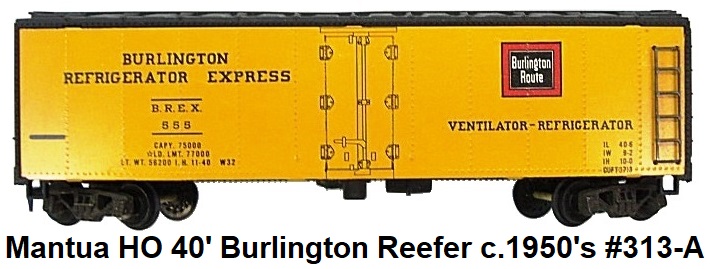
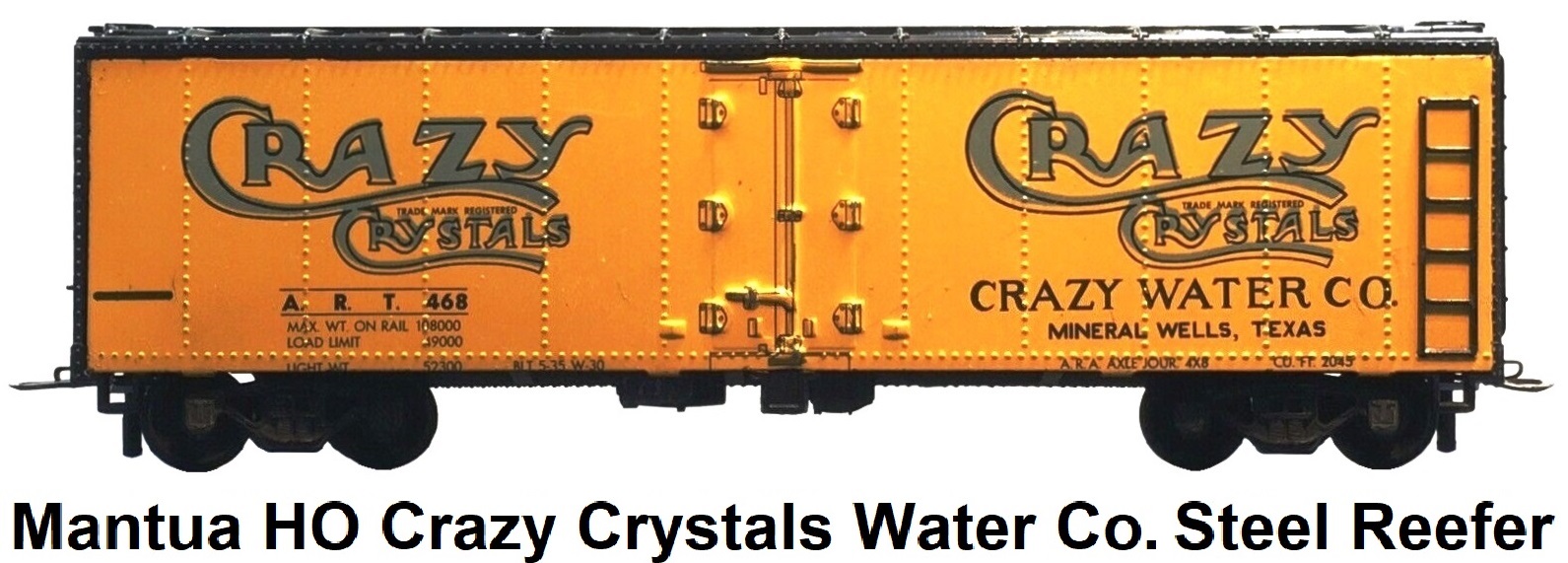
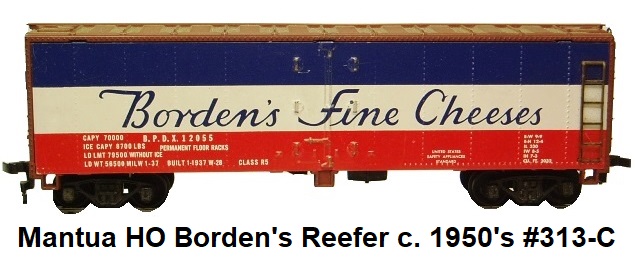
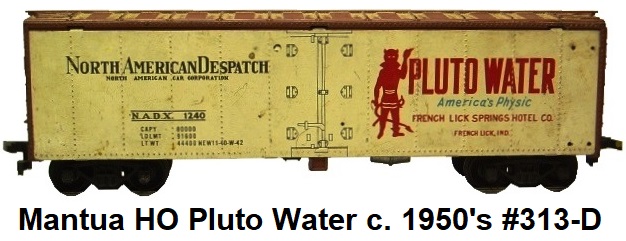
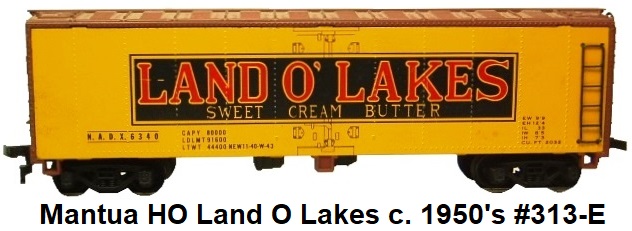
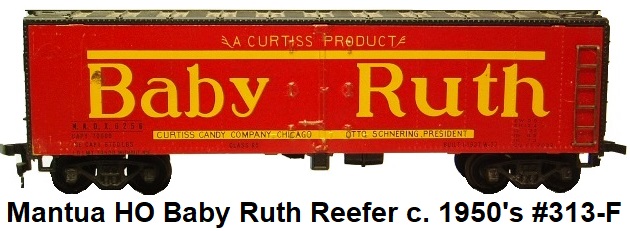
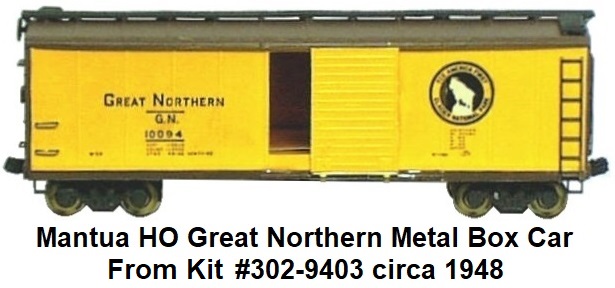 Mantua offered an HO scale brass and cast metal twin-bay coal hopper kit with paper sides in 1948. They
later added gondolas, boxcars, and refrigerator cars of the same metal design. Through the 1950's they offered a 40' steel
ice-hatch refrigerator car kit that used pressed sheet metal sides combined with a plastic shell that featured the roof and
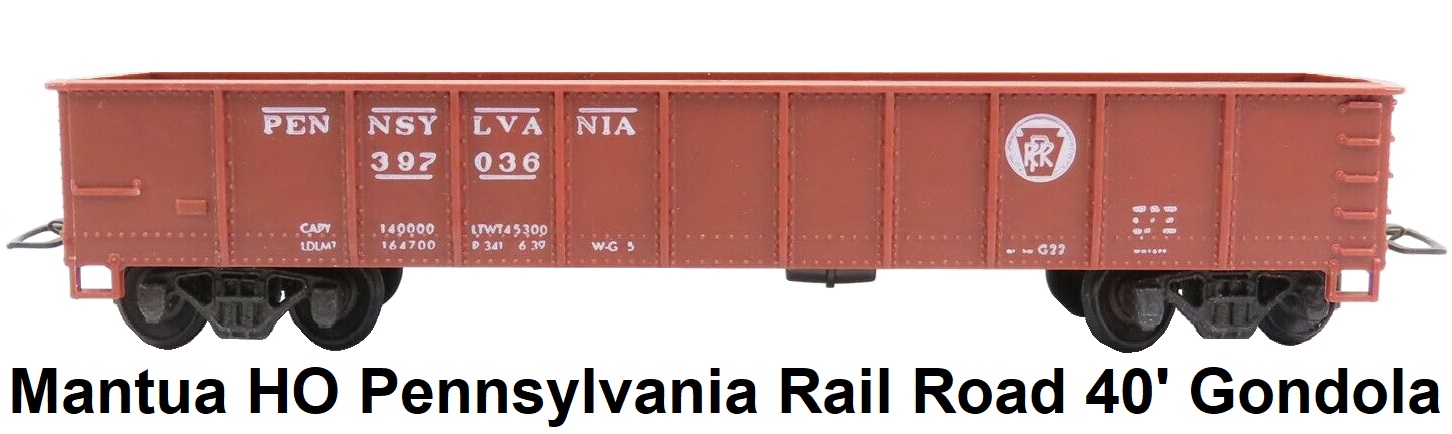
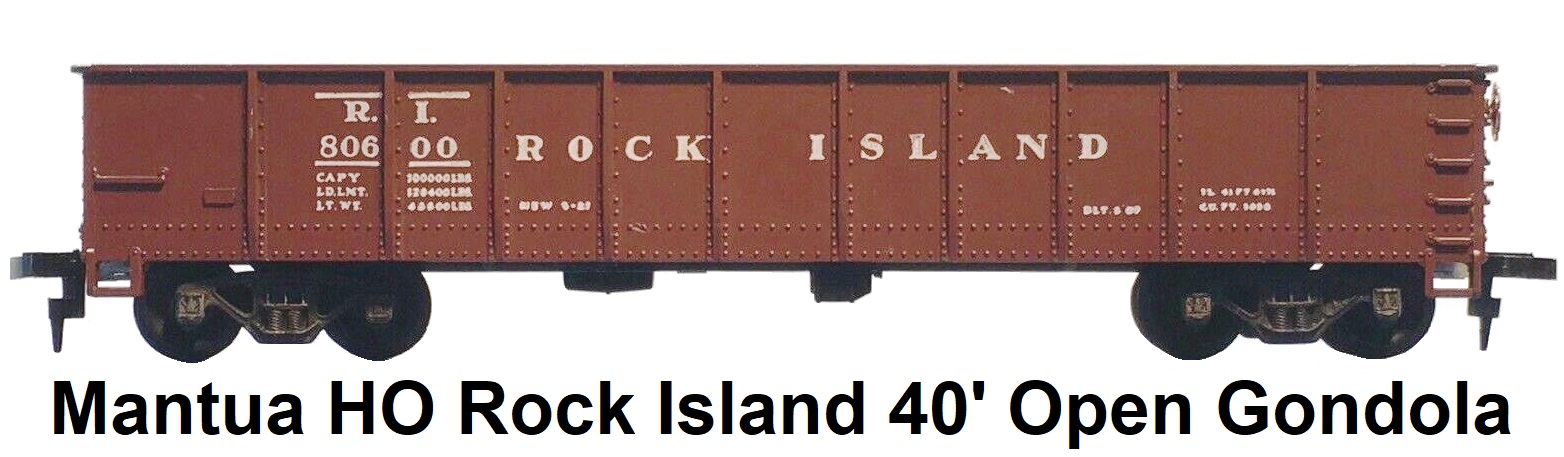
car-end details. It was later offered under the Tyco line in fully assembled form. 1953 saw the release of a 40' gondola in
plastic that appears to be the first time plastic molded rolling stock was issued. The easy to build gondola kit featured a
single piece body that followed the same pattern as the previously issued HO metal and brass gondola. It included the Mantua
automatic couplers and sold for $2.25. It was offered in Baltimore & Ohio, Pennsylvania Railroad, Rock Island, and Texas &
Pacific liveries. Shortly after, fully assembled ready-to-run gondola models in the same four road names were issued under the
Tyco line with a price tag of $3.50 suggested retail. The model underwent modifications, most notably discarding its die-cast
metal underframe for a plastic one, but continued in the Tyco line for 40 years. By 1953 Mantua's automatic couplers were
being used on more than 75% of all HO rolling stock in the United States. Their production of plastic freight cars began to
ramp up in 1954.
Mantua offered an HO scale brass and cast metal twin-bay coal hopper kit with paper sides in 1948. They
later added gondolas, boxcars, and refrigerator cars of the same metal design. Through the 1950's they offered a 40' steel
ice-hatch refrigerator car kit that used pressed sheet metal sides combined with a plastic shell that featured the roof and
car-end details. It was later offered under the Tyco line in fully assembled form. 1953 saw the release of a 40' gondola in
plastic that appears to be the first time plastic molded rolling stock was issued. The easy to build gondola kit featured a
single piece body that followed the same pattern as the previously issued HO metal and brass gondola. It included the Mantua
automatic couplers and sold for $2.25. It was offered in Baltimore & Ohio, Pennsylvania Railroad, Rock Island, and Texas &
Pacific liveries. Shortly after, fully assembled ready-to-run gondola models in the same four road names were issued under the
Tyco line with a price tag of $3.50 suggested retail. The model underwent modifications, most notably discarding its die-cast
metal underframe for a plastic one, but continued in the Tyco line for 40 years. By 1953 Mantua's automatic couplers were
being used on more than 75% of all HO rolling stock in the United States. Their production of plastic freight cars began to
ramp up in 1954.
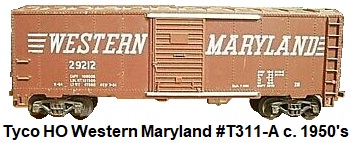
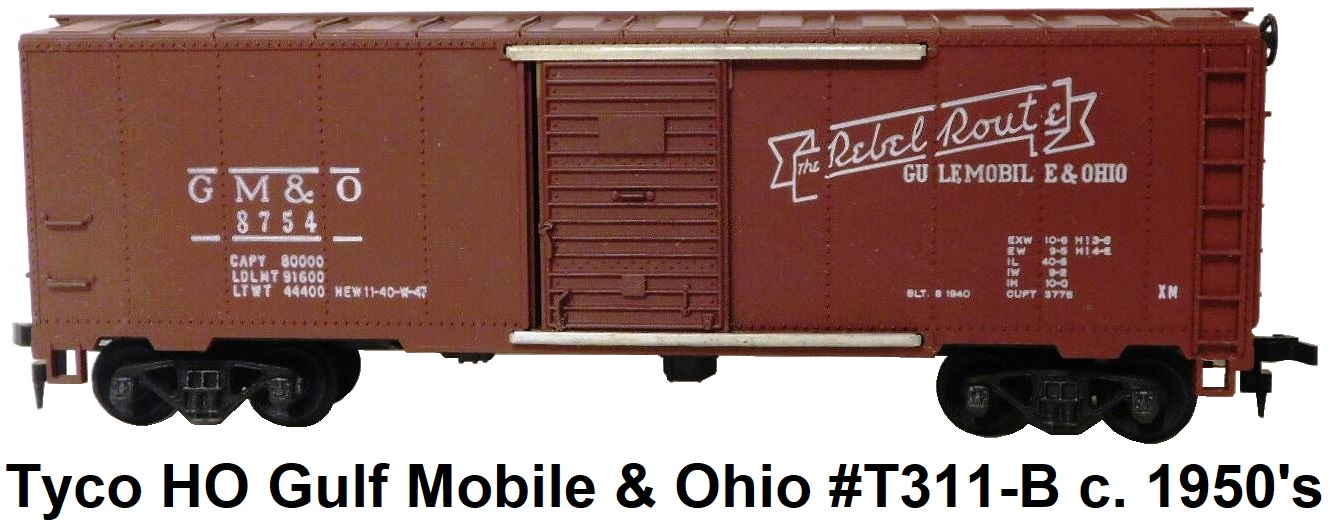
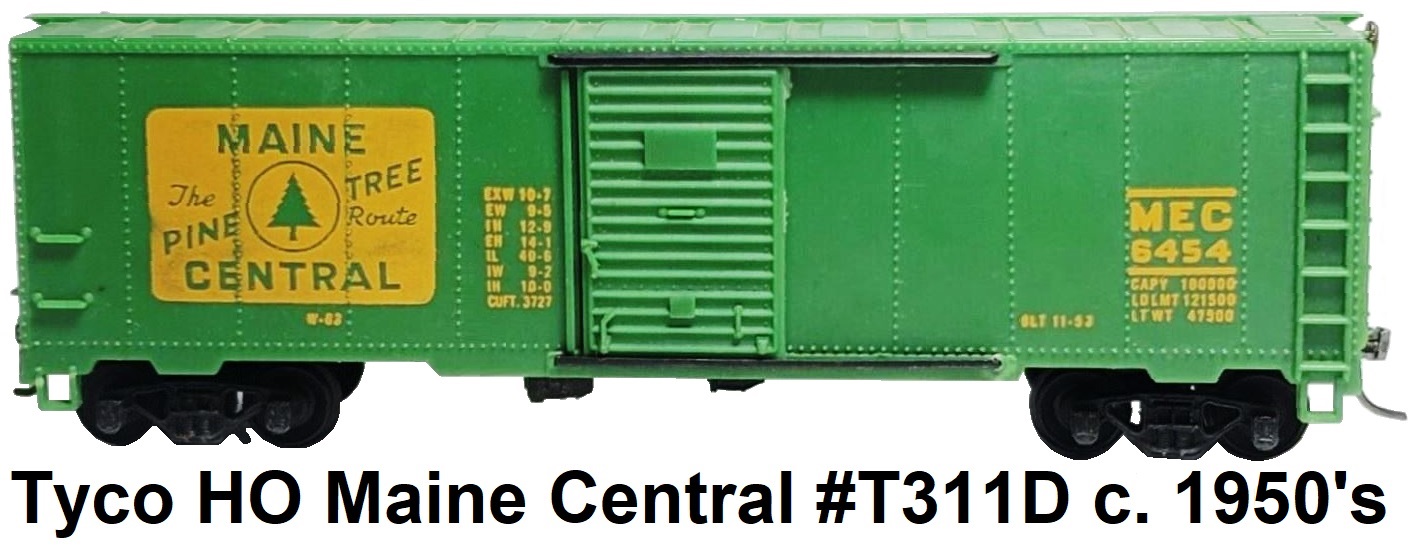
Mantua introduced their plastic 40' steel sided box car model #311 kit in the fall of 1954. Original road
names included General American, Great Northern, Gulf Mobile & Ohio, Maine Central, Missouri-Kansas-Texas, and Western
Maryland. 1955 saw the introduction of the Mantua #316 plastic 8-wheel caboose kit, #309 plastic 4-wheel bobber caboose
kit, and the #314 plastic flat car kit. The box car, flat car and caboose frames were cast metal. Flat cars were available
in Pennsylvania, Santa Fe, and U.S. Navy road names.
Being a model craft company, Mantua's customers consisted of adult and young adult hobbyists. Mantua's
marketing director Milt Grey presented John Tyler with the concept of offering complete ready-to-run HO train sets that would
appeal more to younger children. Tyler Manufacturing, under John and Milt's leadership, began offering these sets in 1953,
which opened a new market in the toy industry. In the 1950's and 1960's these ready-to-run HO train sets outsold the
traditional Mantua railroad kits and led to John and Milt's general shift from the hobby market to the toy industry.
As the company shifted its focus to toys, the marketing strategy, and the company philosophy, also changed. Up until
this time Mantua had focused its sales strategy on using mail-order and hobby stores as retail outlets. Discount chain
stores and toy stores would now be added as outlets. HO trains were small and took up less space on retailer's shelves, which
meant an increase in profits. Industry leaders such as Lionel and Marx were
now noticing the competition from the Mantua efforts. This change involved difficulty and risk. The company was now marketing
products that were pre-assembled rather than products whose whole appeal had been that the buyer could assemble it.
Plant workflow processes and manufacturing had to be changed to produce assembled sets rather than specific parts. The gamble
paid off in the end, even though the competition also followed suit, and price wars in the ready-to-run market
ensued.
The Company also continued to produce die-cast steam locomotives and some early diesels.
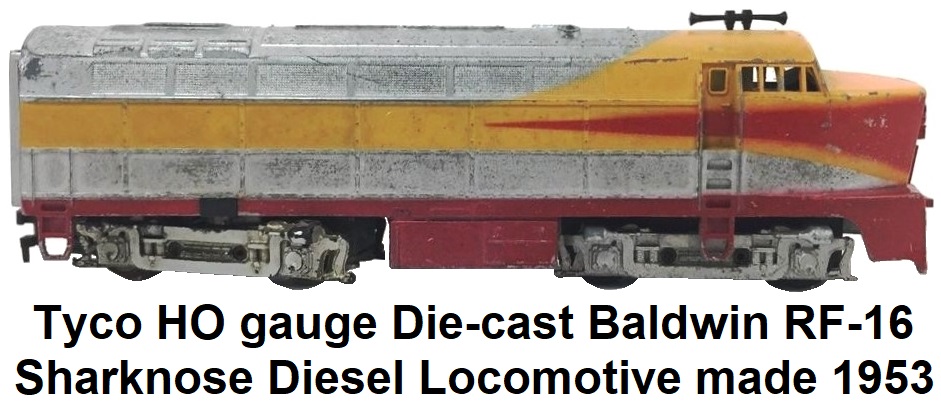
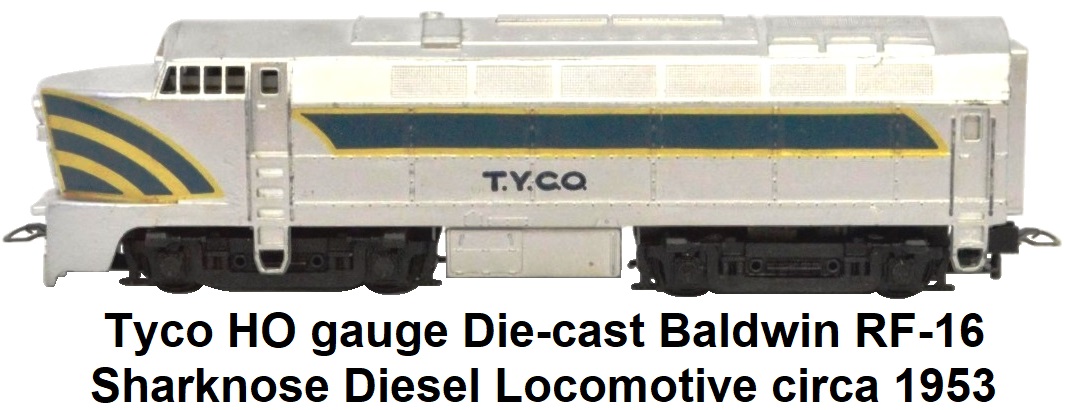
In 1953 Mantua released their die-cast Baldwin RF-16 Shark Nose A and B unit diesels.
Later-on in the 1970's the Sharknose was cast in plastic. In 1955 Mantua boasted that with their
roster of 11 locomotives that they had the largest selection of motive power of any manufacturer.
Many of the Mantua HO steam locomotives were generic designs that shared the same cab. Because the company was
based in New Jersey, the models they created tended to follow local prototypes from Central of New Jersey, Reading and
Lehigh Valley railroads. In order to have a working headlight in their die-cast locomotives, the bulb was initially placed
in the front of the engine's smokebox and a simulated headlight with opening was included in the casting. In later years a
change was made to facilitate more space between the headlight and smokebox front, and the headlight could be placed almost
anywhere on the loco to be more prototypical, since there was now more room for the bulb.
Mantua tended to be very creative in the design of its locomotives, but took some shortcuts that were
not prototypical. The 4-4-2 Lehigh Valley Camelback Atlantic was a camelback superstructure mounted on their Pennsylvania RR
Atlantic power mechanism, valve gear and drivers. The 4-6-2 Camelback took the same shortcut and had the same LV Camelback
superstructure, but mounted on the Mantua 4-6-2 Pacific mechanism. For the 4-6-2 Heavy Pacific, Mantua took their Mikado
boiler and mounted it on their Pacific mechanism. For their 4-6-4 Heavy Hudson, Mantua took their Mikado boiler and placed it
on their Pacific mechanism, then changed the trailing truck to a 4-wheel one. Their NYC 4-6-4 Hudson was simply their
Pacific, with a 4-wheel trailing truck and a set of spoked drivers substituted for the original Boxpok ones. The 4-8-0
Twelve-wheeler utilized the same superstructure as the Ten-wheeler, but with an extra driver squeezed in. Twelve-wheelers
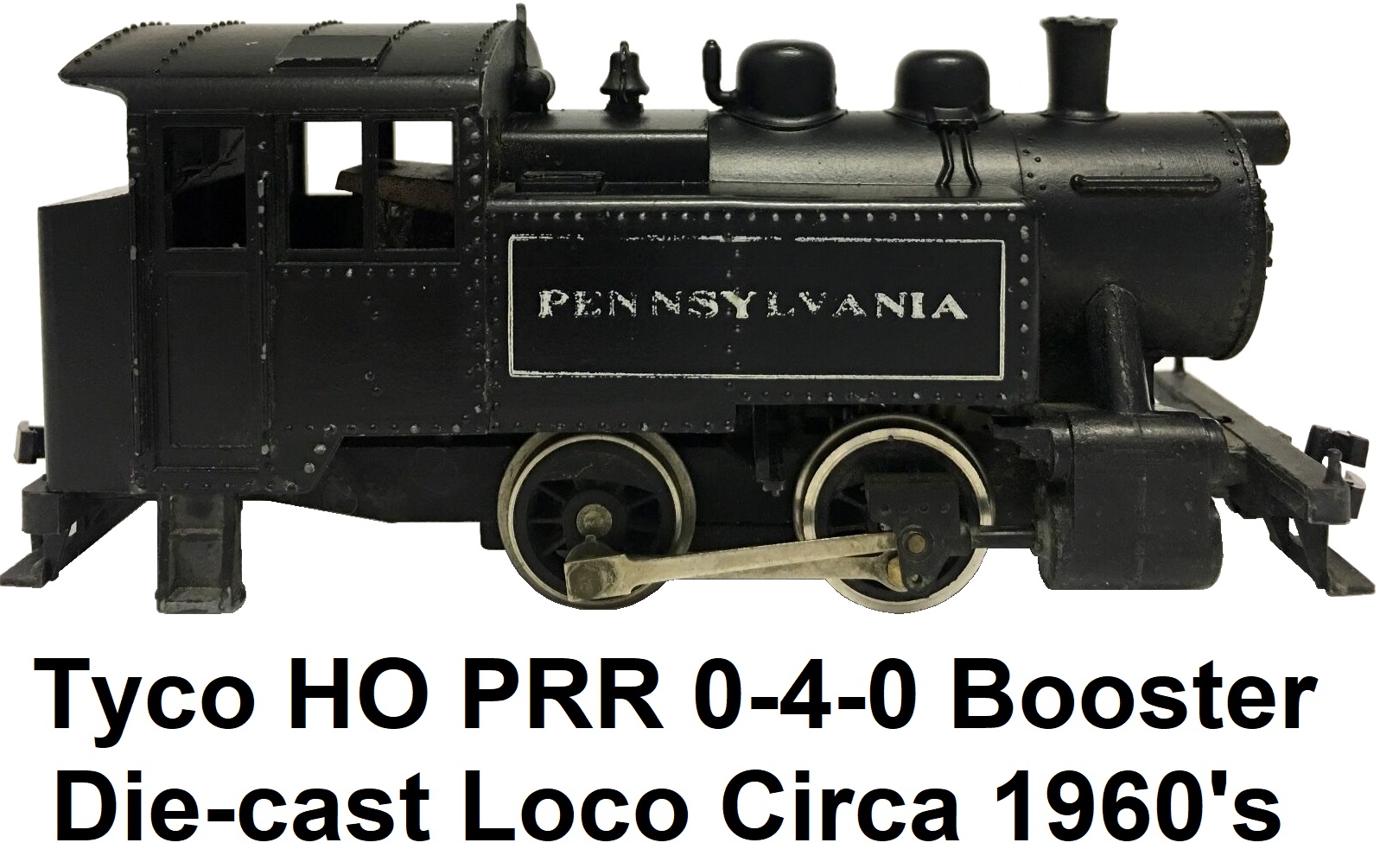
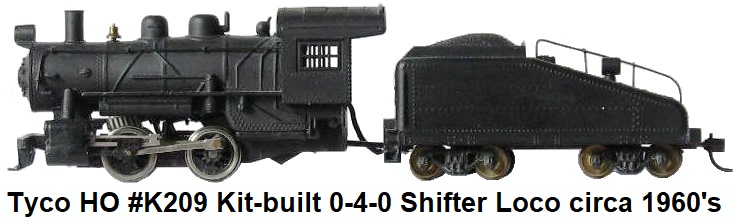
were called Mastodon's. In the mid-1960's Mantua redesigned their superstructure for their small Shifter loco, and used a
number of different wheel arrangements under it (0-4-0, 0-6-0).
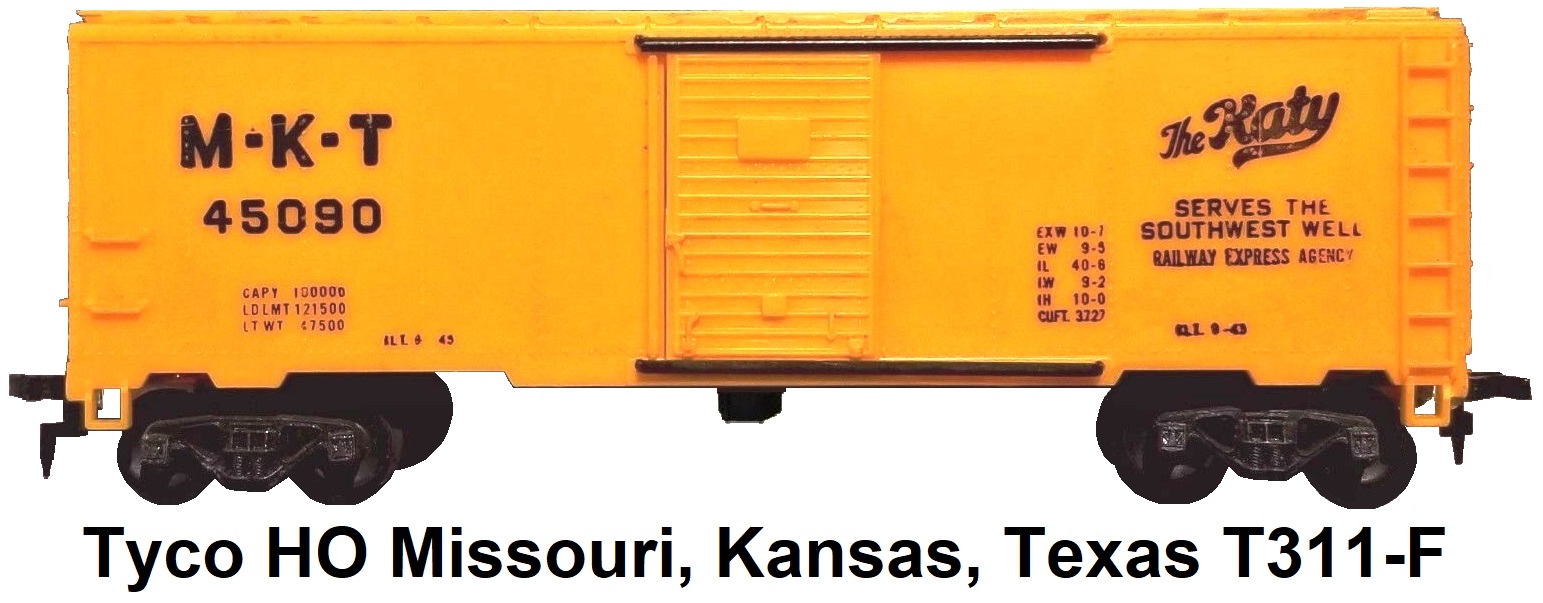
Tyco HO Blue Box Era 40' Steel Box Cars
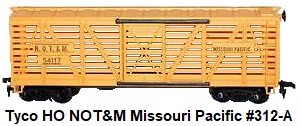
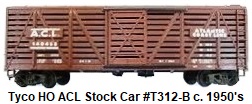
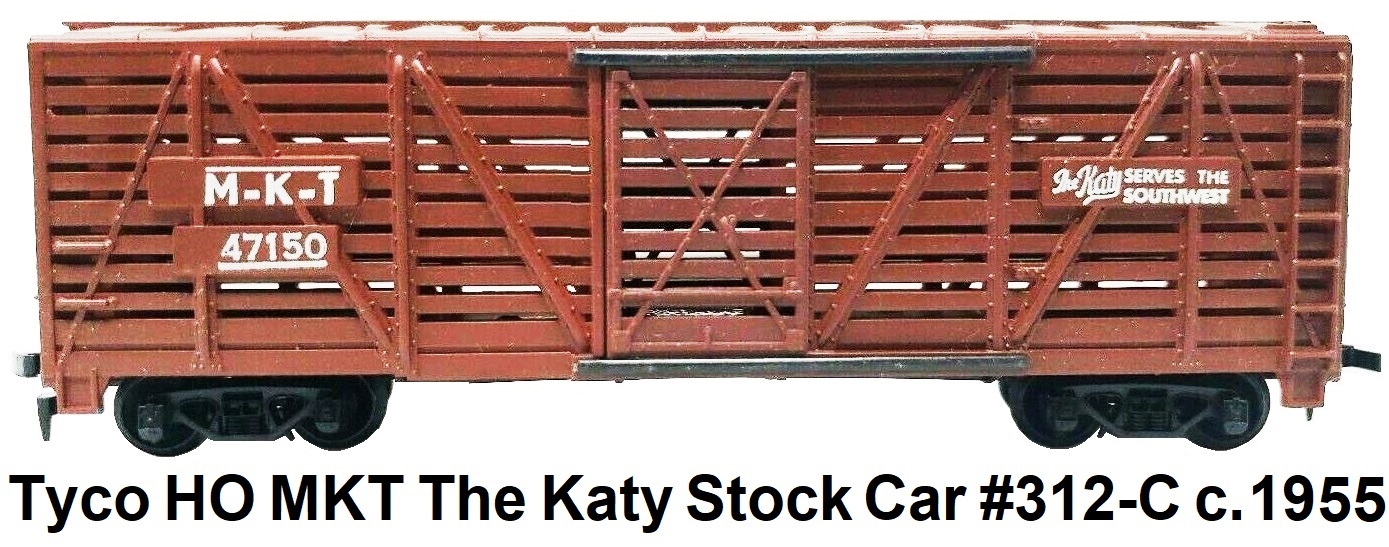
Tyco HO Blue Box Era 40' Live Stock Cars
Tyco HO Blue Box Era 40' Gondolas
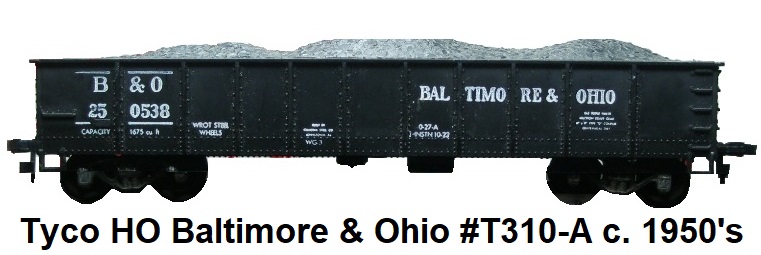
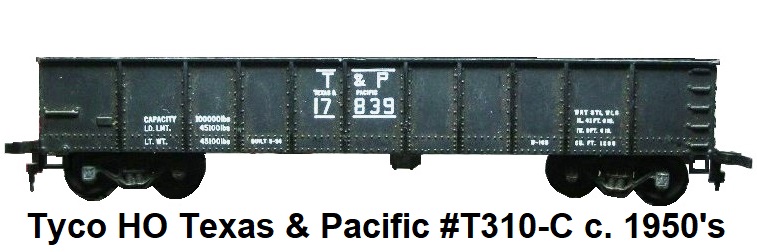
One confusing aspect of the Tyco story for many regards Mantua and its relationship to Tyco.
The name Tyco appeared for the first time in 1952. The Tyler Manufacturing Company or
Tyco was created at Mantua and began selling a product line under that brand that is often known to collectors
as 'the blue-box era'. This moniker was created because Tyco offered kit versions and later ready-to-run(RTR)
versions of various steam and early diesel era model trains in a light-blue packaging. The growth in
ready-to-run HO scale train sets was the reason behind the creation of the Tyco nameplate in 1957. Mantua is
considered the pioneer of the 'ready-to-run' HO-scale model railroad kits under the Tyco
brand. Many Tyco and Mantua die-cast products, such as steam engines, are collector's items today.
From 1957 to 1963 the Tyco brand from Mantua produced the box cars, Wilson Reefer and gondolas for
Penn Line HO train sets.

In 1956 during the blue box era Tyco came out with its version of the streamlined Talgo train
in HO. The #T-9 articulated passenger train was Mantua's imaginary futuristic set and answer to
Varney's Aerotrain from this period. It featured a Talgo diesel locomotive and 3 passenger cars.
The engine was powered with a conventional Mantua power truck. A Baker style coupler connected it to the articulated car set.
The passenger cars were joined together with screws. The engine featured an operating headlight and each passenger car had
interior lighting. Talgo is an abbreviation for 'Tren Articulado Ligero Goicoechea Oriol'. It was a company first founded in
Spain in 1942. Talgo trains are best known for their unconventional articulated railway passenger cars that use in-between
carriage bogies that Talgo first patented in 1941, similar to the earlier Jacobs bogie. The wheels are mounted in pairs but
not joined by an axle and the bogies are shared between coaches rather than underneath individual coaches. This allows a
railway car to take a turn at higher speed with less hunting oscillation. As the coaches are not mounted directly onto wheel
bogies, the coaches are more easily insulated from track noise. As prototypical futuristic high speed trains rapidly fell
out of favor with the public so did these models and as a result they were not made for very long. As a result this Tyco set
is very rare.
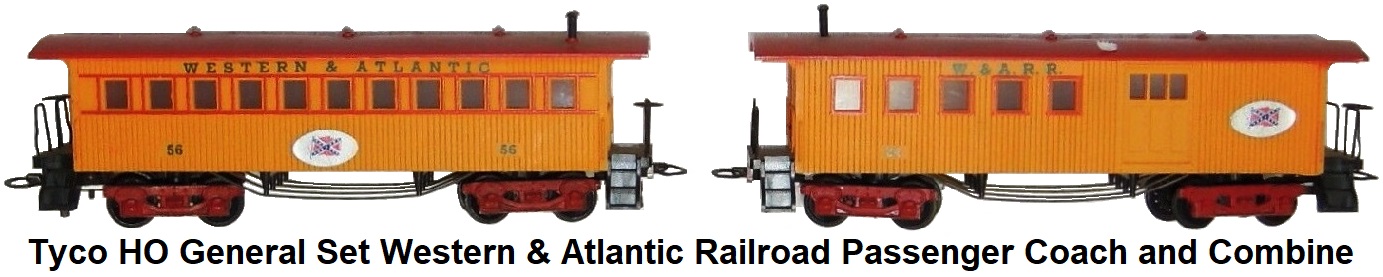
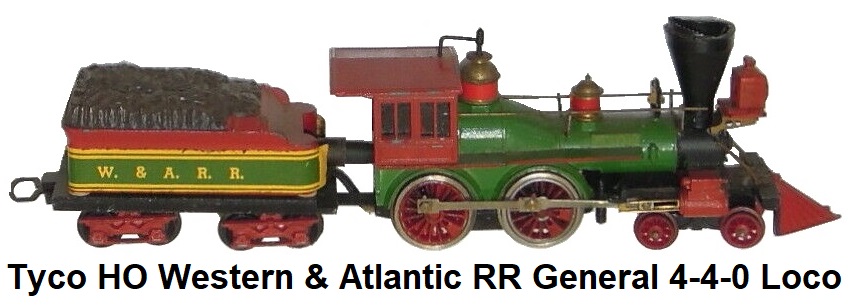 In 1959 the A.C. Gilbert Company, makers of the famous American Flyer
'S' gauge trains, offered a very desirable 'Frontiersman set' in both 'S' gauge and an HO version as part of their HO line
to celebrate their 50th Anniversary. A. C. Gilbert contracted with Mantua/Tyco to produce the HO version of the Frontiersman
set. Mantua/Tyco was already producing their #T-8 HO General Set at the time, so the same loco, tender and coach were
utilized. The American Flyer catalog number for this set was #35099. It came with the #30188 Franklin General Locomotive and
2 #33720 passenger cars. It had a special paint scheme and some of the details like the stack and headlight were changed to
create a special look for American Flyer. The engine body was cast metal and due to space constraints utilized a tender drive
motor that drove a worm and spur gear on the 4-4-0 loco. This HO set is considered to be one of the most desirable sets in the
complete Gilbert/American Flyer 25 year HO series. It is beleived that as part of the deal, A. C. Gilbert provided plastic
passenger car shells for the Tyco passenger cars advertised in the 2 sets offered in the 1959 Tyco catalog - set #T5913 The
Royal Blue Limited and set #T5908 The Canadian Limited. Up until this time Mantua had produced aluminum passenger cars but
was now in the process of making the conversion to plastic. Tyco used their own frames with the plastic shells and their cars
had some subtle differences with the American Flyer ones, including 2 interior light bulbs vs. 1 in the AF cars, and different
passenger silhouettes. These shells were used for one year only by Tyco. From 1960 forward, Tyco made their own passenger
car shells. It is easy to spot the difference, as the Tyco shells are shorter, and the 1959 longer cars have the American
Flyer part number embossed on the inside. Tyco only produced the combine, coach and observation cars. American Flyer had a
vista-dome car in their HO line.
In 1959 the A.C. Gilbert Company, makers of the famous American Flyer
'S' gauge trains, offered a very desirable 'Frontiersman set' in both 'S' gauge and an HO version as part of their HO line
to celebrate their 50th Anniversary. A. C. Gilbert contracted with Mantua/Tyco to produce the HO version of the Frontiersman
set. Mantua/Tyco was already producing their #T-8 HO General Set at the time, so the same loco, tender and coach were
utilized. The American Flyer catalog number for this set was #35099. It came with the #30188 Franklin General Locomotive and
2 #33720 passenger cars. It had a special paint scheme and some of the details like the stack and headlight were changed to
create a special look for American Flyer. The engine body was cast metal and due to space constraints utilized a tender drive
motor that drove a worm and spur gear on the 4-4-0 loco. This HO set is considered to be one of the most desirable sets in the
complete Gilbert/American Flyer 25 year HO series. It is beleived that as part of the deal, A. C. Gilbert provided plastic
passenger car shells for the Tyco passenger cars advertised in the 2 sets offered in the 1959 Tyco catalog - set #T5913 The
Royal Blue Limited and set #T5908 The Canadian Limited. Up until this time Mantua had produced aluminum passenger cars but
was now in the process of making the conversion to plastic. Tyco used their own frames with the plastic shells and their cars
had some subtle differences with the American Flyer ones, including 2 interior light bulbs vs. 1 in the AF cars, and different
passenger silhouettes. These shells were used for one year only by Tyco. From 1960 forward, Tyco made their own passenger
car shells. It is easy to spot the difference, as the Tyco shells are shorter, and the 1959 longer cars have the American
Flyer part number embossed on the inside. Tyco only produced the combine, coach and observation cars. American Flyer had a
vista-dome car in their HO line.
Tyco HO F9A Diesel Locomotives
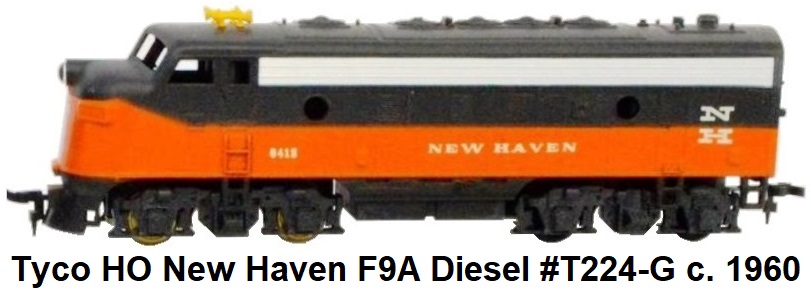
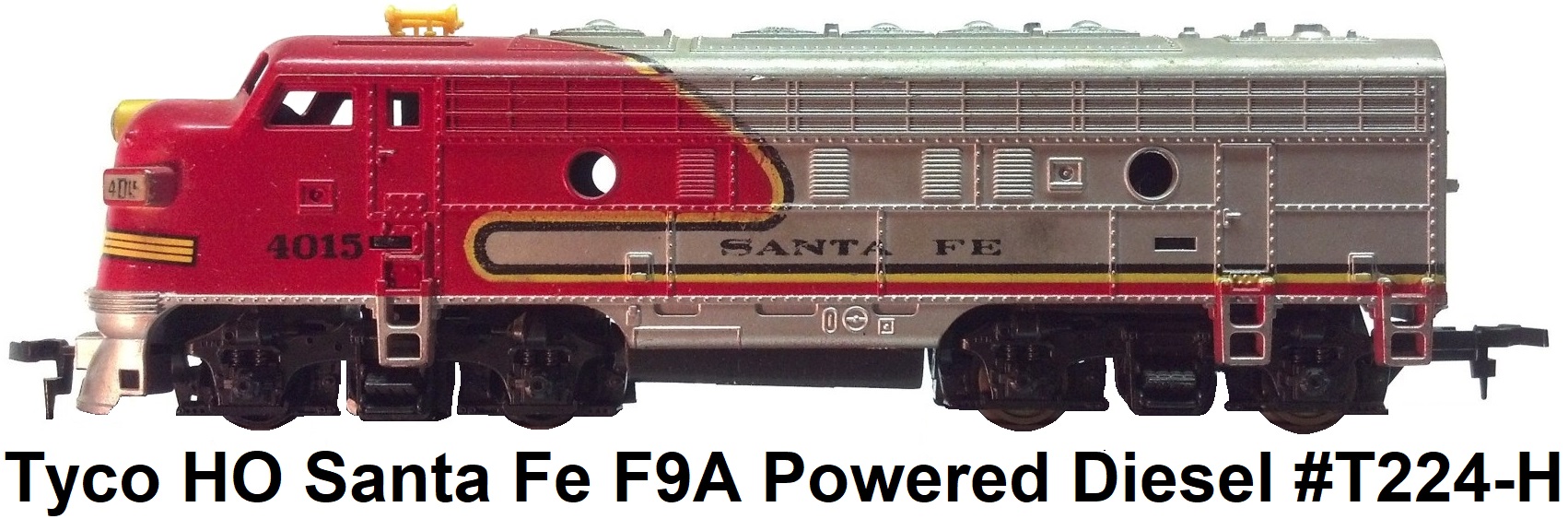
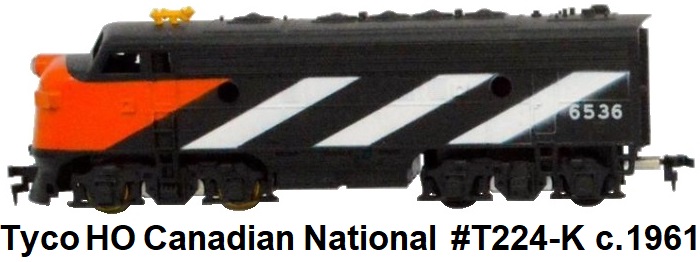
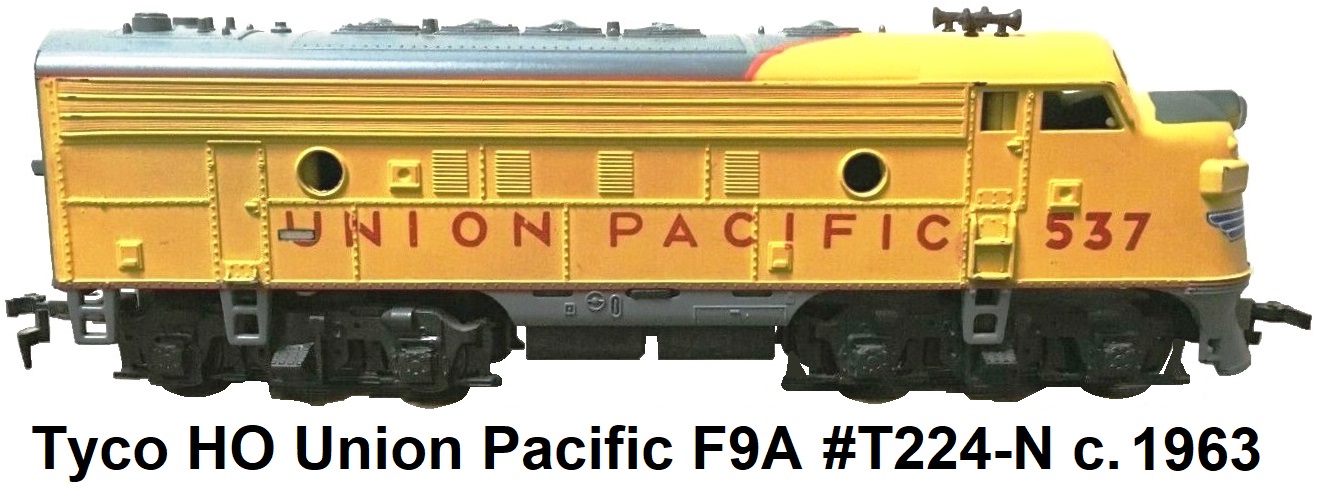
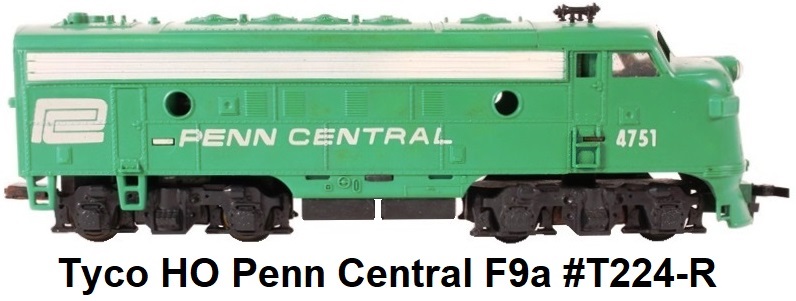
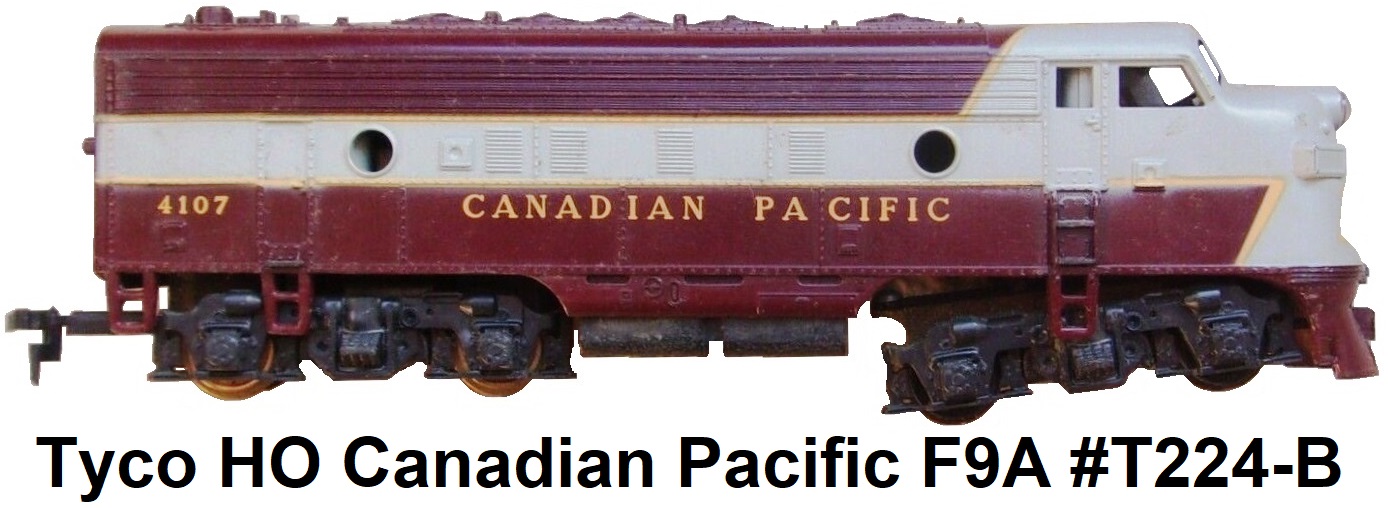
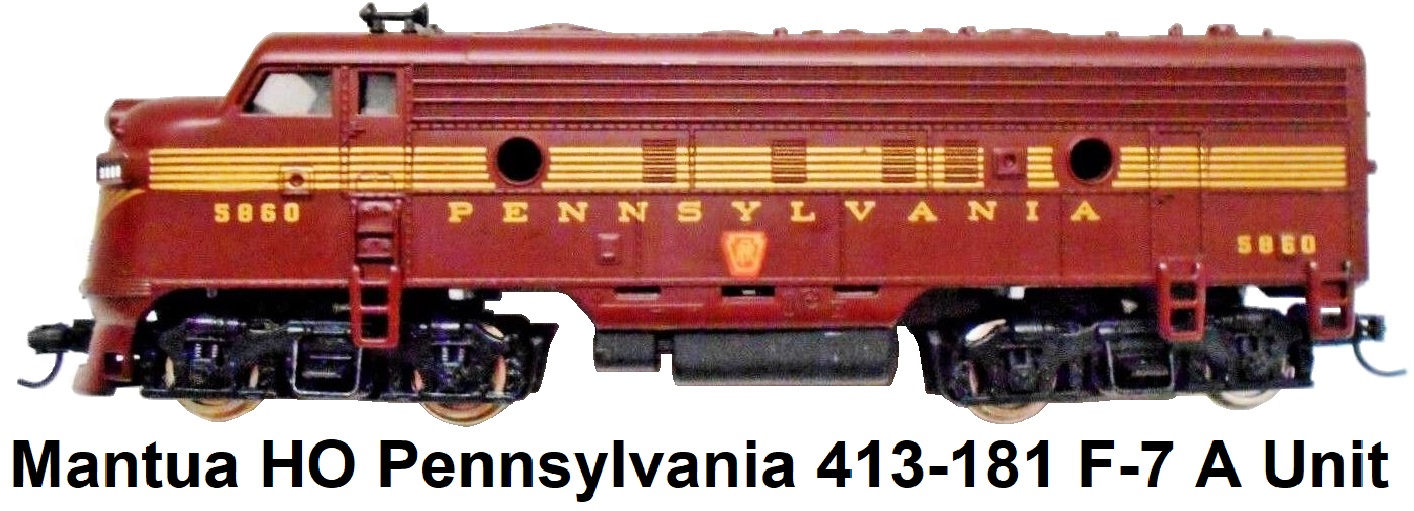 Tyco released its plastic shell F unit diesel in the spring of 1960. It had first appeared in the 1959 catalog in Canadian
Pacific livery heading up 2 sets - #T5908 The Canadian Limited passenger set and #T5903 The Coast To Coast Diesel Flyer
freight set. And in Baltimore & Ohio livery heading up the #T5902 Coast To Coast Diesel Flyer. This diesel locomotive
model would continue in the lineup throughout the entire existence of the company in various roadnames - 36 different ones.
It was described in the catalog as an F9A, but it in fact was really an F-7. This incorrect naming practice was eventually
rectified in the late 1970's when the 2nd generation Mantua took over production, altered the tooling and labeled it
correctly as an F7. The 1960 release included the new road names Atlantic Coast Line, Santa Fe (blue freight livery),
Chesapeake & Ohio, Denver & Rio Grande, New Haven and Santa Fe Warbonnet passenger livery. Canadian National, Burlington and
both a green as well as a red painted Pennsylvania livery were added in 1961. The A units were offered in matching powered
pairs. Non-powered dummy A units were also available in matching road names.
Tyco released its plastic shell F unit diesel in the spring of 1960. It had first appeared in the 1959 catalog in Canadian
Pacific livery heading up 2 sets - #T5908 The Canadian Limited passenger set and #T5903 The Coast To Coast Diesel Flyer
freight set. And in Baltimore & Ohio livery heading up the #T5902 Coast To Coast Diesel Flyer. This diesel locomotive
model would continue in the lineup throughout the entire existence of the company in various roadnames - 36 different ones.
It was described in the catalog as an F9A, but it in fact was really an F-7. This incorrect naming practice was eventually
rectified in the late 1970's when the 2nd generation Mantua took over production, altered the tooling and labeled it
correctly as an F7. The 1960 release included the new road names Atlantic Coast Line, Santa Fe (blue freight livery),
Chesapeake & Ohio, Denver & Rio Grande, New Haven and Santa Fe Warbonnet passenger livery. Canadian National, Burlington and
both a green as well as a red painted Pennsylvania livery were added in 1961. The A units were offered in matching powered
pairs. Non-powered dummy A units were also available in matching road names.
Tyco HO F9A & F9B Diesel Units






1961 saw the release of matching B units, made
available in powered or non-powered versions. In 1963 Union Pacific was added and in 1964 an Atomic Energy Commission F unit
was added to the catalogue, along with a special run of metalized chrome F units in Baltimore & Ohio and Santa Fe paint. In
the 1970's Tyco added F unit diesels in Conrail, Amtrak, Spirit of 76, Penn Central, Western Pacific and Chessie System
liveries. With the return of the Mantua name in the late 1970's twin motored units were offered with 2 power trucks. Road
names expanded even further with the addition of Chicago & North Western, Great Northern (a simplified Empire Builder scheme),
The Milwaukee Road, and VIA Canadian National. By the 1980's New York Central, Reading, Frisco, Southern Railway, a Big Sky
blue Great Northern, Military, MKT, and Northern Pacific (in both the Lowey 2-tone green and the Pine Tree schemes) appeared
in the F unit lineup. The only new road name issued in the 1990's was the NFL Super Bowl Express.
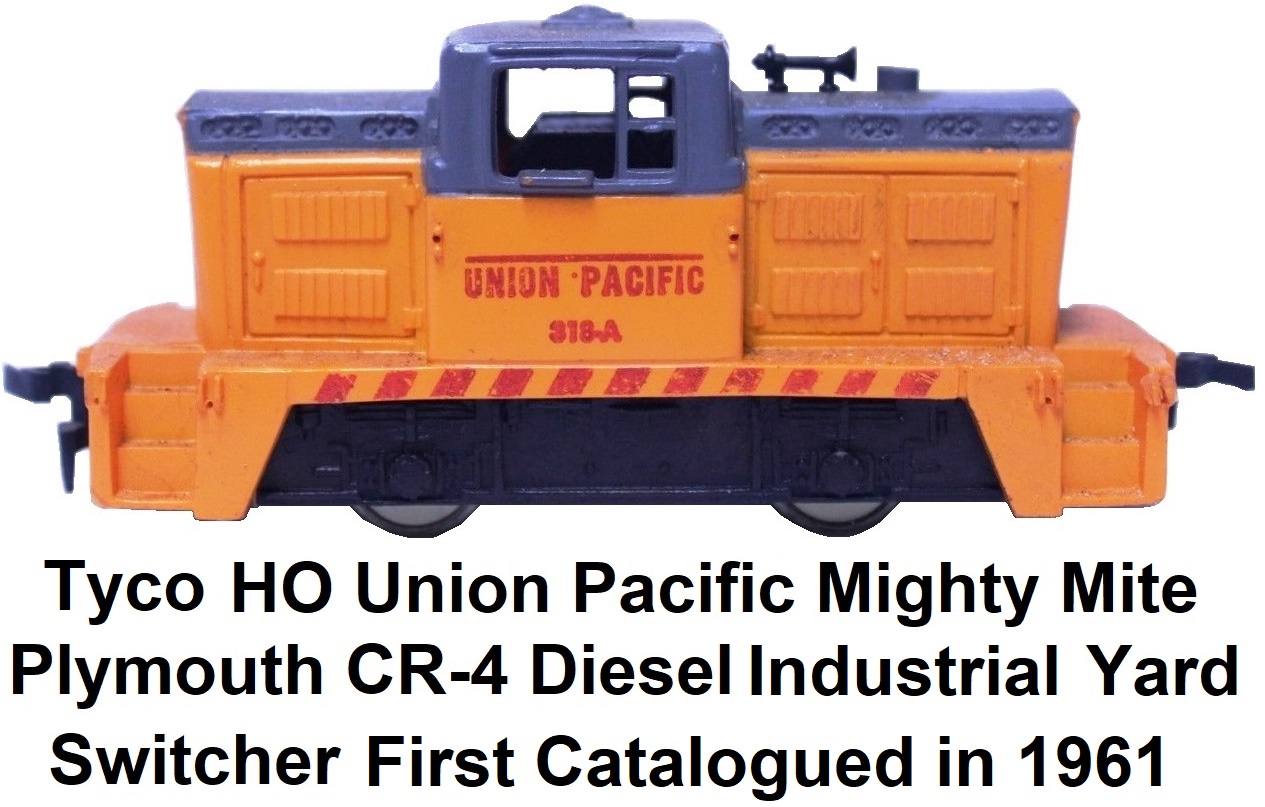 In the 1960's, Tyco continued to change its focus from model train kits to ready-to-run trains sold in
hobby shops and chain stores. Around this time they also added HO scale electric racing, or 'slot car' sets (in 1963).
During this period, the HO scale train line saw growth and expansion, especially with diesel locomotives. One new item issued
in 1960 was the Plymouth Industrial Diesel Switcher. This was essentially a one piece plastic shell placed over a 4-wheel
power truck. Other diesel locomotives issued in the Tyco line typically were made available as both ready-to-run as well as
in kit form. The Plymouth Industrial Diesel was never produced as a kit however. This small switch engine remained in the
Tyco catalogues through 1968. Mantua did bring back this switcher in its revamped new line in 1978. The Tyco 1960's product
line is referred to as 'the red-box era', as items from this time period are found in red Tyco boxes.
In the 1960's, Tyco continued to change its focus from model train kits to ready-to-run trains sold in
hobby shops and chain stores. Around this time they also added HO scale electric racing, or 'slot car' sets (in 1963).
During this period, the HO scale train line saw growth and expansion, especially with diesel locomotives. One new item issued
in 1960 was the Plymouth Industrial Diesel Switcher. This was essentially a one piece plastic shell placed over a 4-wheel
power truck. Other diesel locomotives issued in the Tyco line typically were made available as both ready-to-run as well as
in kit form. The Plymouth Industrial Diesel was never produced as a kit however. This small switch engine remained in the
Tyco catalogues through 1968. Mantua did bring back this switcher in its revamped new line in 1978. The Tyco 1960's product
line is referred to as 'the red-box era', as items from this time period are found in red Tyco boxes.
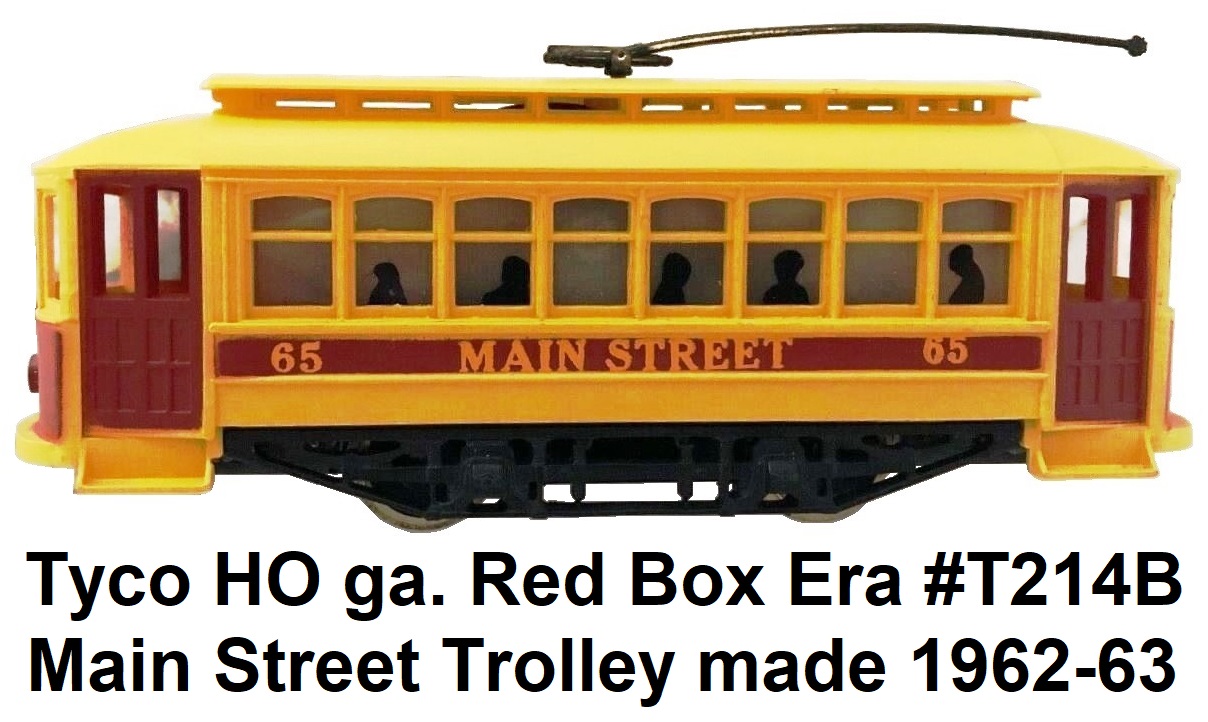 Starting in 1953, Mantua advertised an HO gauge 8-window Brill-type trolley kit in molded plastic. Coincidently, in
the 1950's identical HO gauge trolleys were first imported to the United States by Bernie Paul and his General Hobbies Corp.
(GHC), and marketed under the name 'The HO Train Company of Philadelphia'. The GHC-imported trolleys were from the Japanese
producer Sakai. It is not known if Mantua acquired their trolley shells from that same producer, but
the similarity would lead one to beleive that either they did acquire them from Sakai, or Sakai copied Mantua's trolley in
exact detail and dimensions. There has been no documnetation produced to clear up this question. Mantua
promoted their new model in all the model railroad magazines and it makes its initial appearance in the 1955 Mantua
catalogue. Under the Mantua brand they first issued a kit #214 that
consisted of a body shell molded in orange and a #33552 open-frame five-pole Pittman-type 12-volt motor. Unlike the
GHC/HO Train Co. of Phila. model, this early Mantua version did not have a trolley pole. The advertised price for the Mantua
trolley in 1953 was $8.95, while GHC sold their version for $4.95. Eventually in 1959 Mantua issued complete ready-to-run sets
consisting of two trolleys, with a power car and a trailer car, and added an oval of special street track, that simulated
a paved street with 2 embedded rails, almost like slot car track. This early set was called the 'Old Strap Hanger Electric
Street Car Set' and used 6 'D' cell batteries to provide the constant track power to run the trolley. The trolley cars
manufactured by the HO Trolley Company and the early Mantua production each had two axles, with one electrical pickup per
axle, which resulted in erratic operation. Eventually, Mantua realized that the poor performance that resulted from only one
electrical pickup per axle was hindering potential sales. Rather than extensively (and expensively) redesigning the power
mechanism of the trolley, Mantua chose to replace the drive unit in the trolley with an existing power mechanism from their
diesel locomotive line. This replacement mechanism was a proven unit, but it had the wrong axle spacing for the trolley car’s
short wheelbase. The difference was small, and most people did not notice it. Initial catalogue images depicted the trolley
as a street car with the name Mantua printed on its sides, but the early trolleys that were issued and that collectors have
discovered have never bore Mantua lettering. As early as 1955, the street car was advertised under the Tyco banner, as
ready-to-run, showing a multicolor paint scheme on an unlettered model. Tyco continued to offer these trolleys through the
1980's in several colors and line names including Coney Island, Main Street, Crosstown, Nob Hill, Wabash Avenue, Beal Street
and Broadway.
Starting in 1953, Mantua advertised an HO gauge 8-window Brill-type trolley kit in molded plastic. Coincidently, in
the 1950's identical HO gauge trolleys were first imported to the United States by Bernie Paul and his General Hobbies Corp.
(GHC), and marketed under the name 'The HO Train Company of Philadelphia'. The GHC-imported trolleys were from the Japanese
producer Sakai. It is not known if Mantua acquired their trolley shells from that same producer, but
the similarity would lead one to beleive that either they did acquire them from Sakai, or Sakai copied Mantua's trolley in
exact detail and dimensions. There has been no documnetation produced to clear up this question. Mantua
promoted their new model in all the model railroad magazines and it makes its initial appearance in the 1955 Mantua
catalogue. Under the Mantua brand they first issued a kit #214 that
consisted of a body shell molded in orange and a #33552 open-frame five-pole Pittman-type 12-volt motor. Unlike the
GHC/HO Train Co. of Phila. model, this early Mantua version did not have a trolley pole. The advertised price for the Mantua
trolley in 1953 was $8.95, while GHC sold their version for $4.95. Eventually in 1959 Mantua issued complete ready-to-run sets
consisting of two trolleys, with a power car and a trailer car, and added an oval of special street track, that simulated
a paved street with 2 embedded rails, almost like slot car track. This early set was called the 'Old Strap Hanger Electric
Street Car Set' and used 6 'D' cell batteries to provide the constant track power to run the trolley. The trolley cars
manufactured by the HO Trolley Company and the early Mantua production each had two axles, with one electrical pickup per
axle, which resulted in erratic operation. Eventually, Mantua realized that the poor performance that resulted from only one
electrical pickup per axle was hindering potential sales. Rather than extensively (and expensively) redesigning the power
mechanism of the trolley, Mantua chose to replace the drive unit in the trolley with an existing power mechanism from their
diesel locomotive line. This replacement mechanism was a proven unit, but it had the wrong axle spacing for the trolley car’s
short wheelbase. The difference was small, and most people did not notice it. Initial catalogue images depicted the trolley
as a street car with the name Mantua printed on its sides, but the early trolleys that were issued and that collectors have
discovered have never bore Mantua lettering. As early as 1955, the street car was advertised under the Tyco banner, as
ready-to-run, showing a multicolor paint scheme on an unlettered model. Tyco continued to offer these trolleys through the
1980's in several colors and line names including Coney Island, Main Street, Crosstown, Nob Hill, Wabash Avenue, Beal Street
and Broadway.
Tyco & Mantua HO EMD GP20 Diesel Locomotives
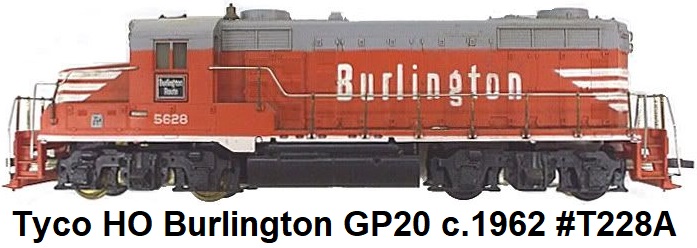
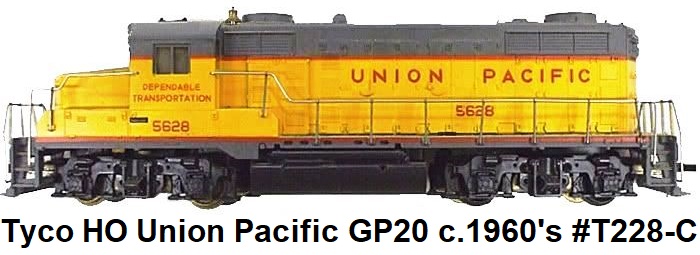
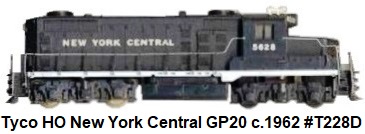
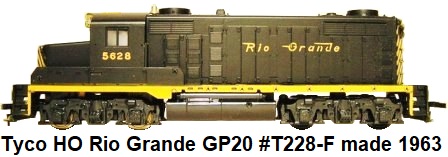
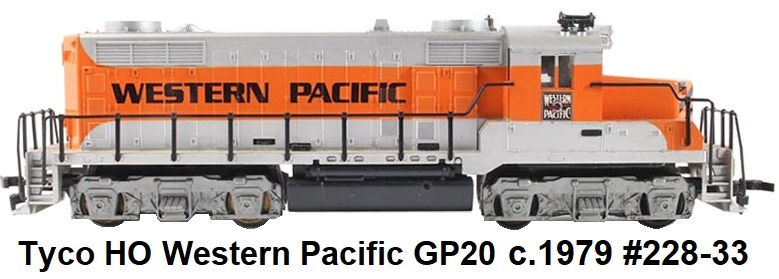
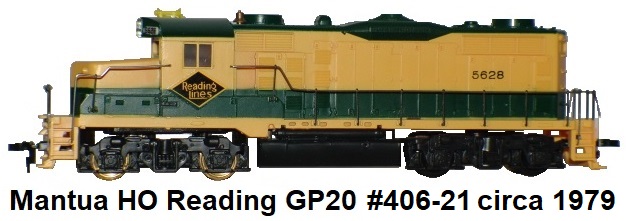
The EMD GP20 diesel was first released by Tyco during the red box era
in 1961, and would continue to be produced in the brown box era and then by Mantua through 2001. Tyco's release
of the GP20 coincided with the real EMD GP20's introduction. The majority of Tyco’s GP20 models wear the number 5628.
That number was given to one of EMD’s demo set of GP20s. Originally the model was offered with Mantua’s powered-truck
drive, but later was fitted with the Tyco PowerTorque drive truck. The split between Mantua and Tyco had its beginnings in
1967. Norman Tyler, son of founder John Tyler, became president and chairman of the board of Mantua in 1967.
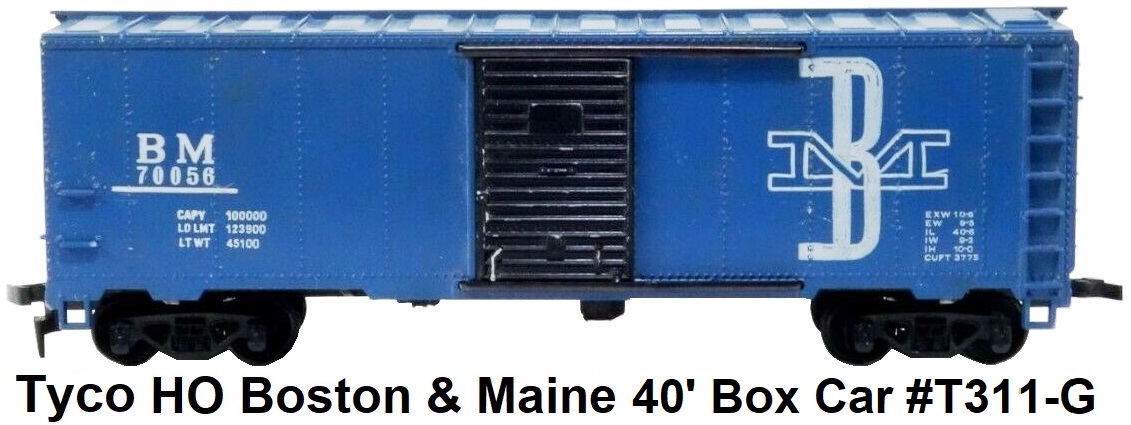
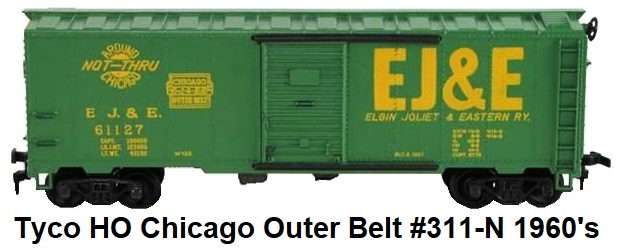
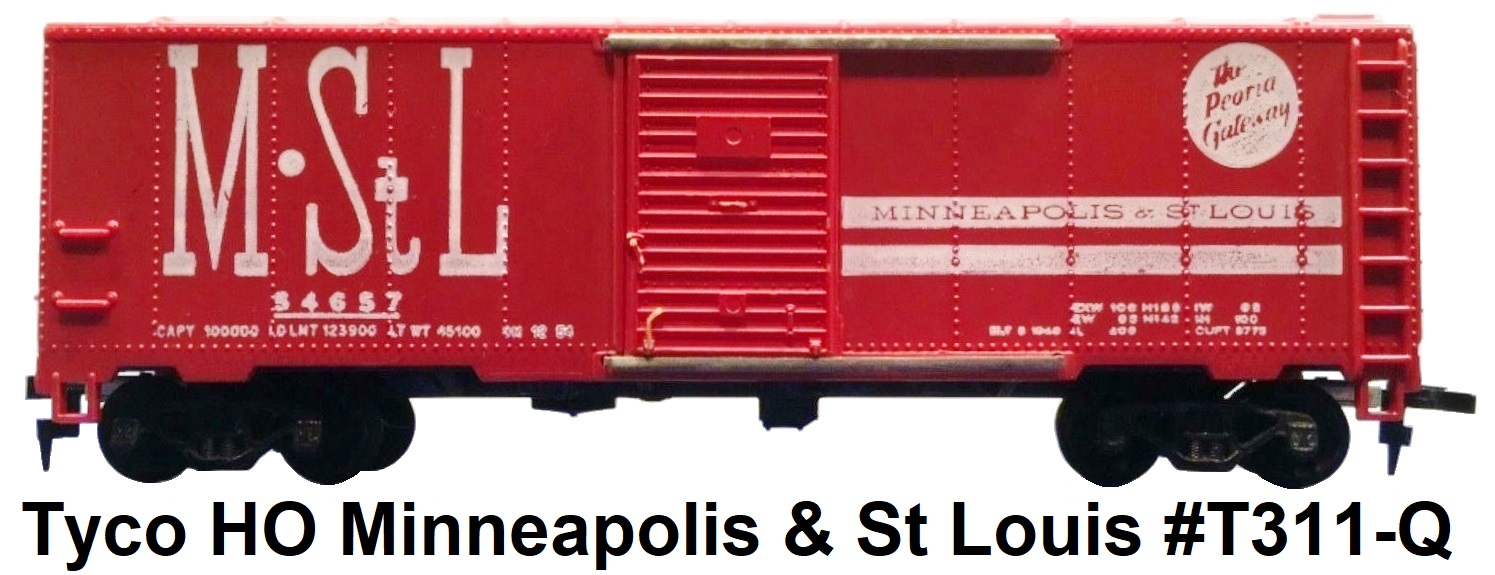
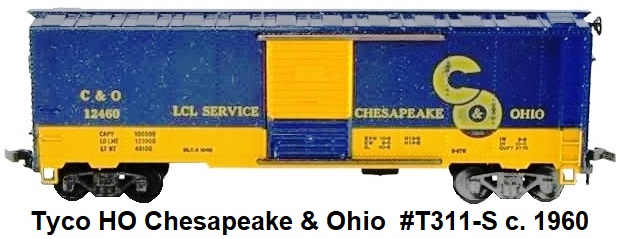
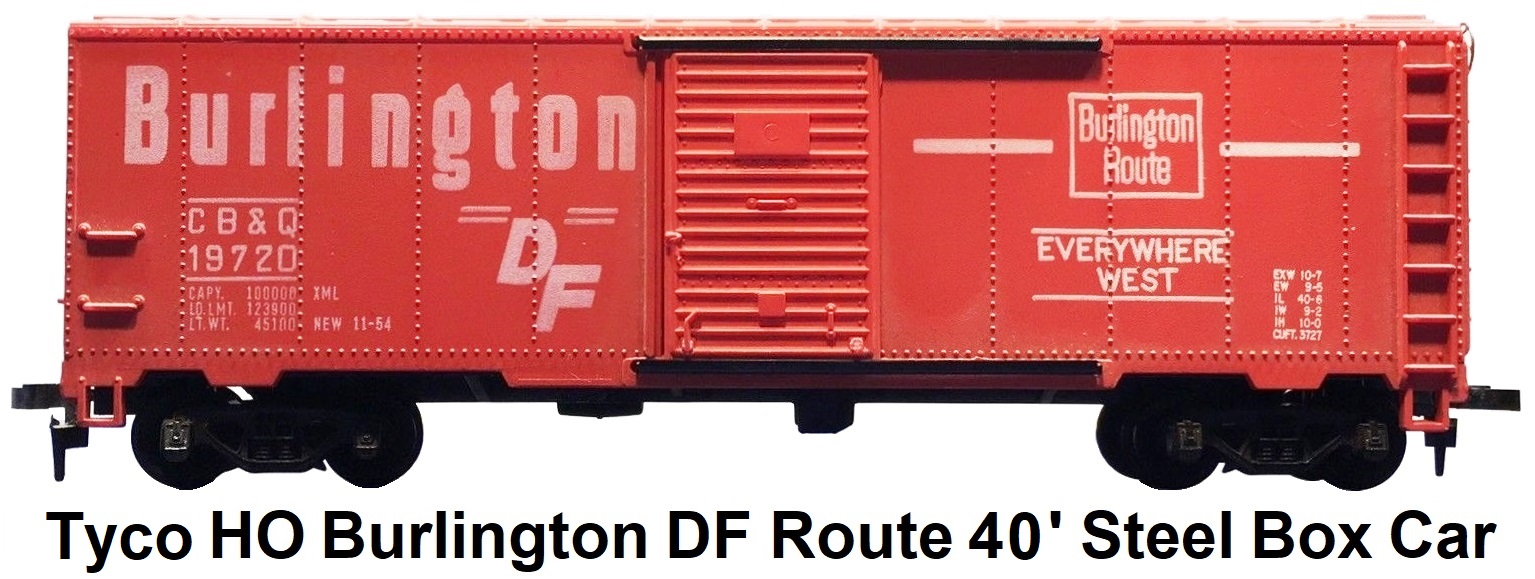
Tyco HO Red Box Era 40' Steel Box Cars
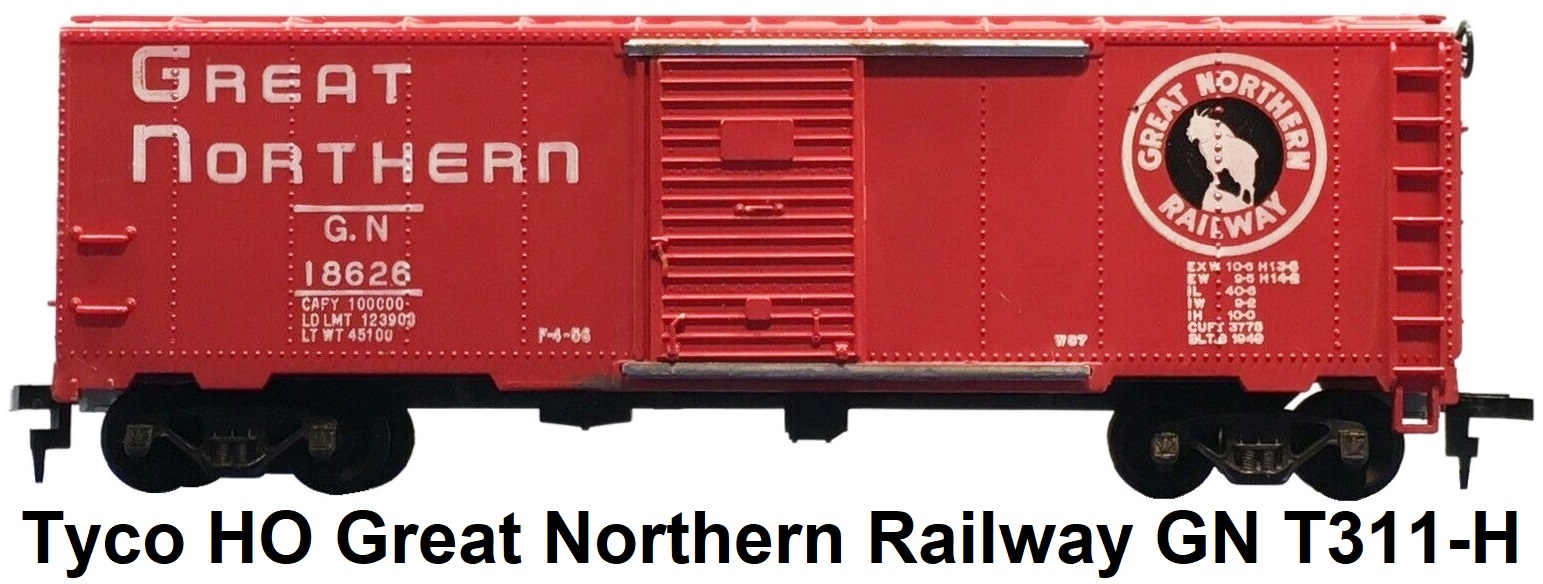
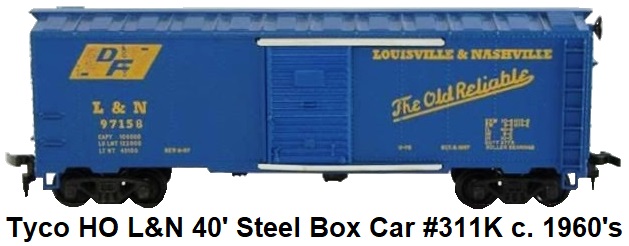
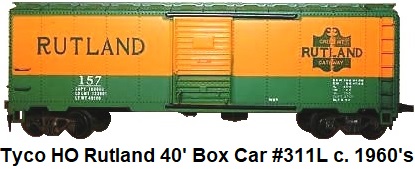
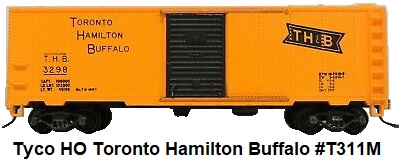

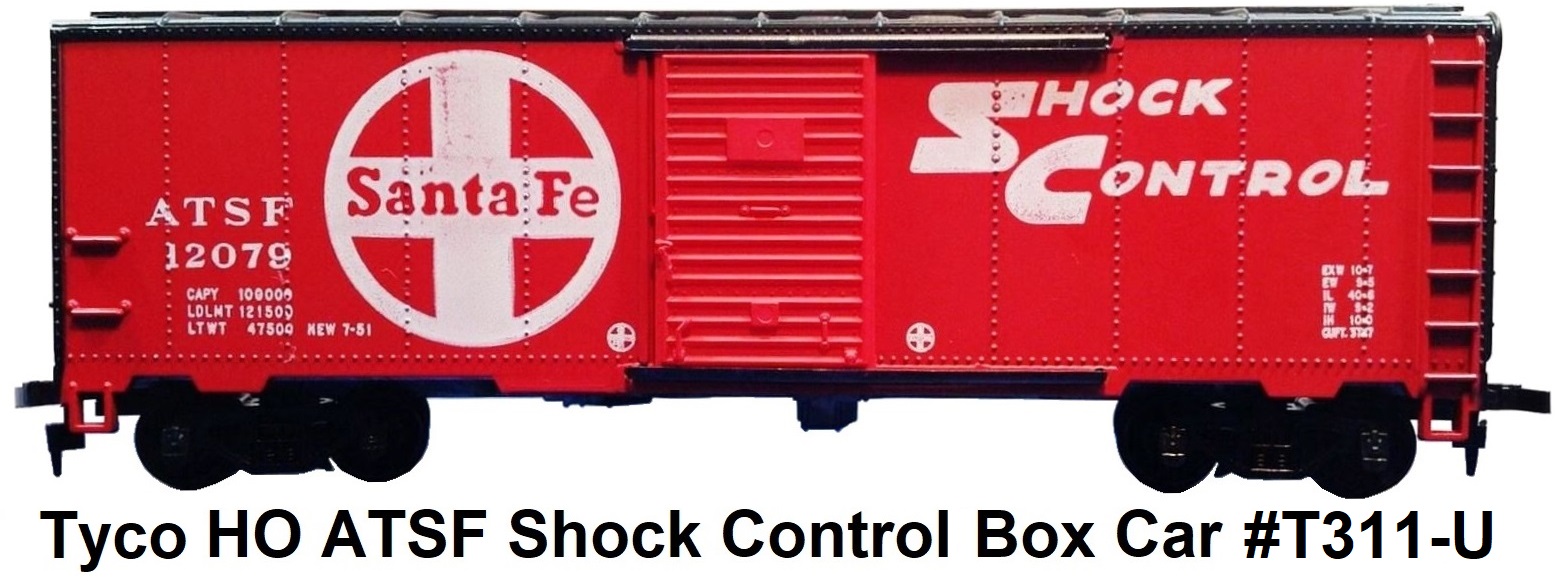
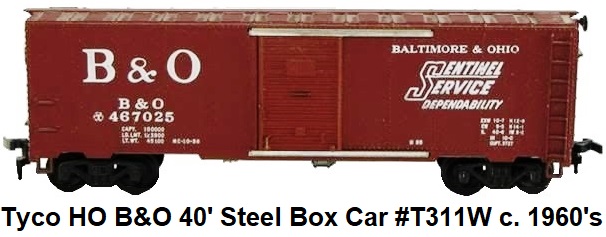
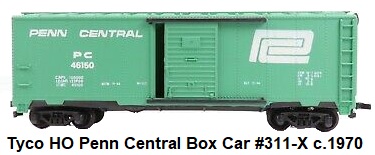
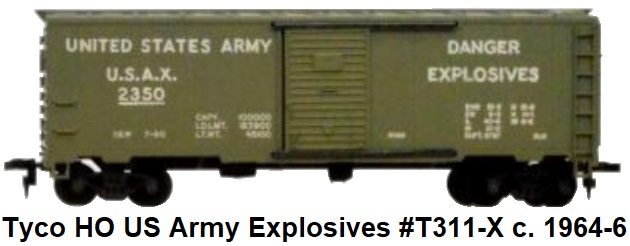
Tyco HO Red Box Era 40' Open Gondolas
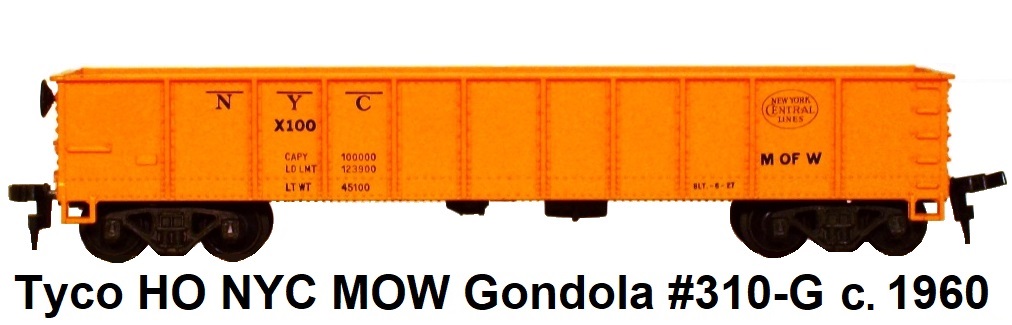
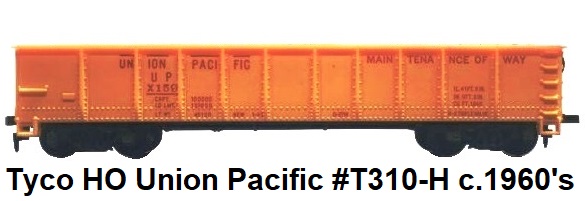
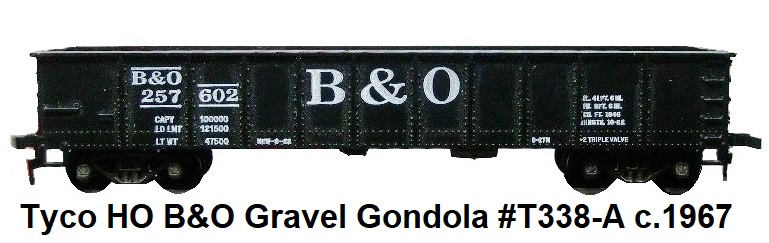
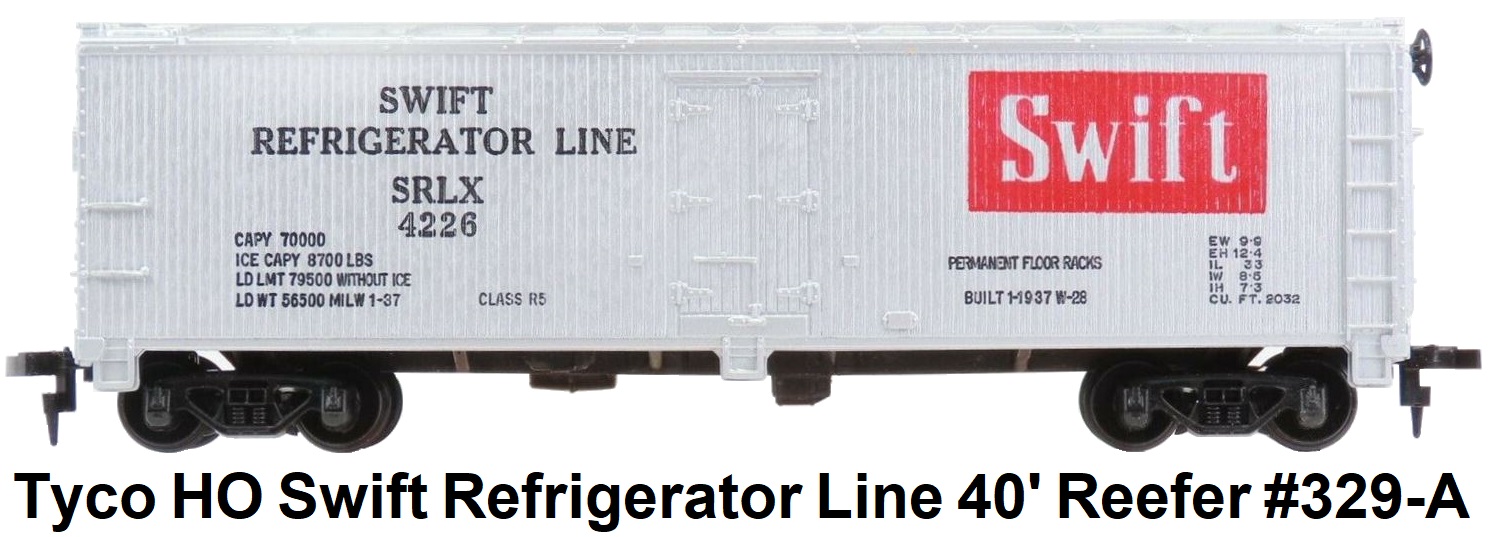
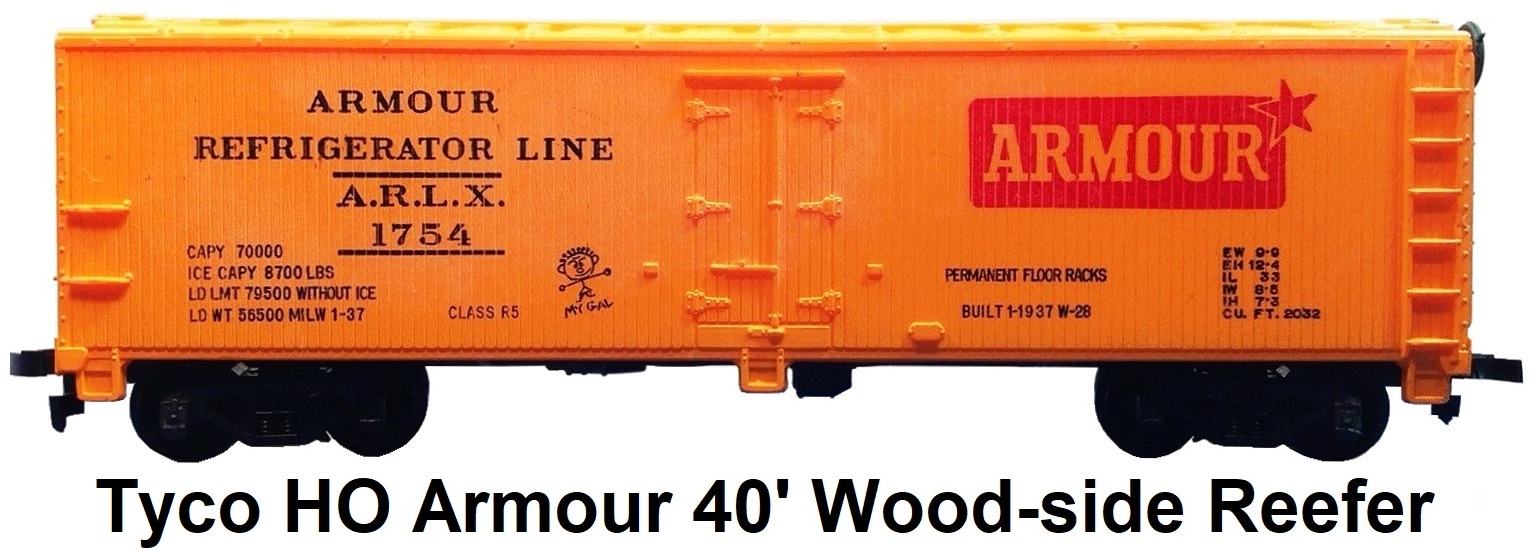
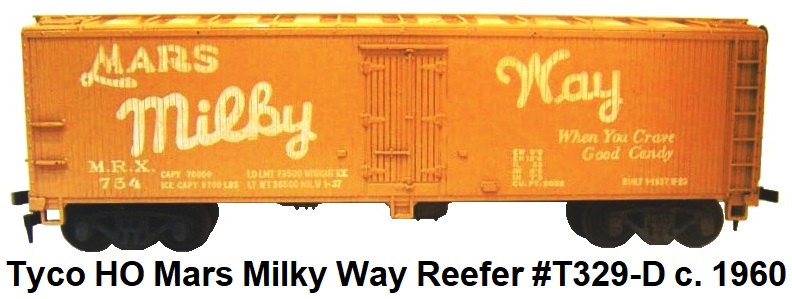
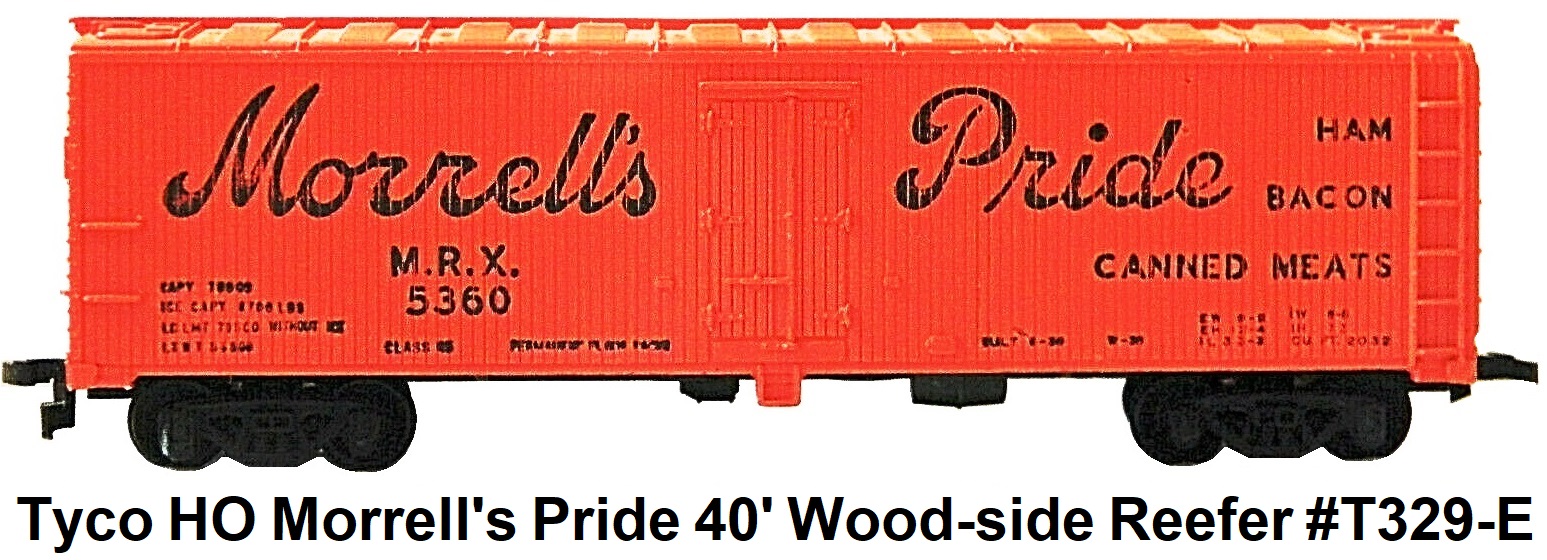
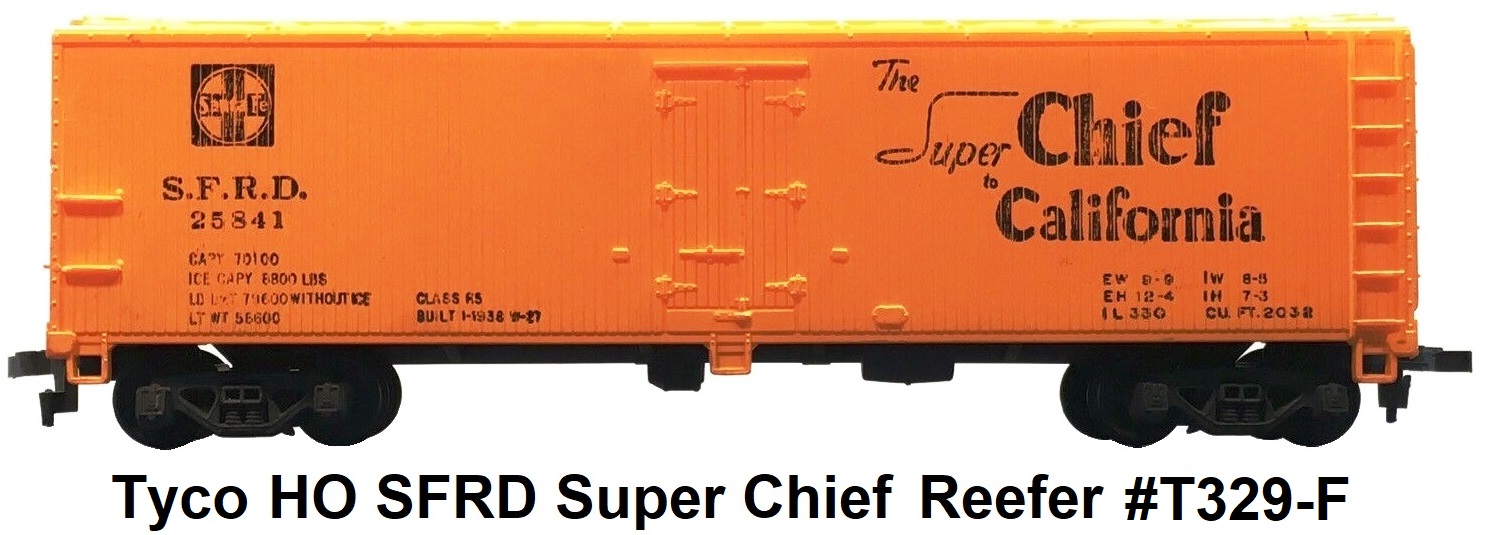
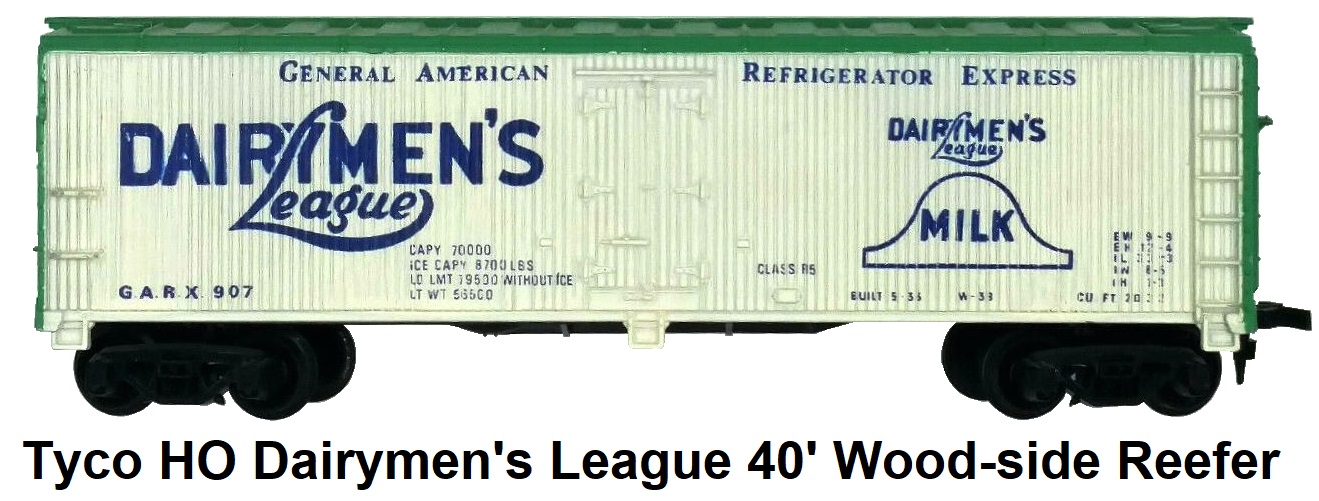
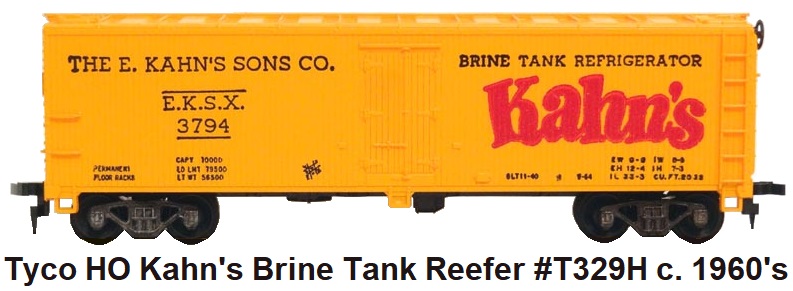
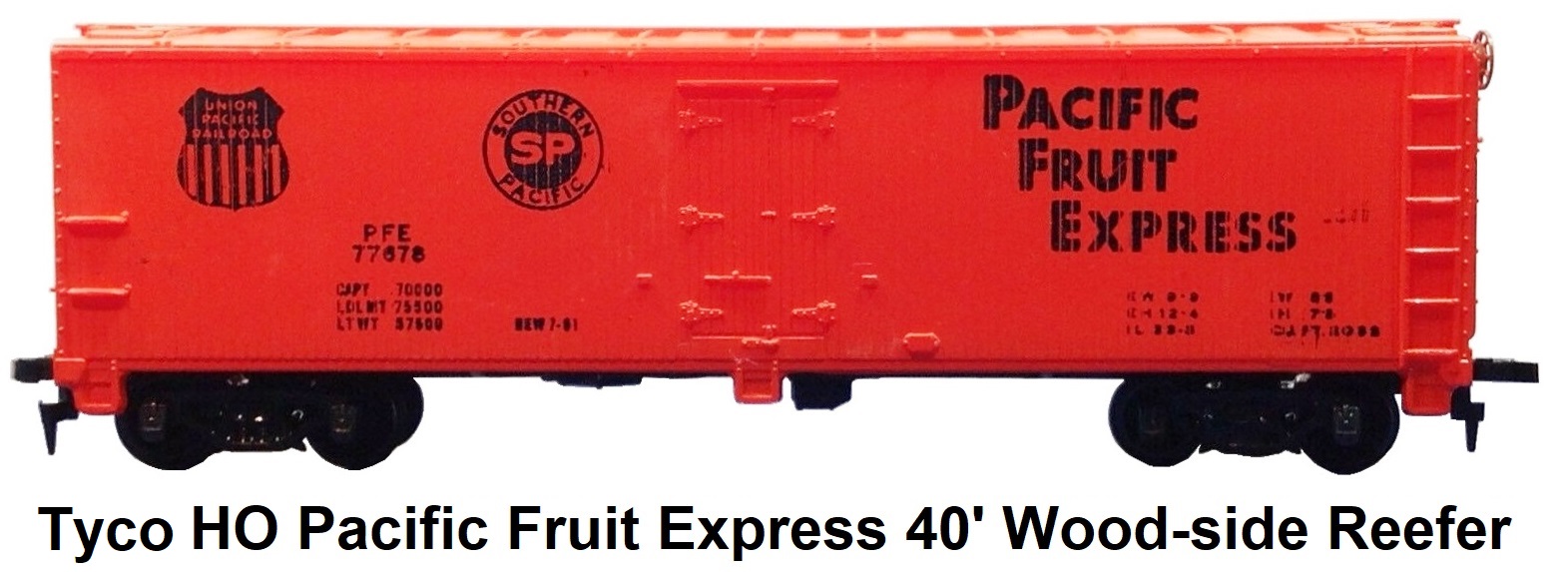
Tyco HO Red Box Era 40' Wood-side Refrigerator Cars
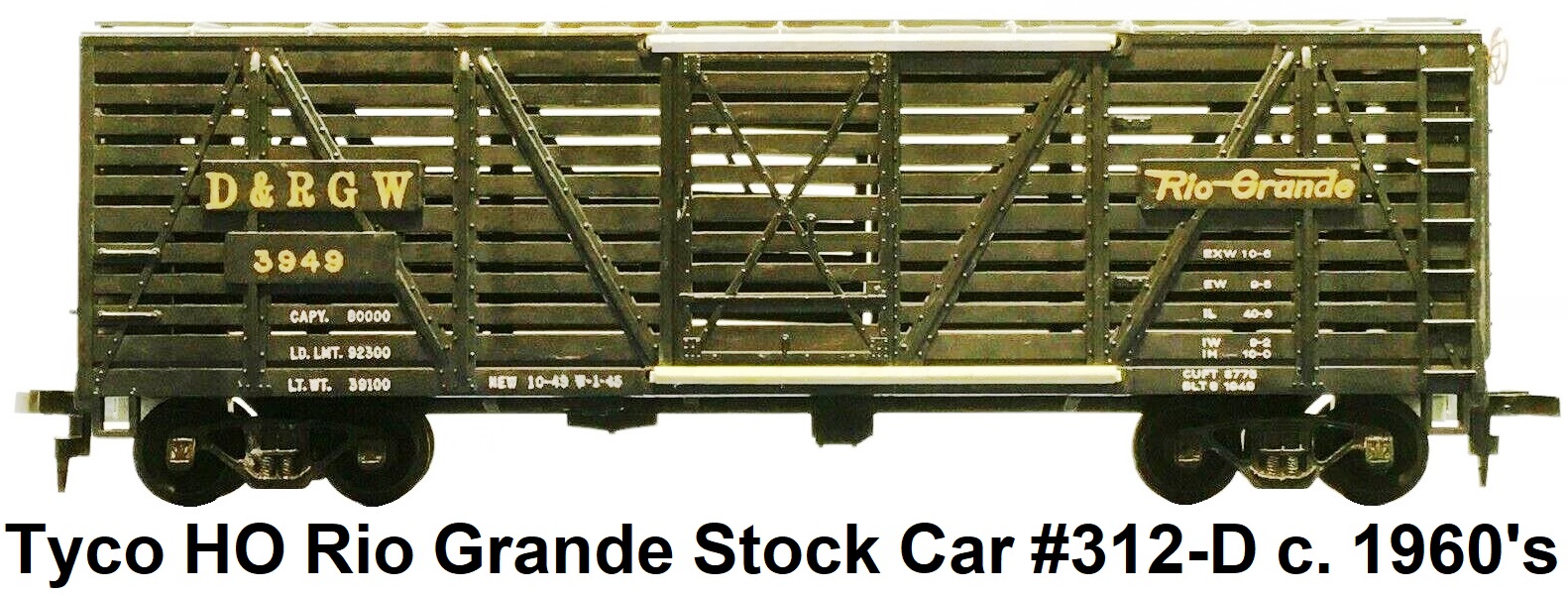
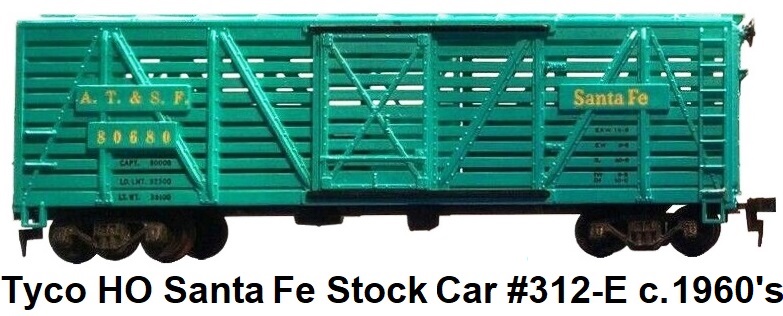
Tyco HO Red Box Era 40' Live Stock Cars
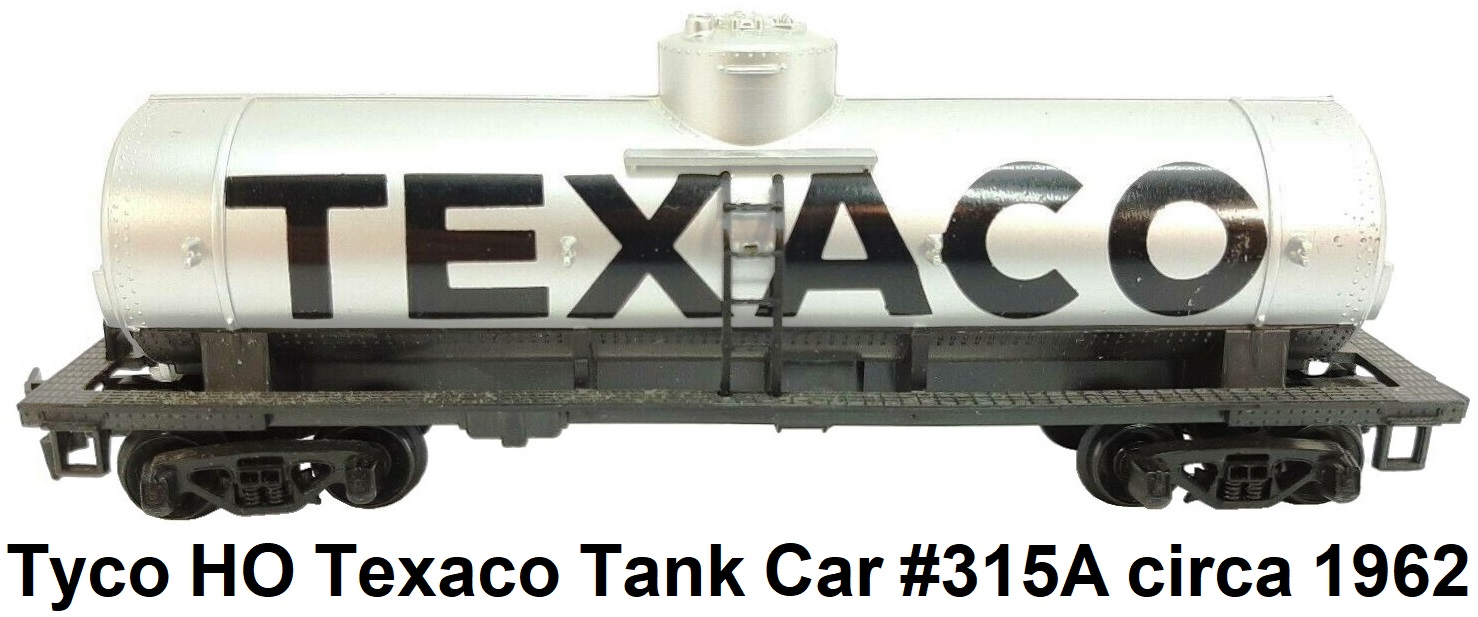
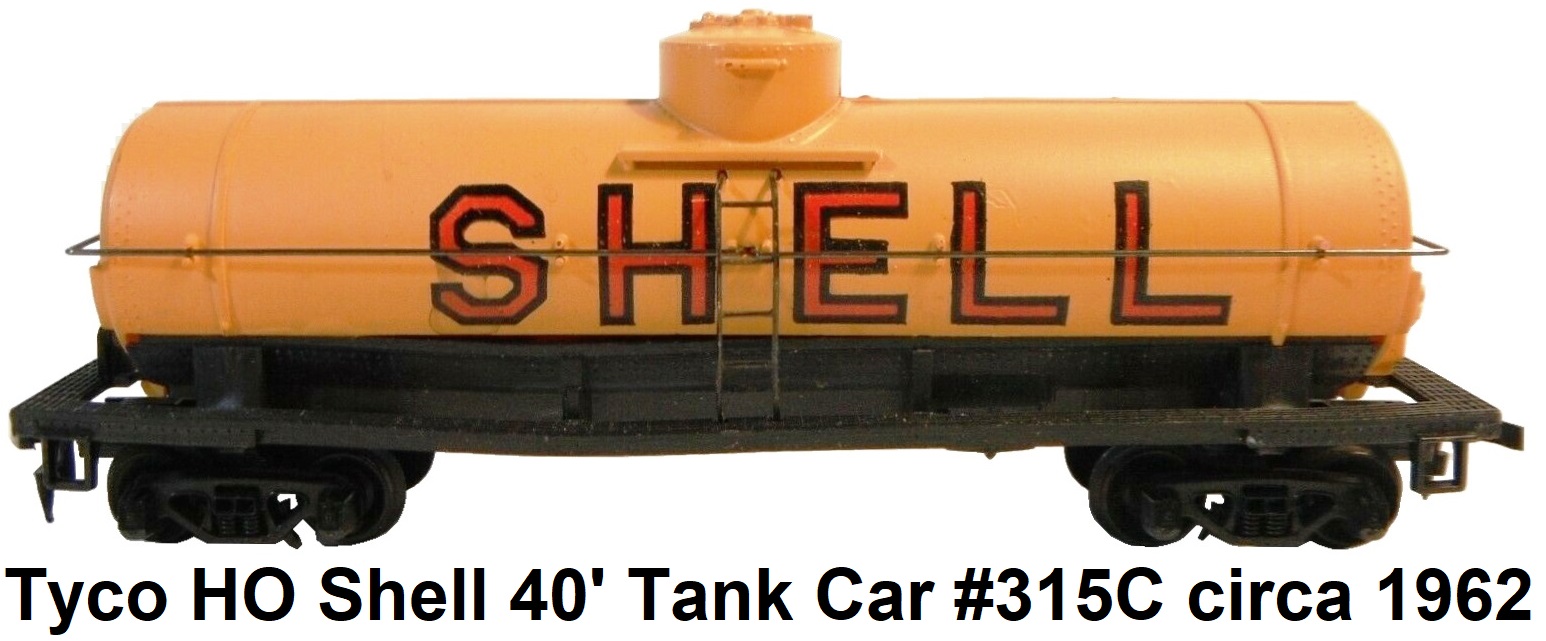
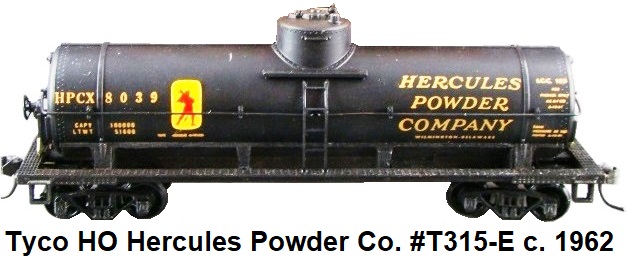
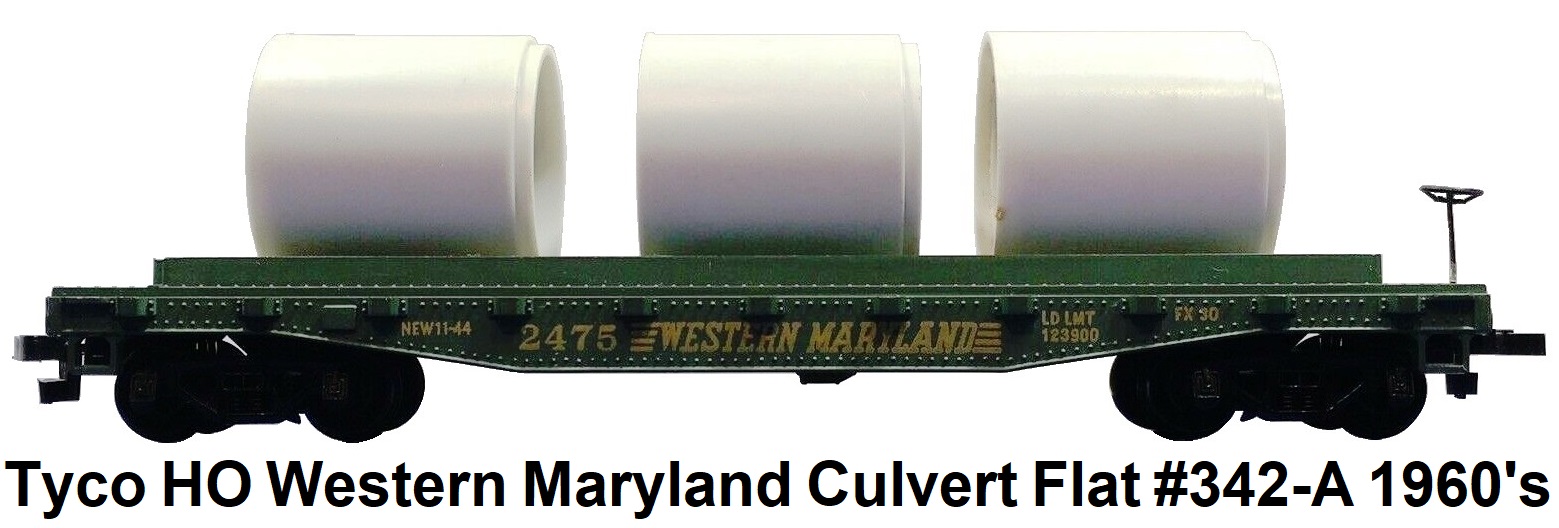
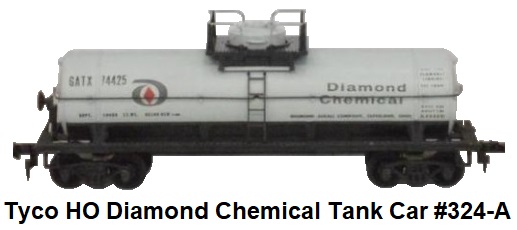
Tyco HO Red Box Era 40' Single Dome Tank Cars
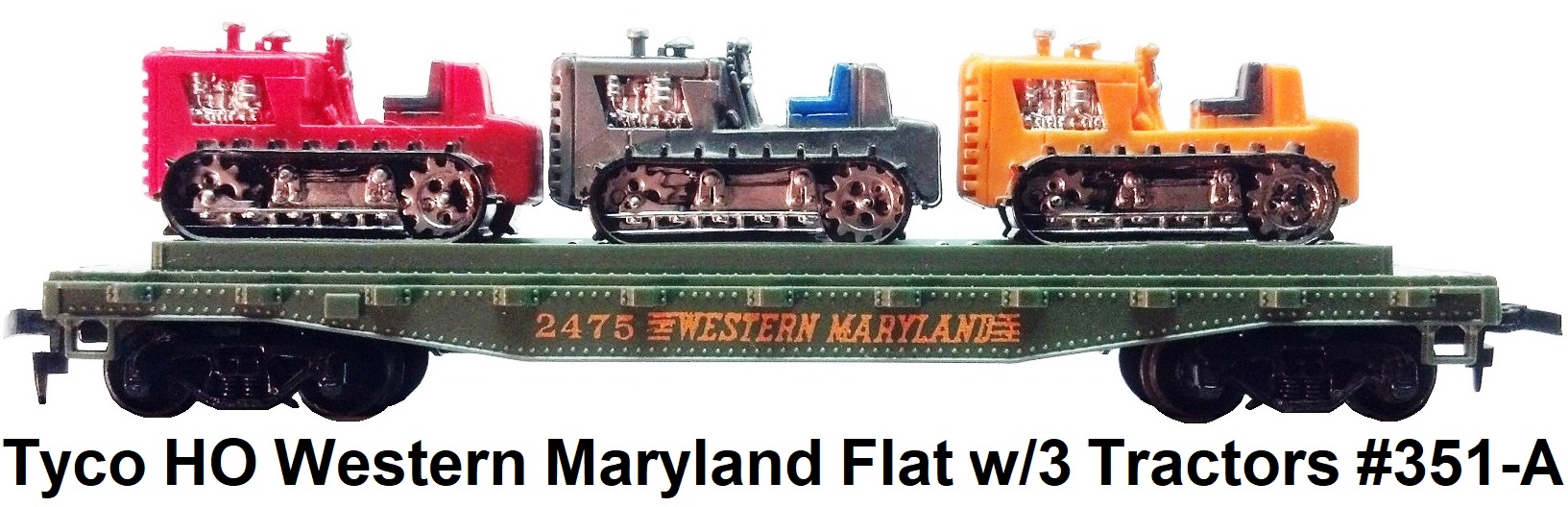
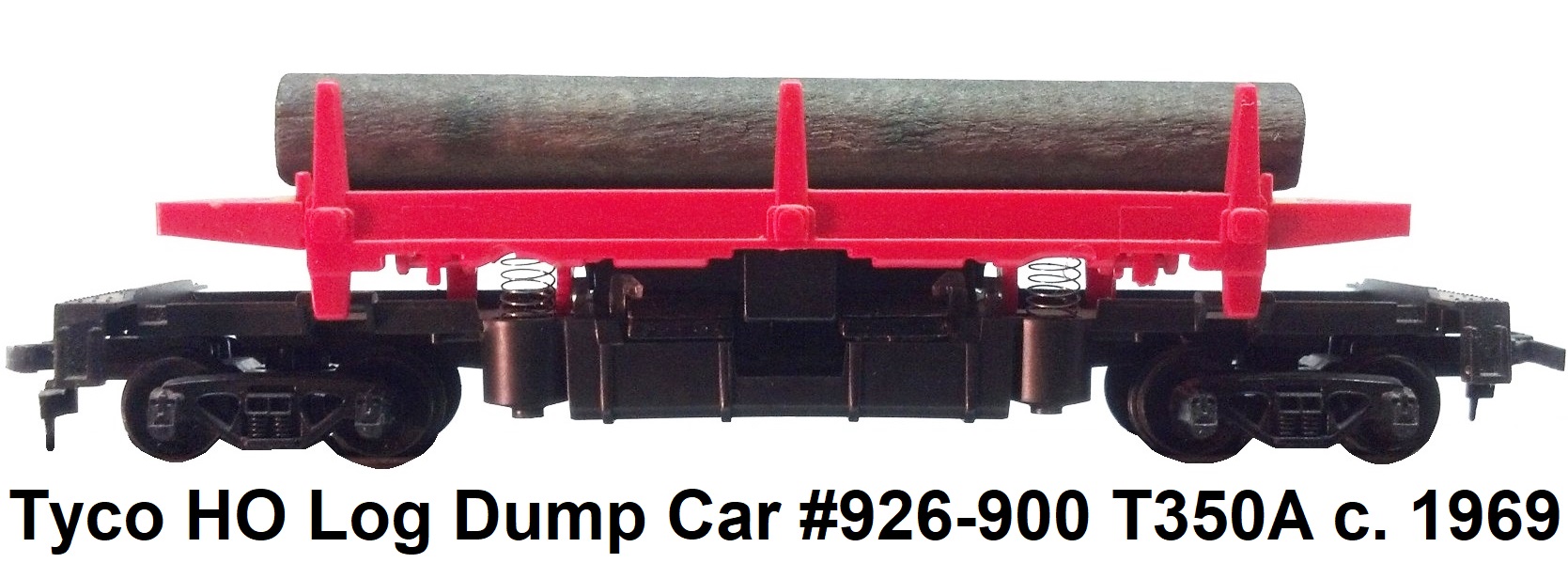
Miscellaneous Tyco HO Red Box Era Freight Cars
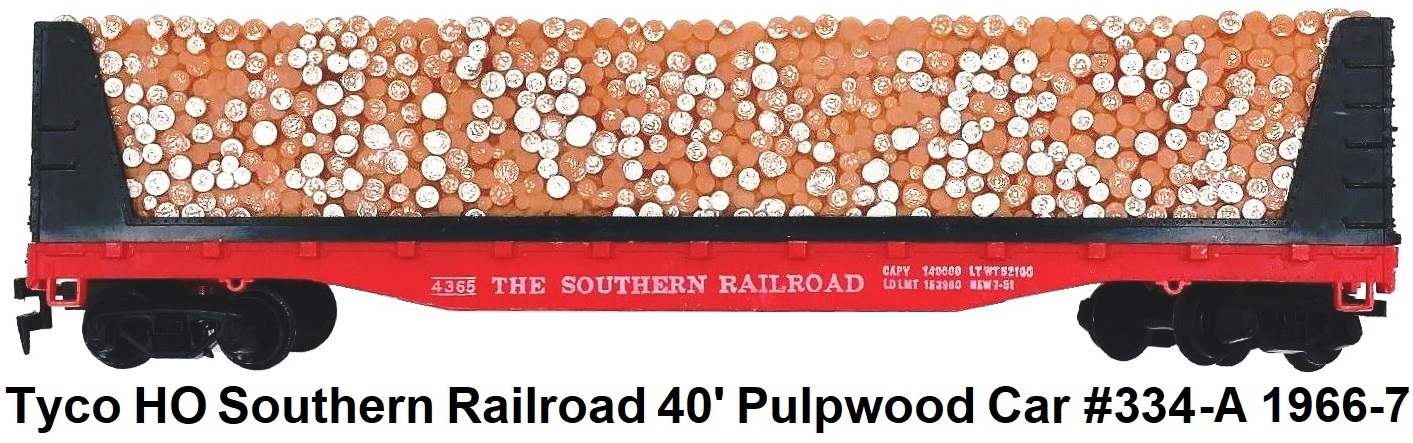
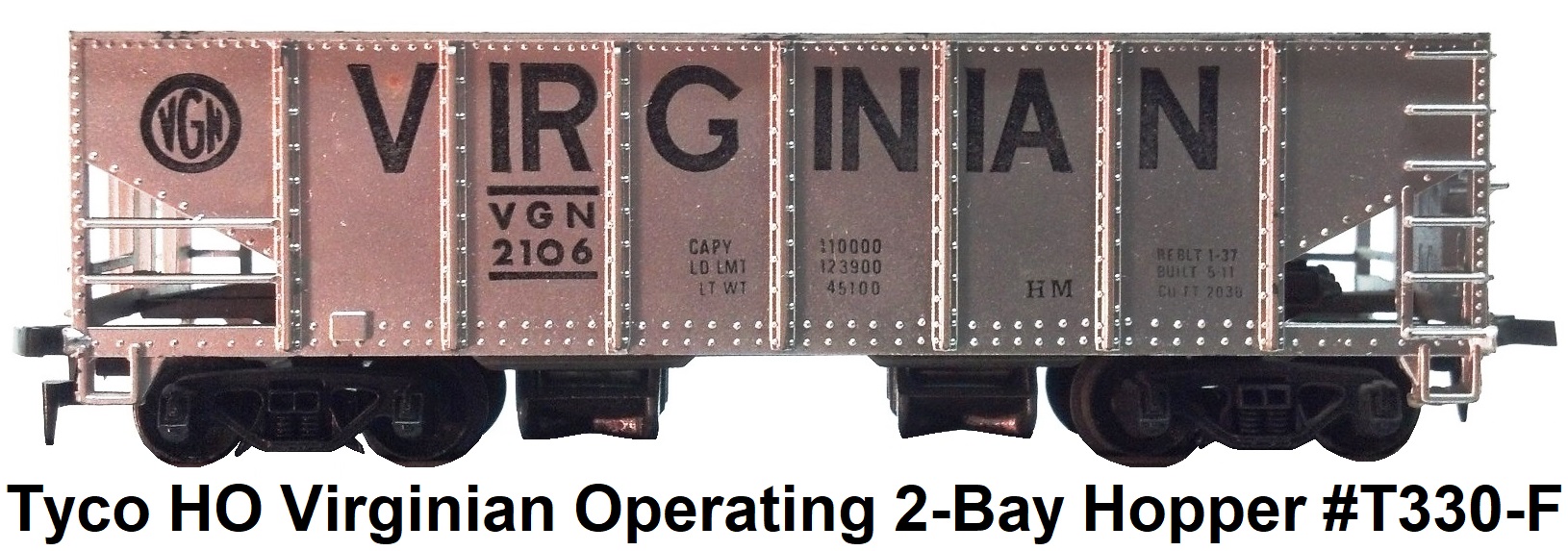
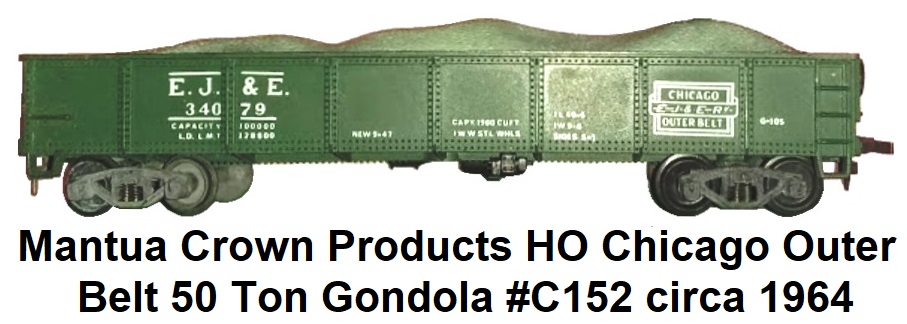
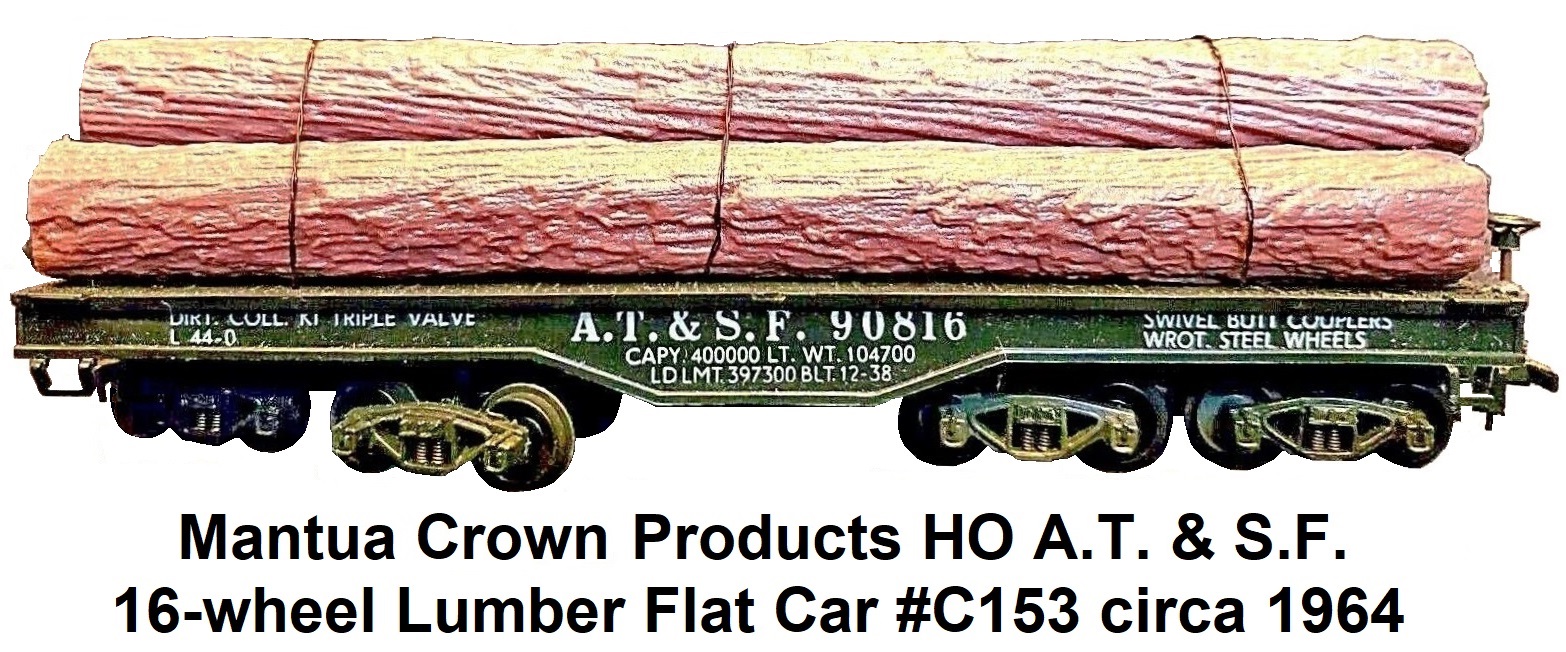
In early 1964, Mantua began selling a separate line of injected molded HO freight cars under the name of
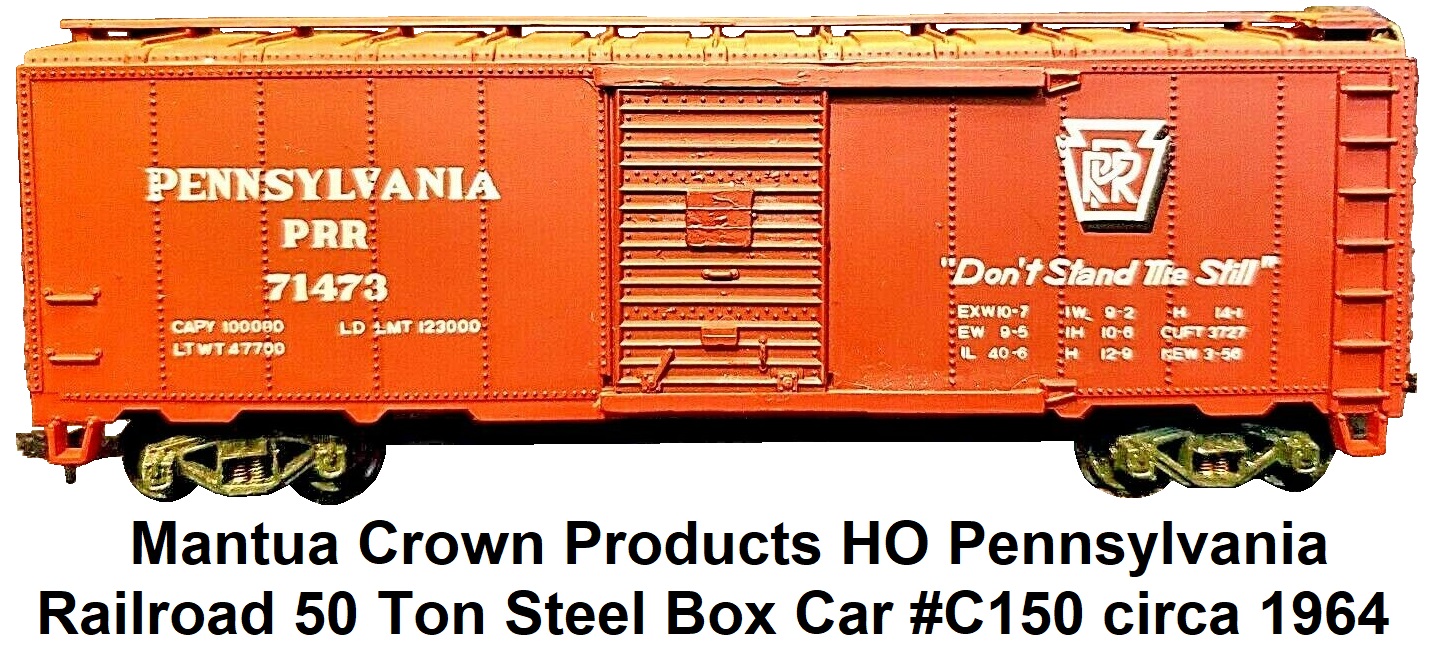
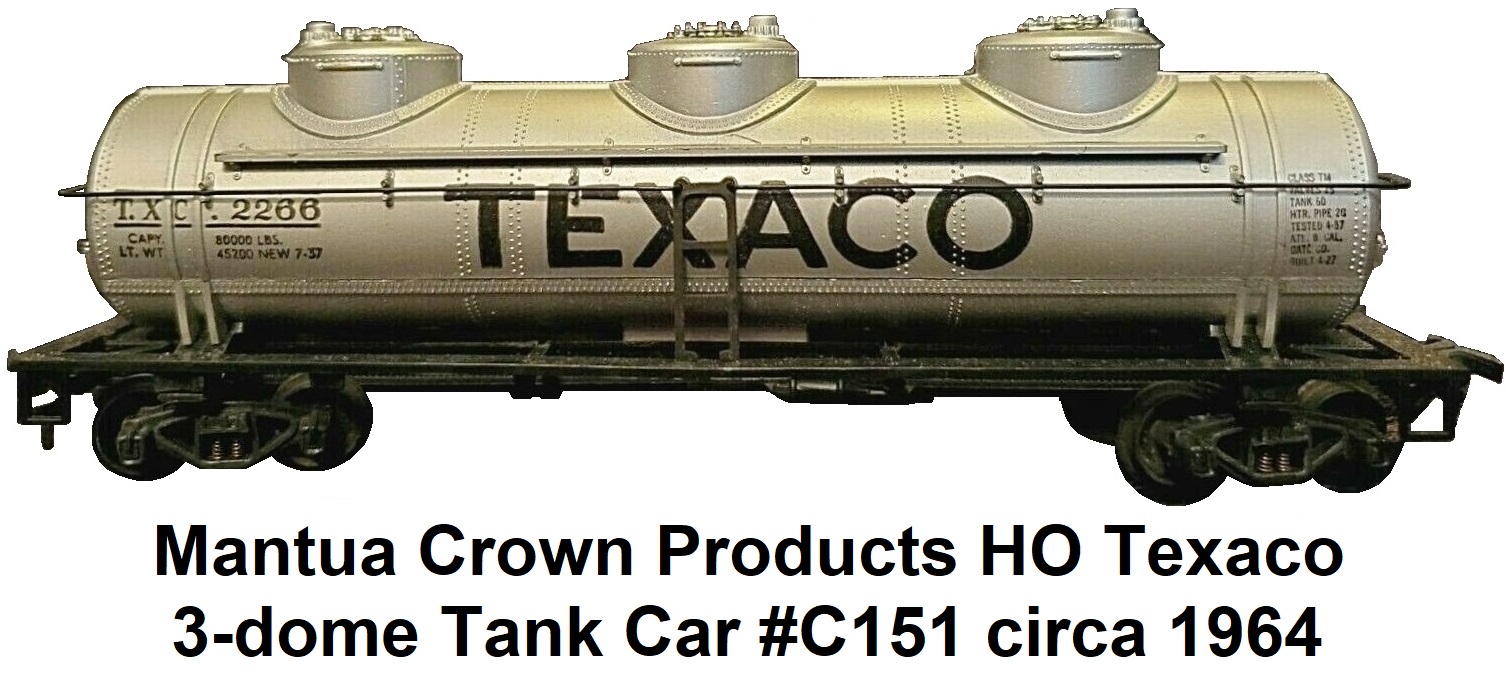
Crown Products that were produced in Hong Kong by Kader. The cars were a 36' steel-type end-cupola caboose model, a 50 ton
steel box car, 3-dome tank car, 50 ton gondola, and a 50' 200 ton 16-wheel flatcar with logs. Mantua advertised the Hong
Kong-made Crown line on the inside front cover of the January 1964 issue of Model Railroader magazine. At the bottom of the
ad Crown Products was listed as a division of Mantua Metal Products. The Crown cars were sold in cardboard and plastic
blister-packs that were marked with Mantua’s Woodbury Heights, N.J. address. These were the first HO scale Kader-produced
trains to be sold in the United States. All of the Crown Products freight cars appeared to be knock-off copies of other
manufacturers cars. Similarities to Varney and Athearn HO freights are
uncanny. The Crown cars can be easily identified as the words 'Crown' and 'Hong Kong' are embossed on the undersides of the
plastic frames. The Crown cars had sprung trucks with plastic wheels and cylindrical axles, rather than pointed axles found
in replacement wheelsets. These Crown freight cars were offered at a much lower price point than the regular blue box and red
box Mantua/Tyco production freights. These same cars later appeared in the lines of AHM and Bachmann. In 1984 Kader acquired
Bachmann and continued to produce a wide variety of model trains in multiple scales, including the
same HO freight cars that Mantua offered in the Crown Products line.
Crown products HO Freight Cars Issued by Mantua in 1964
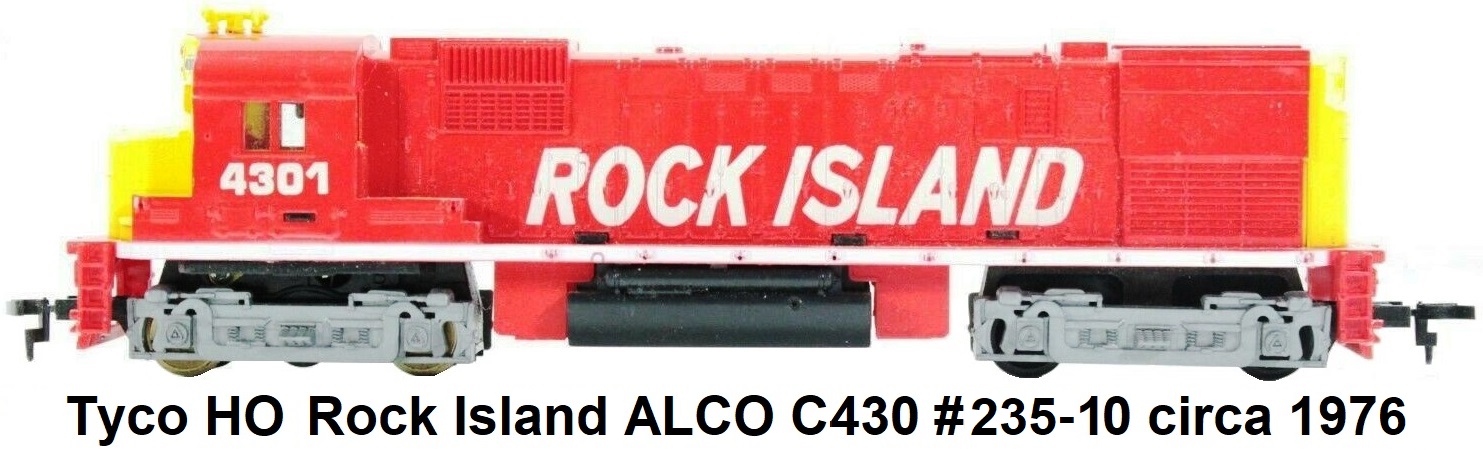
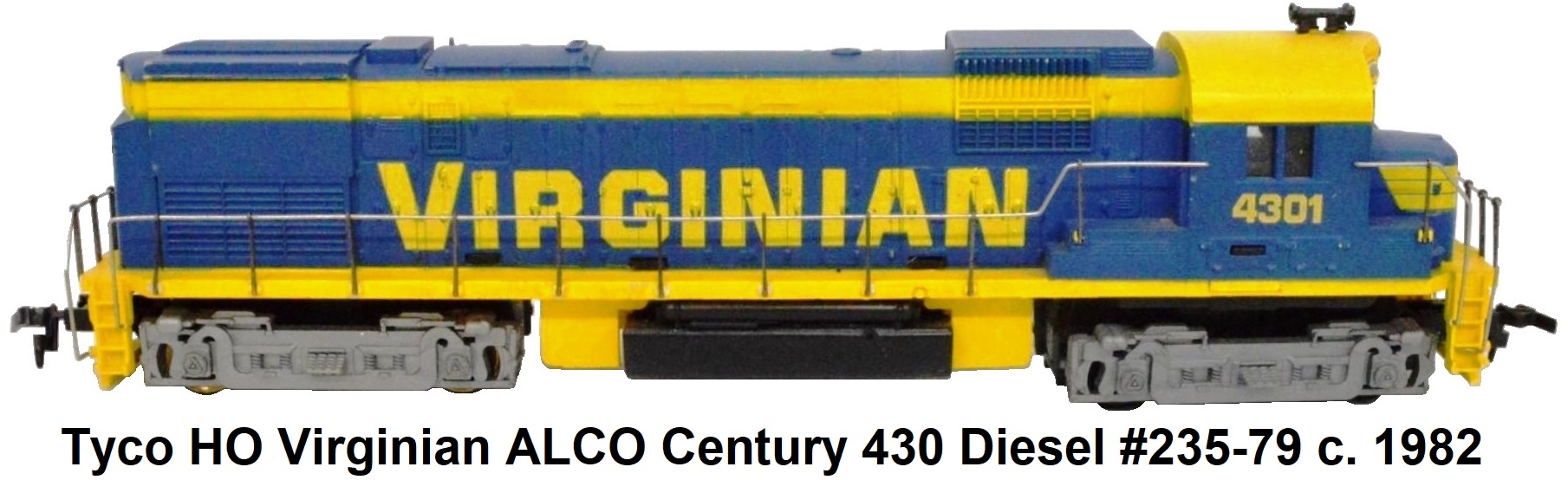
Tyco introduced its HO model of the ALCO Century 430 diesel locomotive in 1966. This engine would
remain in the product line through 1993, 25 years longer than the real ALCO Century 430's that only lasted 2 years (1966-68).
During its lifespan at Tyco it was catalogued as the #235 series and appeared in
Chicago Quincy & Burlington, Burlington Nothern, Canadiana, Canadian National, Chessie System, Grand Trunk RR,
Great Northern, Green Bay & Western, Illinois Central, Illinois Central Gulf, New Haven, Penn Central, Pennsylvania, Rock
Island, Santa Fe (Warbonnet), Santa Fe (freight), Silver Streak, Soo Line, Spirit of 76, Spokane Portland & Seattle,
USA Express, and Virginian liveries, plus an upainted kit version. It was always found with road #4301 rgardless of road
name. Tyco's Century 430 was initally powered using Mantua's power-truck motor. The early versions have 'Mantua-Tyco'
embossed on the weight at the bottom of the fuel tank. Later Century 430 models utilized the Tyco PowerTorque drive.
Starting in 1990 Tyco moved production from Hong Kong to Yugoslovia, where Mehano built the ALCO Century 430's using their own
tooling. This later production is easily recognizable as it does not carry Tyco's name on the fuel tank. There have been no
known models discovered of either the Green Bay & Western or the Spokane Portland & Seattle Century 430's in HO by Tyco,
so it is generally believed that they were never actually produced in this road name despite being catalogued.
By the 1970's, Tyco shifted sales and marketing to a consumer-oriented, mass marketing focus.
After the name changed to Tyco Industries, the company was sold in 1970 to
Consolidated Foods during an era of corporate conglomerates, takeovers and diversification.
The sale ended forty-five years of continuous ownership by the Tyler family.
John Tyler passed away in November, 1972. With the creation of Tyco Industries,
the Mantua brand name was retired. Tyco headquarters was moved to Mt. Laurel, New Jersey.
Although the Mantua name was no longer used, many locomotive kits continued to be
sold but under the Tyco name. As a division of what became Sara Lee, Tyco continued to grow. Norman Tyler
oversaw the incorporation of the company under the new name Tyco Industries, which combined Mantua Metal Products and
Tyler Manufacturing. This Consolidated Foods Era is referred to as the 'brown-box' period for collectors.
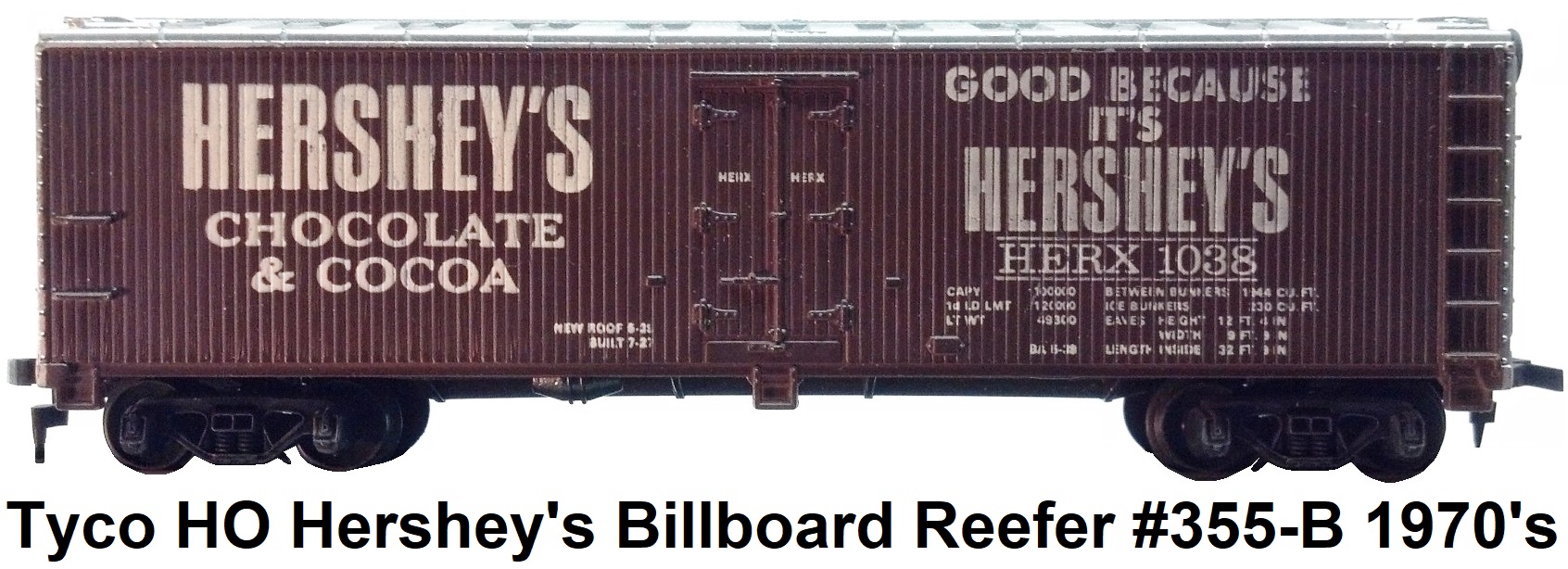
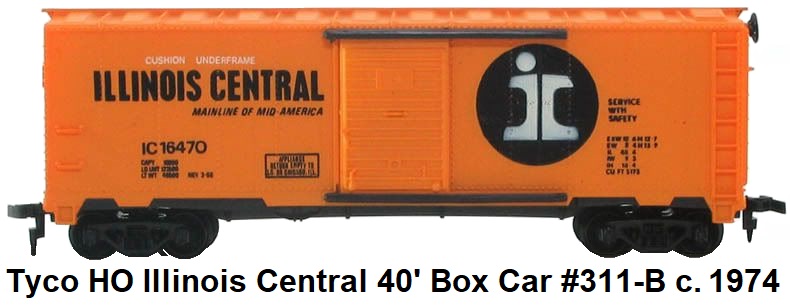
Tyco Brown Box Era HO 40' Wood-side Refrigerator Cars, Billboard Reefers & Old Time Reefers
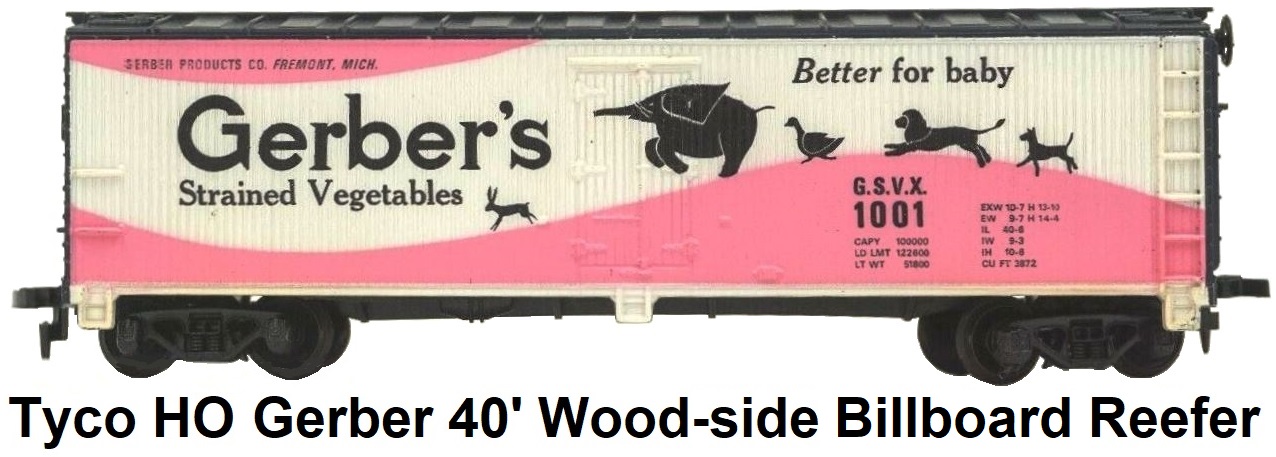
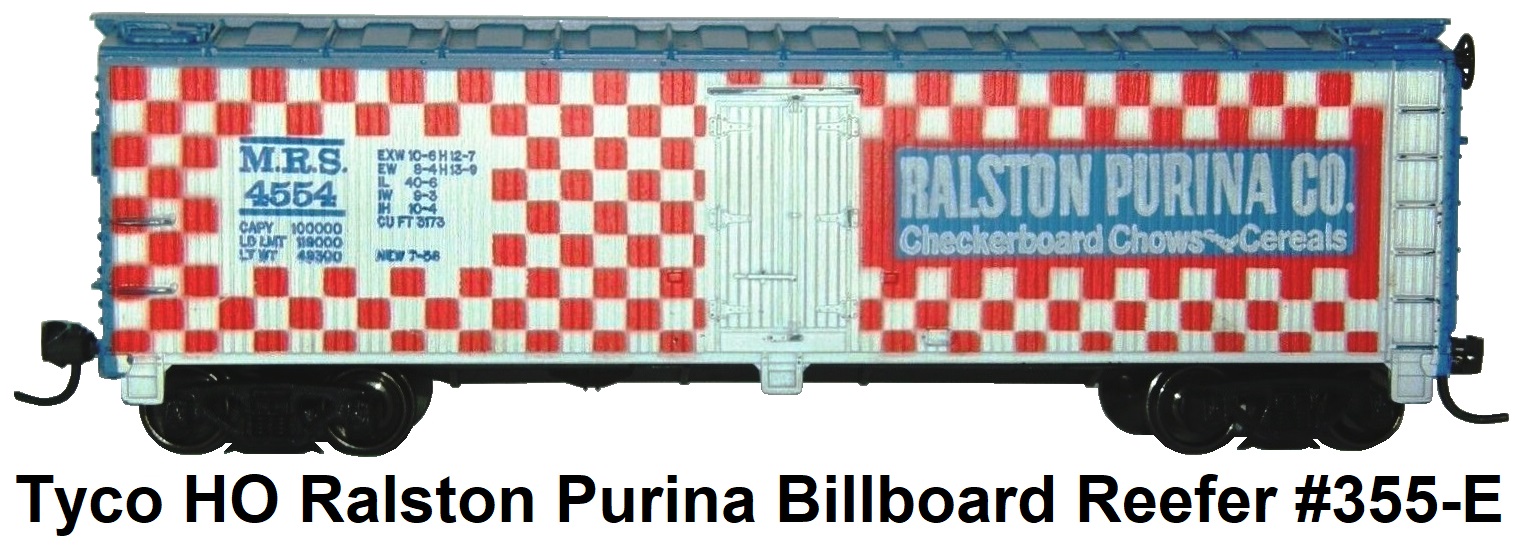
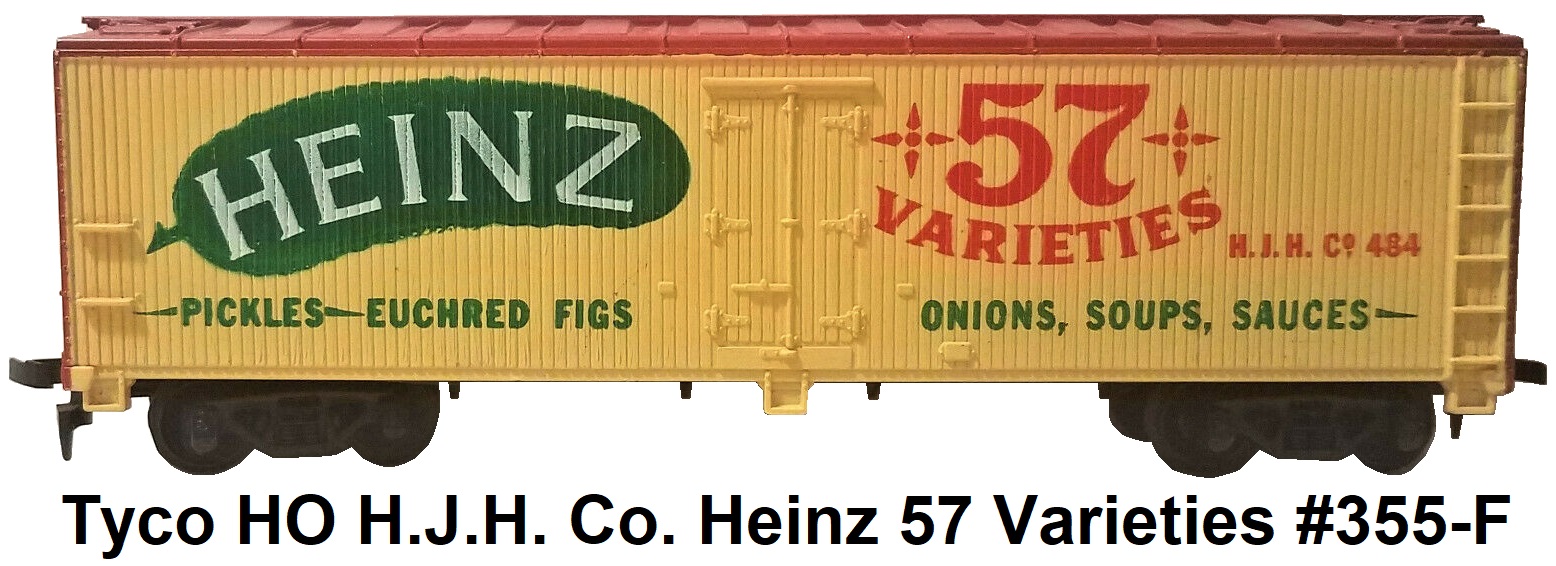
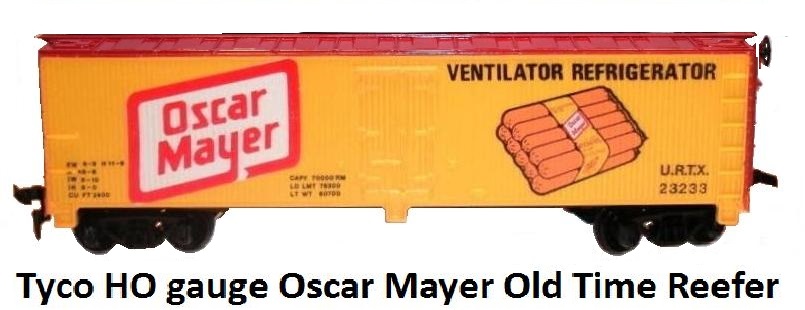
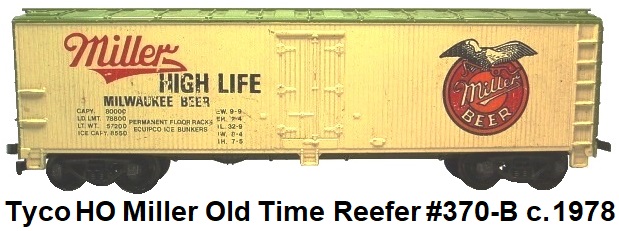
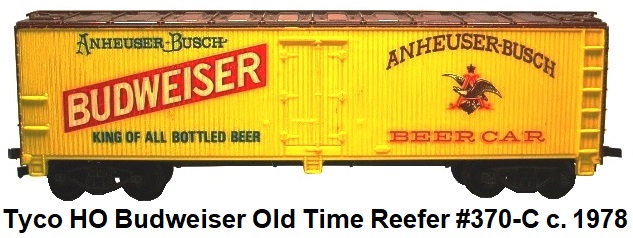
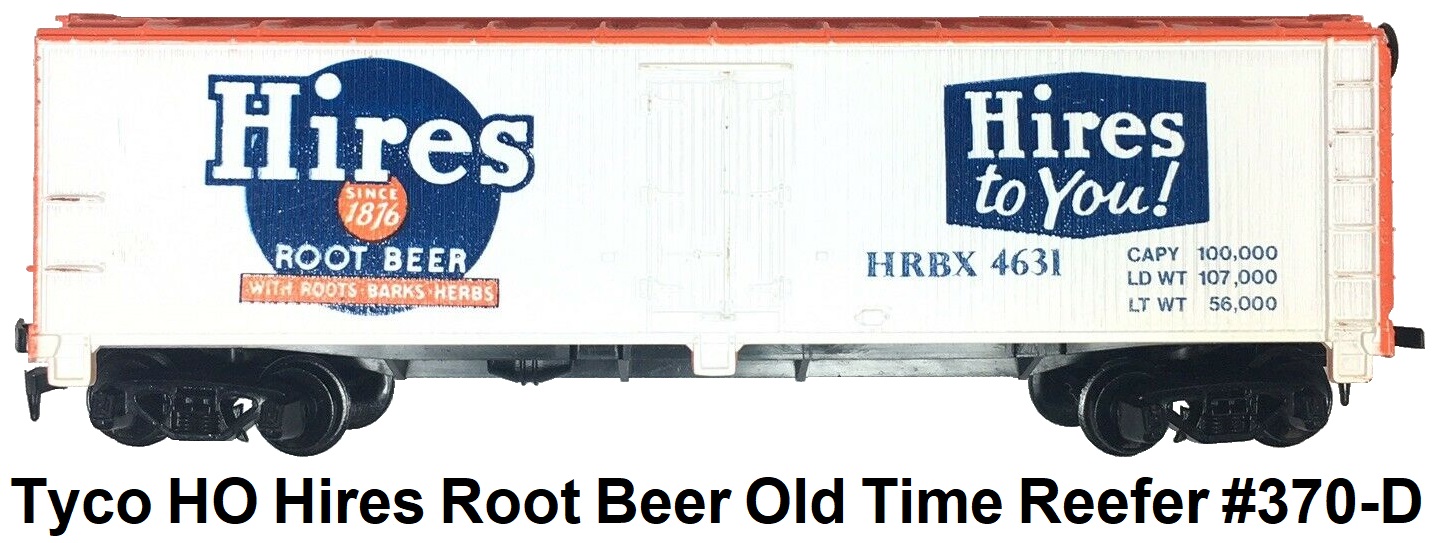
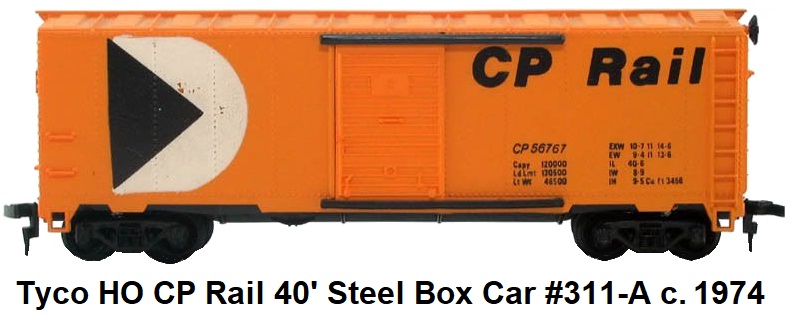
Tyco HO Brown Box Era 40' Steel Box Cars
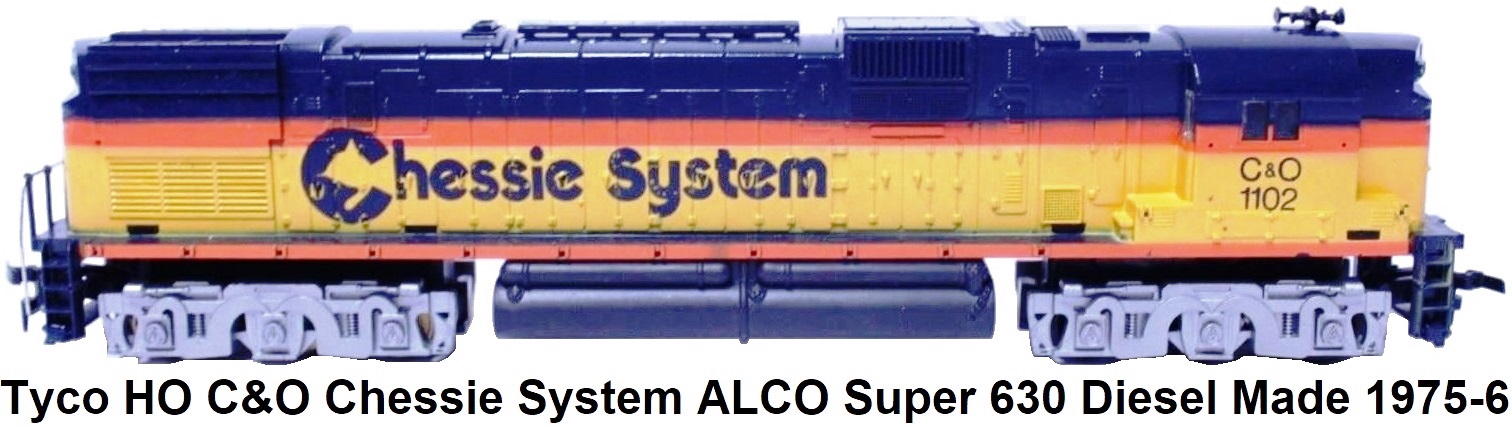 The Super 630 ALCO diesels were introduced in the 1972
catalog. The 630 was the first new locomotive to arrive after the Tyler family sold the Tyco line to Consolidated Foods.
Prior to 1970, Tyco offered models that reflected fairly accurate prototypes. After 1970, under Consolidated Foods
leadership, Tyco's offerings wandered into a fantasy world of unprototypical models. It is this interesting period that
provides modelers and collectors with such items as a Popsicle and Star-Kist Tuna box cars and various Bicentennial
locomotives. Looked down upon by serious hobbyists, these items none the less found favor among those
who enjoyed them as kids and went on to enjoy collecting them as adults. After reaching its zenith in 1973, the work
force at Woodbury Heights dwindled as Consolidated Foods moved more and more production to the Far East. Many
items from this period can be found with 'Made in Hong Kong' embossed on the underside. Consolidated
Foods management remained positive on Tyco and appointed Dick Grey, son of Milt, as president and Harry Pearce as chief
financial officer in 1973. Grey and Pearce brought Tyco back into the black by the late 1970's.
The Super 630 ALCO diesels were introduced in the 1972
catalog. The 630 was the first new locomotive to arrive after the Tyler family sold the Tyco line to Consolidated Foods.
Prior to 1970, Tyco offered models that reflected fairly accurate prototypes. After 1970, under Consolidated Foods
leadership, Tyco's offerings wandered into a fantasy world of unprototypical models. It is this interesting period that
provides modelers and collectors with such items as a Popsicle and Star-Kist Tuna box cars and various Bicentennial
locomotives. Looked down upon by serious hobbyists, these items none the less found favor among those
who enjoyed them as kids and went on to enjoy collecting them as adults. After reaching its zenith in 1973, the work
force at Woodbury Heights dwindled as Consolidated Foods moved more and more production to the Far East. Many
items from this period can be found with 'Made in Hong Kong' embossed on the underside. Consolidated
Foods management remained positive on Tyco and appointed Dick Grey, son of Milt, as president and Harry Pearce as chief
financial officer in 1973. Grey and Pearce brought Tyco back into the black by the late 1970's.
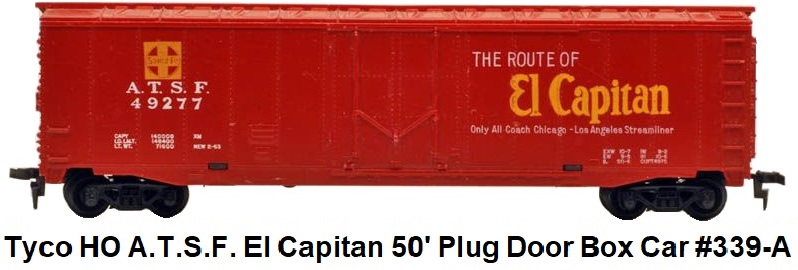
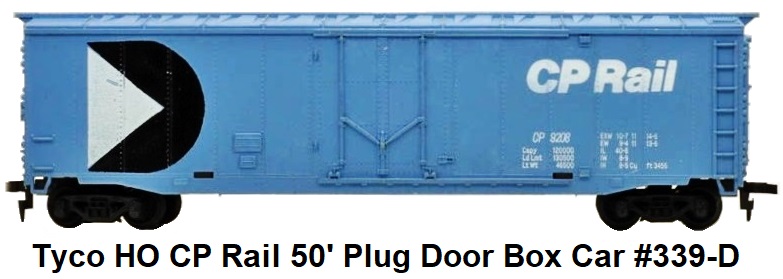
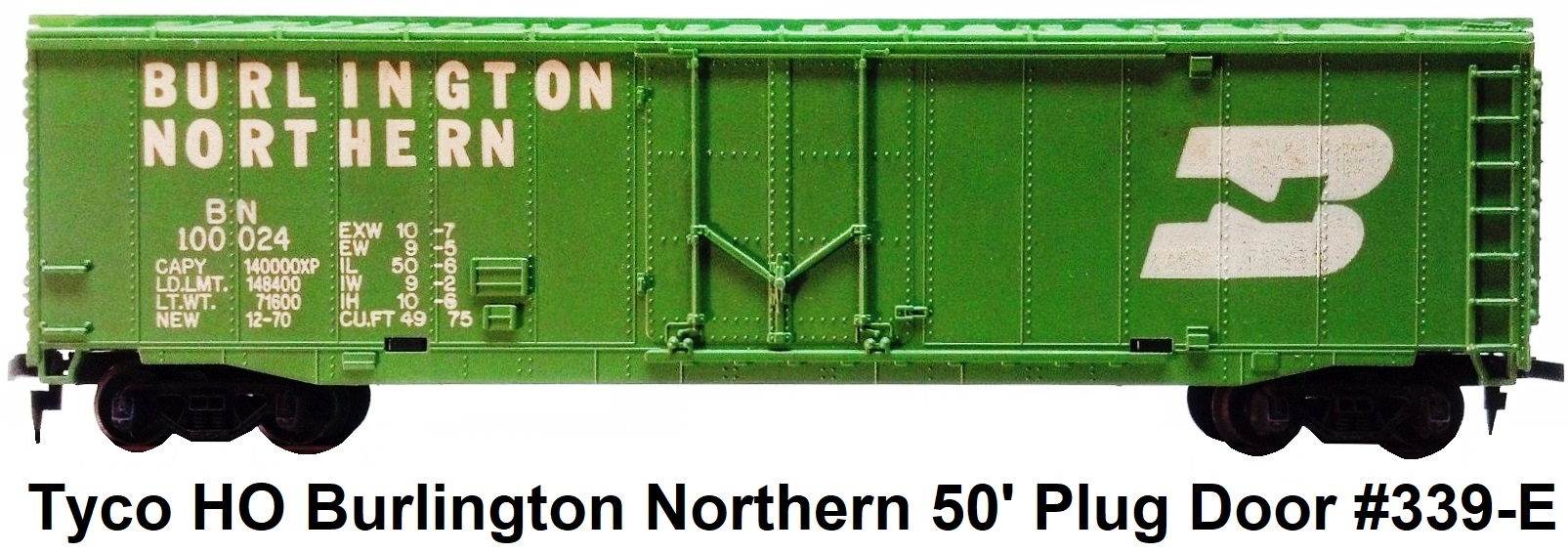
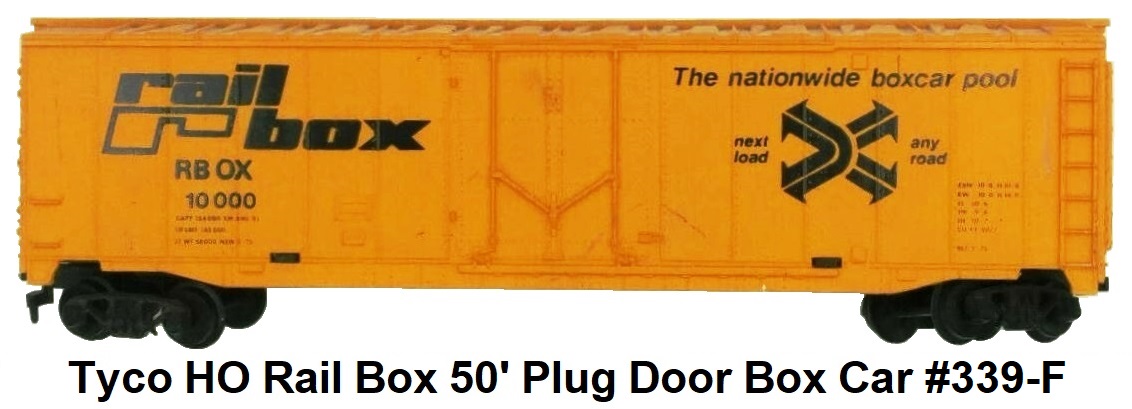
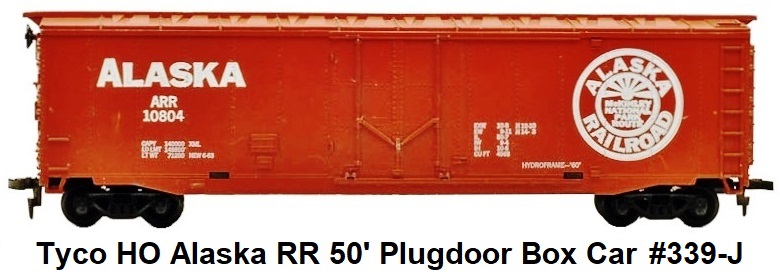
Tyco HO Brown Box Era 50' Plug Door Box Cars
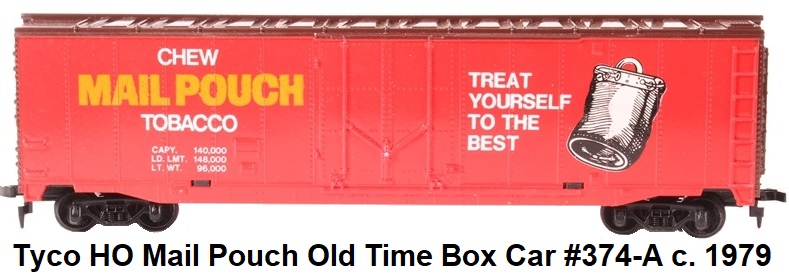
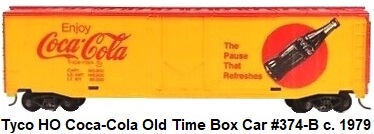
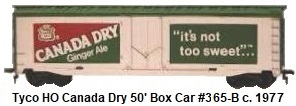
Tyco HO Brown Box Era 50' Old Time Box Cars

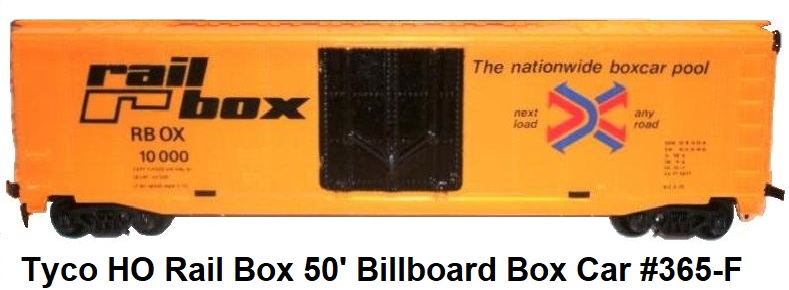
Tyco HO Brown Box Era 50' Billboard Box Cars

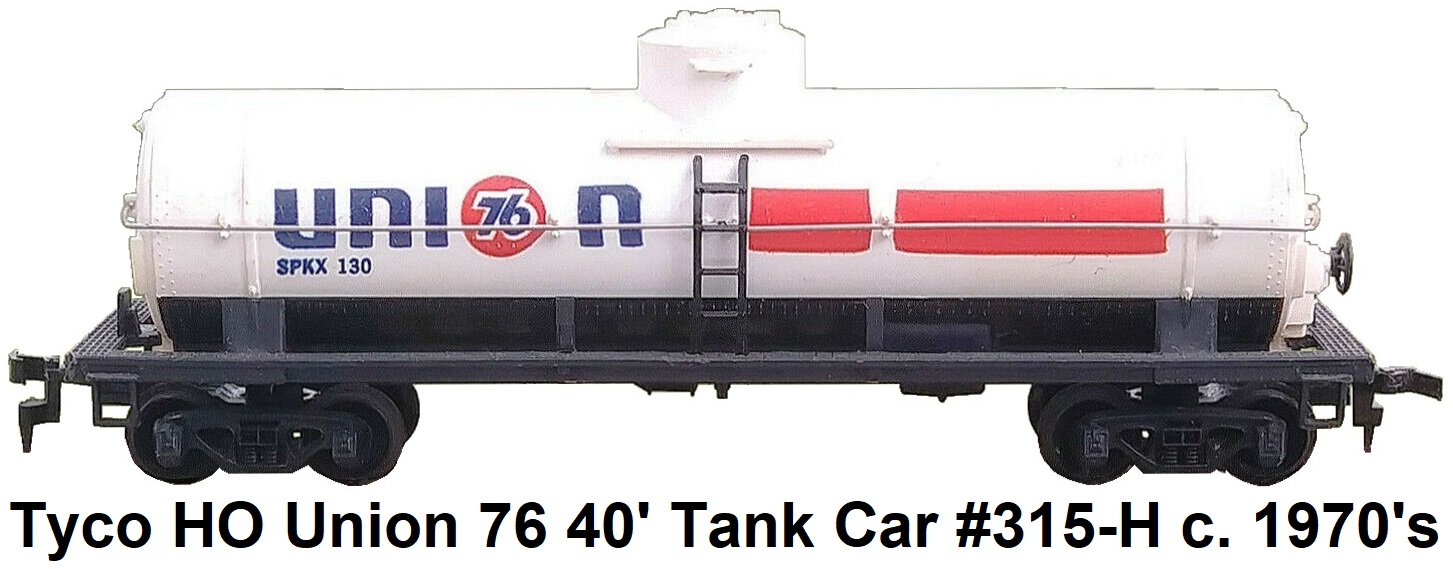
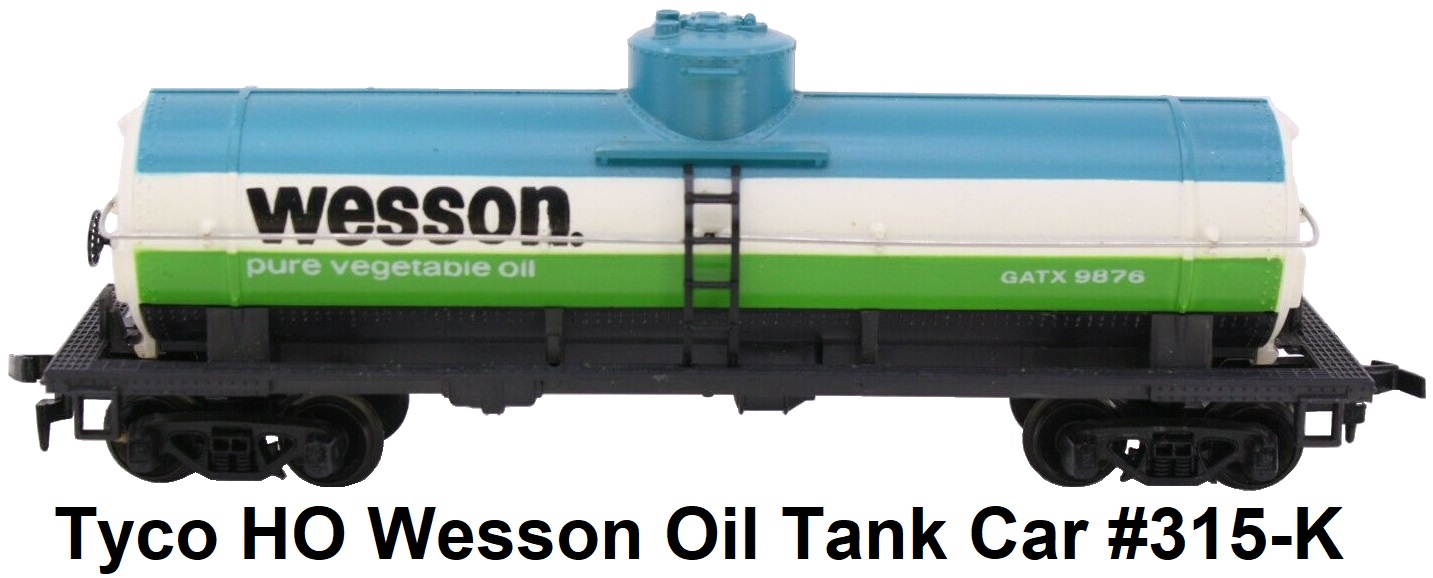
Tyco HO Brown Box Era 40' Tank Cars
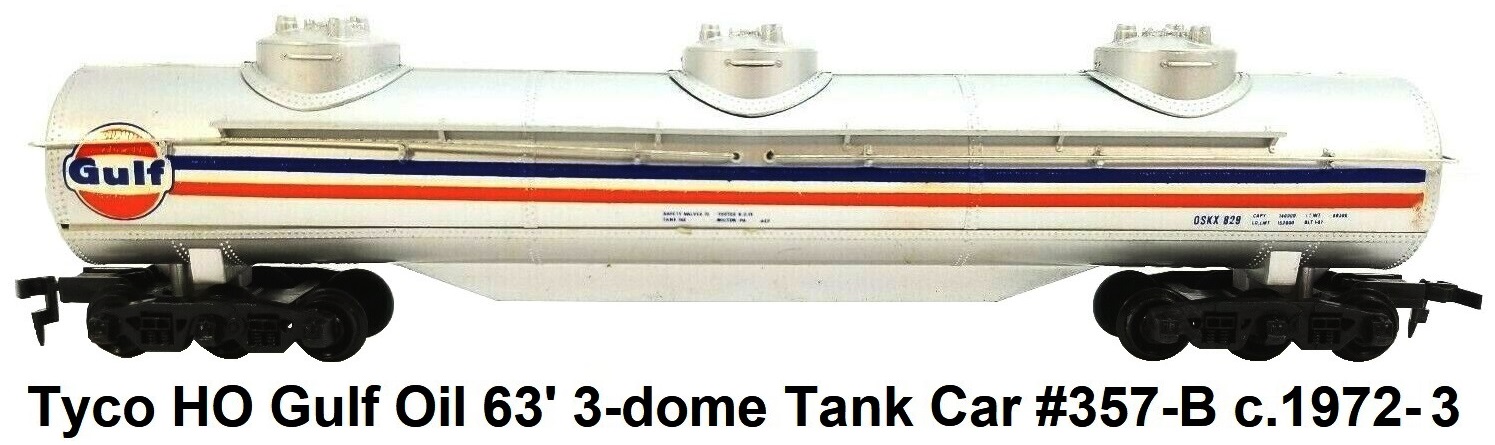
Tyco HO Brown Box Era 63' Tank Cars

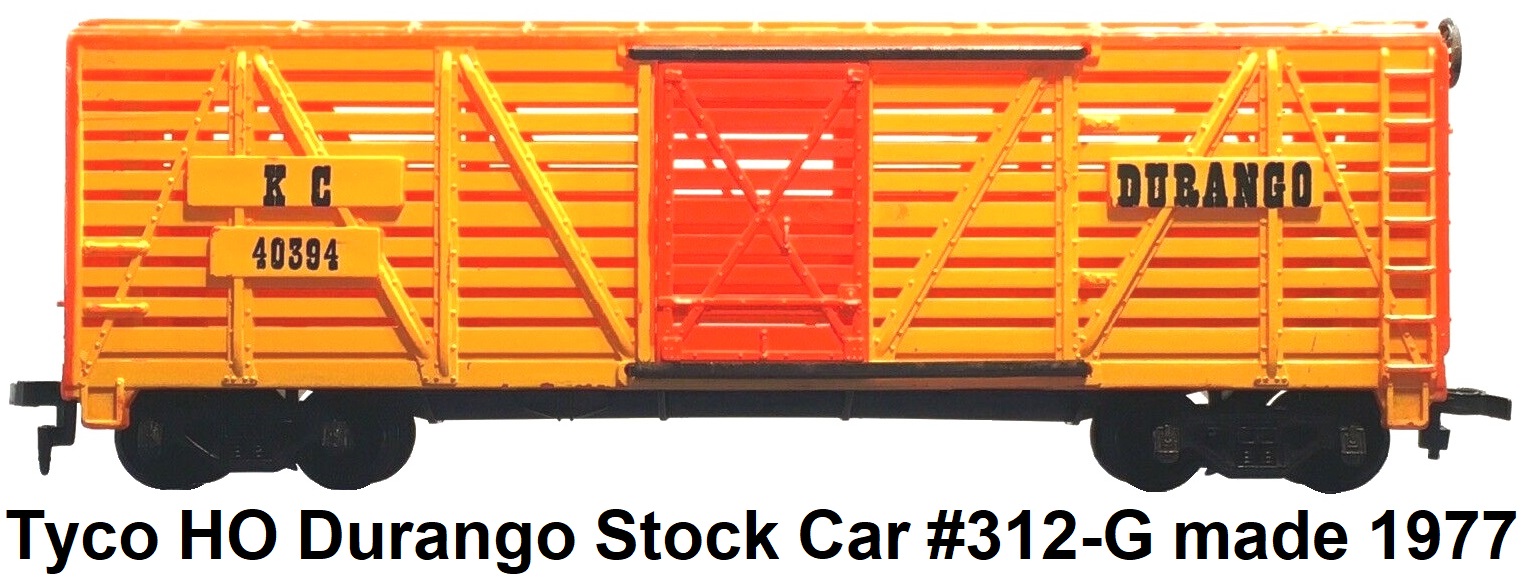
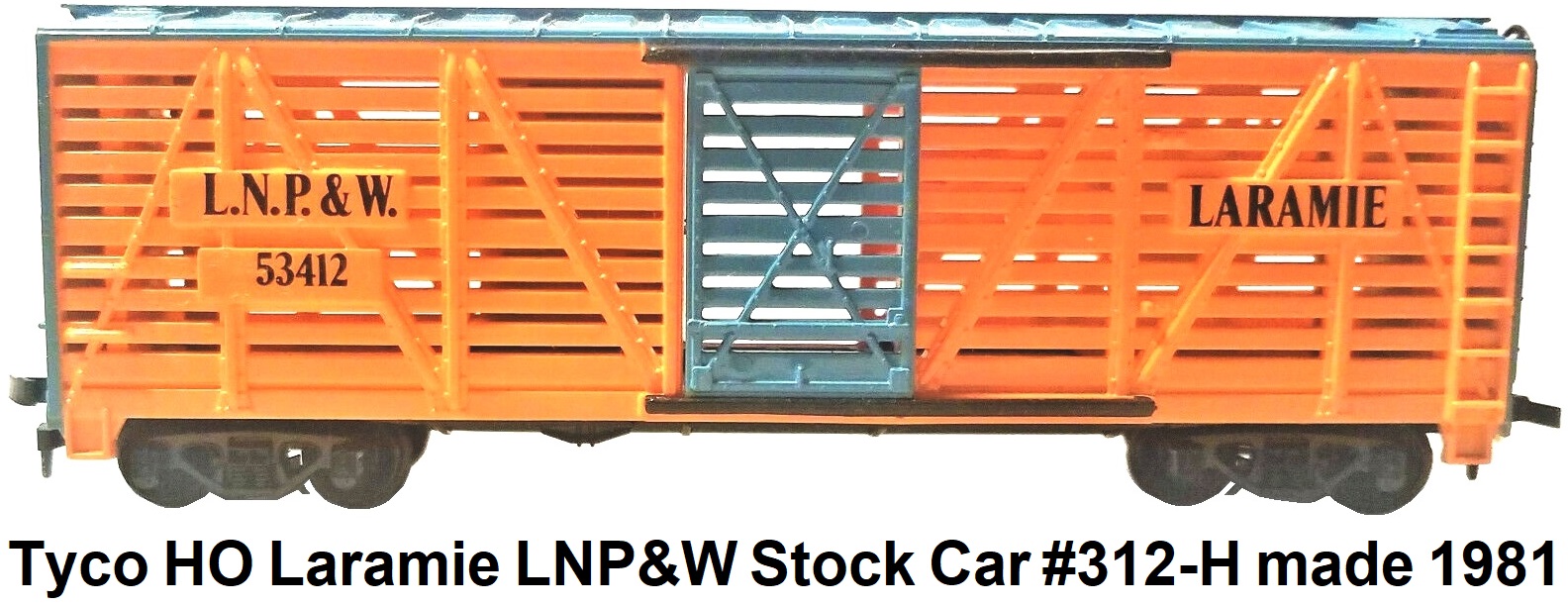
Tyco HO Brown Box Era 40' Live Stock Cars
Miscellaneous Tyco HO Brown Box Era Freight Cars
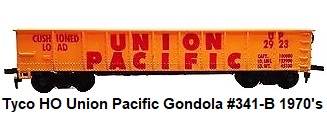
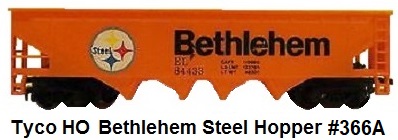
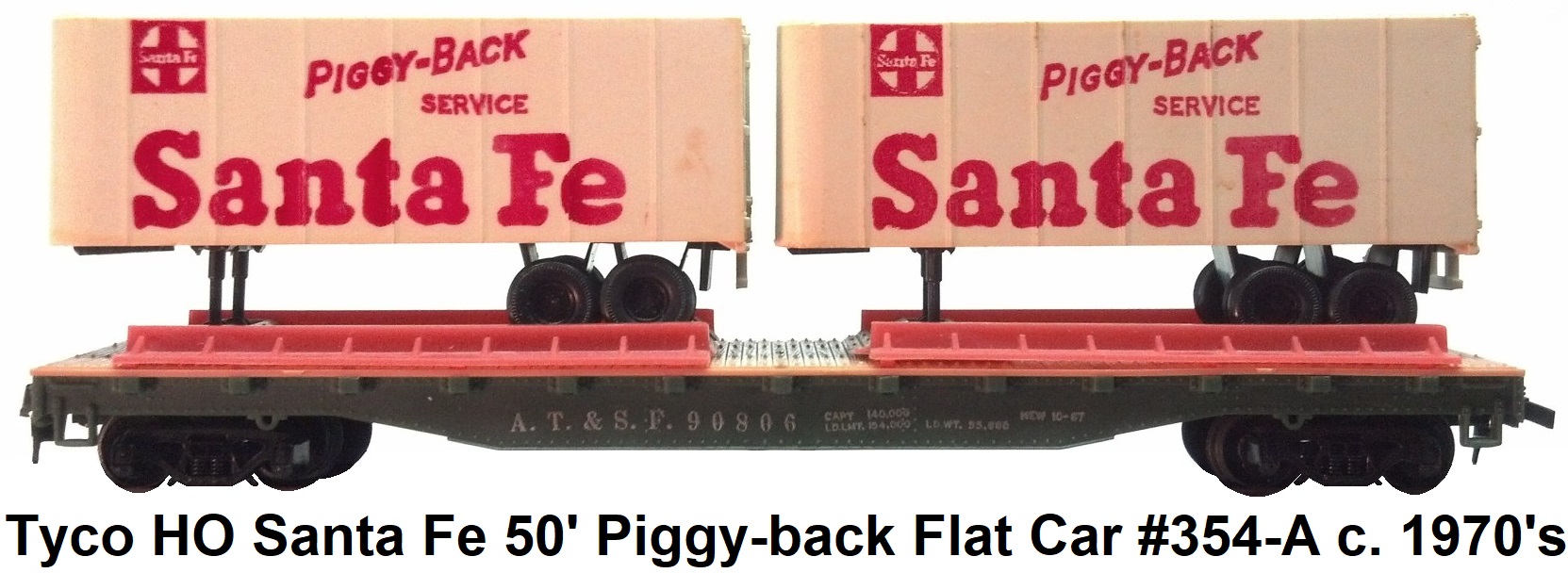
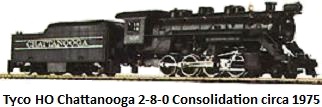 In 1975 Tyco came out with its Chattanooga Choo-Choo products. The line included regular production
locomotives and freight cars, configured in sets, and adorned with Chattanooga Choo-Choo graphics. The first year
featured a 2-8-0 Consolidation as the loco. The Consolidation and the caboose were made available as separate sale items.
The 1977 set was headed up by a yellow-and-orange GP-20 diesel. In 1978 the motive power provided in the set was an 0-8-0
steam outline loco and tender. The Chattanooga Choo-Choo 0-8-0 had the motor and gearing completely located in the tender, so
the locomotive was essentially a dummy. Chattanooga Choo-Choo sets remained in the Tyco catalog through 1992, with the
exception of 1982, 83 and 84. Only the 0-8-0 loco with tender was advertised in the catalog during that 3-year period.
In 1975 Tyco came out with its Chattanooga Choo-Choo products. The line included regular production
locomotives and freight cars, configured in sets, and adorned with Chattanooga Choo-Choo graphics. The first year
featured a 2-8-0 Consolidation as the loco. The Consolidation and the caboose were made available as separate sale items.
The 1977 set was headed up by a yellow-and-orange GP-20 diesel. In 1978 the motive power provided in the set was an 0-8-0
steam outline loco and tender. The Chattanooga Choo-Choo 0-8-0 had the motor and gearing completely located in the tender, so
the locomotive was essentially a dummy. Chattanooga Choo-Choo sets remained in the Tyco catalog through 1992, with the
exception of 1982, 83 and 84. Only the 0-8-0 loco with tender was advertised in the catalog during that 3-year period.
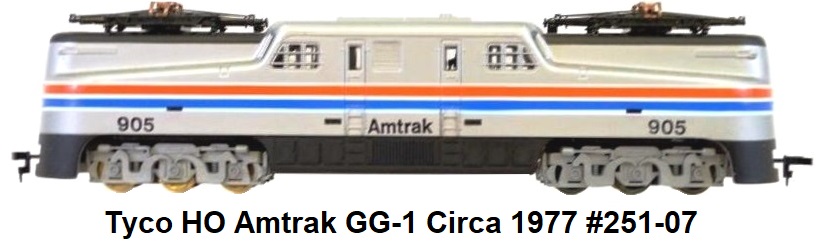
Tyco introduced its HO model of the famous GG-1 Electric in 1977. It was offered in only a single
set - The Broadway Limited, but remained in the Tyco catalogue through 1986. It was available for separate sale in
Pennsylvania, New Haven (1981-2) and Amtrak road names. In 1978 Tyco released an HO model of the Electro-Motive Division's
(EMD) SD24 diesel locomotive as the #239 series. The HO model was driven by Tyco's single-truck PowerTorque mechanism. This
was the first diesel issued by Tyco to employ solid snap-in plastic handrails instead of metal wire. Tyco's actual HO model
appeared
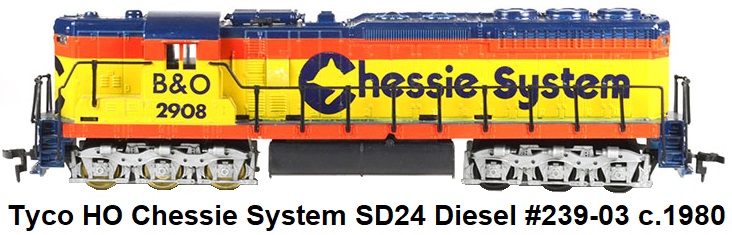 somewhat different than the illustration that was used in the 1977 catalogue announcement. It is beleived that the artist
actually utilized a custom painted Atlas SD24 that was produced by Roco as a
model to create the drawing. The Tyco SD24 production models differ from Roco's in that they do not have a winterization hatch
over the lead radiator fan and the exhaust stack is rectangular shaped vs. the Roco model's oval shape. Other differences
include grab irons running up the nose of the short hood, as well as more correctly spaced trucks and fuel tank. During its
life span at Tyco the SD24 was catalogued in Burlington, Chessie System, Rio Grande, Rocky Mountain Line, and Union
Pacific road names. Again in later years when production shifted from Hong Kong to Mehano in Yugoslavia, the appearance
of the Tyco SD24 differed from earlier production. The length of the early diesel loco was shortened, but
featured a prototypical flexcoil truck. Late versions were fitted with a non-prototypical truck similar to the trucks found
on Tyco's Super 630 diesels. The SD24 was last catalogued by Tyco in 1983.
somewhat different than the illustration that was used in the 1977 catalogue announcement. It is beleived that the artist
actually utilized a custom painted Atlas SD24 that was produced by Roco as a
model to create the drawing. The Tyco SD24 production models differ from Roco's in that they do not have a winterization hatch
over the lead radiator fan and the exhaust stack is rectangular shaped vs. the Roco model's oval shape. Other differences
include grab irons running up the nose of the short hood, as well as more correctly spaced trucks and fuel tank. During its
life span at Tyco the SD24 was catalogued in Burlington, Chessie System, Rio Grande, Rocky Mountain Line, and Union
Pacific road names. Again in later years when production shifted from Hong Kong to Mehano in Yugoslavia, the appearance
of the Tyco SD24 differed from earlier production. The length of the early diesel loco was shortened, but
featured a prototypical flexcoil truck. Late versions were fitted with a non-prototypical truck similar to the trucks found
on Tyco's Super 630 diesels. The SD24 was last catalogued by Tyco in 1983.
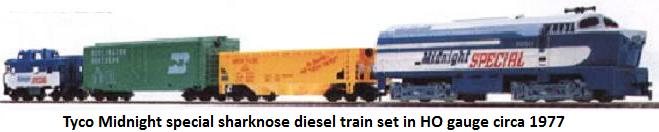
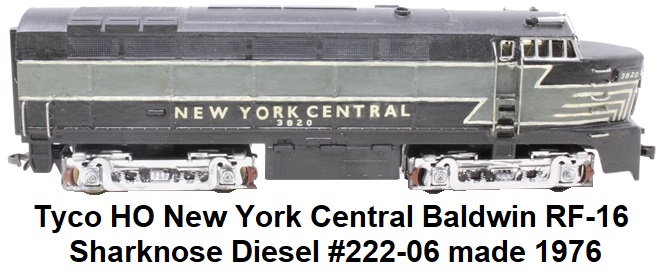 By the 1980's, Tyco dominated the market in electric slot car racing, as well as the radio control category.
In the mid 1980's, Tyco products no longer carried the Consolidated Foods ownership markings and Tyco
Industries emerged. Consolidated Foods sold Tyco in 1981 for $18.6 million to Savoy Industries. Savoy was
known for being an investment company that restructured troubled companies.
Tyco's train line was becoming even more outlandish with items like 'The A-Team'
and 'Rambo' train sets. The line in general also was shrinking in total variety. The company added
By the 1980's, Tyco dominated the market in electric slot car racing, as well as the radio control category.
In the mid 1980's, Tyco products no longer carried the Consolidated Foods ownership markings and Tyco
Industries emerged. Consolidated Foods sold Tyco in 1981 for $18.6 million to Savoy Industries. Savoy was
known for being an investment company that restructured troubled companies.
Tyco's train line was becoming even more outlandish with items like 'The A-Team'
and 'Rambo' train sets. The line in general also was shrinking in total variety. The company added
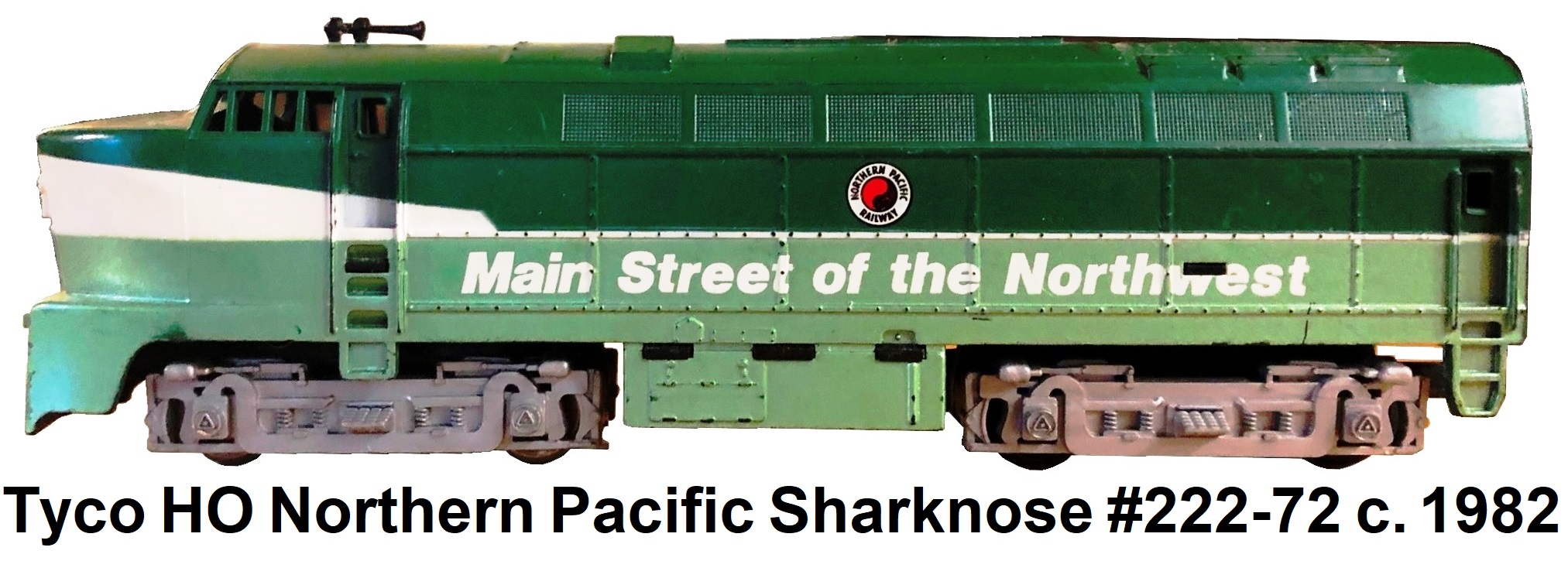 the 'US-1 Trucking' slot trucks to its line in 1981. In early 1986, Savoy Industries put Tyco stock on the open market
generating $13.4 million and ending Savoy’s involvement in the toy company. Diversification continued with the 1989
purchase of the View-Master/Ideal Group, which brought to the company the View-Master®, Magna Doodle® and the Ideal
Nursery line of dolls. The company also began offering telephones; remote-control vehicles; and other
items beyond the model train line. These changes in product line see the model train category down to 60% of Tyco’s
overall 1986 sales.
the 'US-1 Trucking' slot trucks to its line in 1981. In early 1986, Savoy Industries put Tyco stock on the open market
generating $13.4 million and ending Savoy’s involvement in the toy company. Diversification continued with the 1989
purchase of the View-Master/Ideal Group, which brought to the company the View-Master®, Magna Doodle® and the Ideal
Nursery line of dolls. The company also began offering telephones; remote-control vehicles; and other
items beyond the model train line. These changes in product line see the model train category down to 60% of Tyco’s
overall 1986 sales.
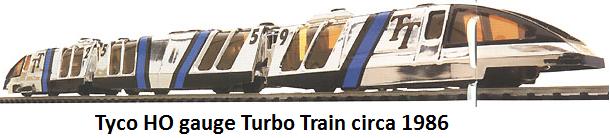
Tyco had first utilized television ads and program tie-ins in the 1960's to promote their products. By
the 1980's more and more money was being spent and children's television programs were being produced to sell specific toys.
In 1989, Michael Lyden, Tyco Industries, Inc.'s then vice president of business development,
announced that the company would be spending more dollars on television advertising. A total of $2 million was to be spent on
primetime television promoting Tyco's Twin Turbo Train. This was a system of two trains that could race against each other
and go through loops. That amount was the most Tyco had ever spent promoting a single train.
 In the 1990's, Tyco branched out with other toys such as airplanes, Super Blocks, which were
clones of Lego brand building elements (after the basic patent ran out in 1983), and Sesame Street items.
Tyco purchased Matchbox, a maker of model cars, in 1993. They acquired licensing agreements with Warner Bros., Walt Disney,
and Children's Television Workshop to produce Bugs Bunny, Daffy Duck, Road Runner, Sesame Street, and Little Mermaid toys.
Tyco exited the model railroad business after the 1993 catalog.
Only three train sets were offered in the final year, including Railroad Empire II, Overnight Freight, and Santa Fe 72. No
separate accessories were offered in this final year of production. In 1995, Tyco Preschool was named the primary toy
licensee for the Children's Television Workshop. A year later Tyco
Preschool launched an extensive new line based on the popular children's program, Sesame Street. When Tyco was purchased by
Mattel on March 27, 1997, it was the third largest toy company in the United States. The brand survived as the
Mattel Tyco R/C division. In 2005 the Mt. Laurel headquarters was closed and the Tyco division was moved to Mattel's
headquarters in El Segundo, Ca.
In the 1990's, Tyco branched out with other toys such as airplanes, Super Blocks, which were
clones of Lego brand building elements (after the basic patent ran out in 1983), and Sesame Street items.
Tyco purchased Matchbox, a maker of model cars, in 1993. They acquired licensing agreements with Warner Bros., Walt Disney,
and Children's Television Workshop to produce Bugs Bunny, Daffy Duck, Road Runner, Sesame Street, and Little Mermaid toys.
Tyco exited the model railroad business after the 1993 catalog.
Only three train sets were offered in the final year, including Railroad Empire II, Overnight Freight, and Santa Fe 72. No
separate accessories were offered in this final year of production. In 1995, Tyco Preschool was named the primary toy
licensee for the Children's Television Workshop. A year later Tyco
Preschool launched an extensive new line based on the popular children's program, Sesame Street. When Tyco was purchased by
Mattel on March 27, 1997, it was the third largest toy company in the United States. The brand survived as the
Mattel Tyco R/C division. In 2005 the Mt. Laurel headquarters was closed and the Tyco division was moved to Mattel's
headquarters in El Segundo, Ca.
 The Tyco model railroad business was purchased back by the Tyler family on July 1, 1977. When the old factory in Woodbury
Heights, N.J., was placed on the market, Norman Tyler purchased it. Mantua Metal
Products was reborn as Mantua Industries. To commemorate the milestone,
a limited edition box car designated MMP 307 was produced and sent to each Mantua distributor. This white and orange
car is colorfully designed with an illustration of the General locomotive and its wood pile tender to the right of
the car door and printed data relating to the Mantua firm and car weights to the left. These cars were never offered to the
public and are quite rare. The new group of HO scale trains made consisted largely of the
items found during Tyco's Red Box Era and before. Products were again being issued in blue boxes, just as Mantua had in the
pre-war era. Nearly all steam engines and a few of the diesel
locomotives, plus an assortment of rolling stock were included in this new Mantua product line.
The initial diesels included the F-unit, now correctly labeled as an F-7, the GP-20 and the Plymouth Yard Diesel.
These late 1970's Mantua diesels differ from their Tyco counterparts in that the Mantua locos featured
the company's self contained Power Truck motor and not Tyco's PowerTorque motor. The Power Truck featured an electric motor
with a 5-pole armature fitted with a nylon worm and gear. The truck also had solid brass wheel bearings. Mantua also added a
Dynamic Brake to the GP-20's hood. The brake could be purchased separately as a kit.
The Tyco model railroad business was purchased back by the Tyler family on July 1, 1977. When the old factory in Woodbury
Heights, N.J., was placed on the market, Norman Tyler purchased it. Mantua Metal
Products was reborn as Mantua Industries. To commemorate the milestone,
a limited edition box car designated MMP 307 was produced and sent to each Mantua distributor. This white and orange
car is colorfully designed with an illustration of the General locomotive and its wood pile tender to the right of
the car door and printed data relating to the Mantua firm and car weights to the left. These cars were never offered to the
public and are quite rare. The new group of HO scale trains made consisted largely of the
items found during Tyco's Red Box Era and before. Products were again being issued in blue boxes, just as Mantua had in the
pre-war era. Nearly all steam engines and a few of the diesel
locomotives, plus an assortment of rolling stock were included in this new Mantua product line.
The initial diesels included the F-unit, now correctly labeled as an F-7, the GP-20 and the Plymouth Yard Diesel.
These late 1970's Mantua diesels differ from their Tyco counterparts in that the Mantua locos featured
the company's self contained Power Truck motor and not Tyco's PowerTorque motor. The Power Truck featured an electric motor
with a 5-pole armature fitted with a nylon worm and gear. The truck also had solid brass wheel bearings. Mantua also added a
Dynamic Brake to the GP-20's hood. The brake could be purchased separately as a kit.
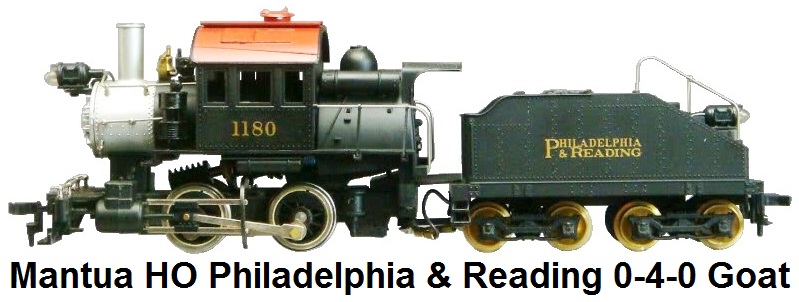
 There were 14 different steam locomotive offerings included in the Mantua 1978 catalogue, covering the
majority of its pages. The lineup consisted of the small #301-series Booster 0-4-0 tank, the #302 series 0-6-0 Little Six tank
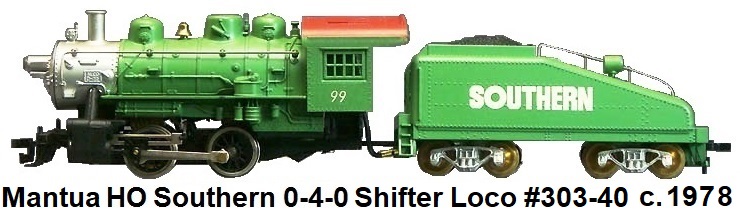
loco, the #303 series 0-4-0 Shifter loco with tender, the #304 series 0-6-0 Big Six loco with tender, the #305 series
0-4-0 Pony loco and tender, the #306 series 2-6-2 Prairie loco and tender, the #307 series 4-4-0 General loco and tender,
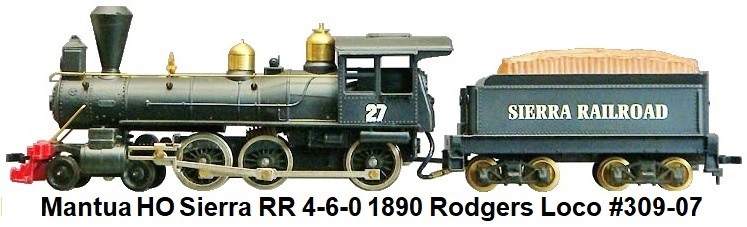
the #308 series Dixie Belle loco and tender, the #309 series 4-6-0 1890 Rodgers loco and tender, the #310 series
There were 14 different steam locomotive offerings included in the Mantua 1978 catalogue, covering the
majority of its pages. The lineup consisted of the small #301-series Booster 0-4-0 tank, the #302 series 0-6-0 Little Six tank
loco, the #303 series 0-4-0 Shifter loco with tender, the #304 series 0-6-0 Big Six loco with tender, the #305 series
0-4-0 Pony loco and tender, the #306 series 2-6-2 Prairie loco and tender, the #307 series 4-4-0 General loco and tender,
the #308 series Dixie Belle loco and tender, the #309 series 4-6-0 1890 Rodgers loco and tender, the #310 series
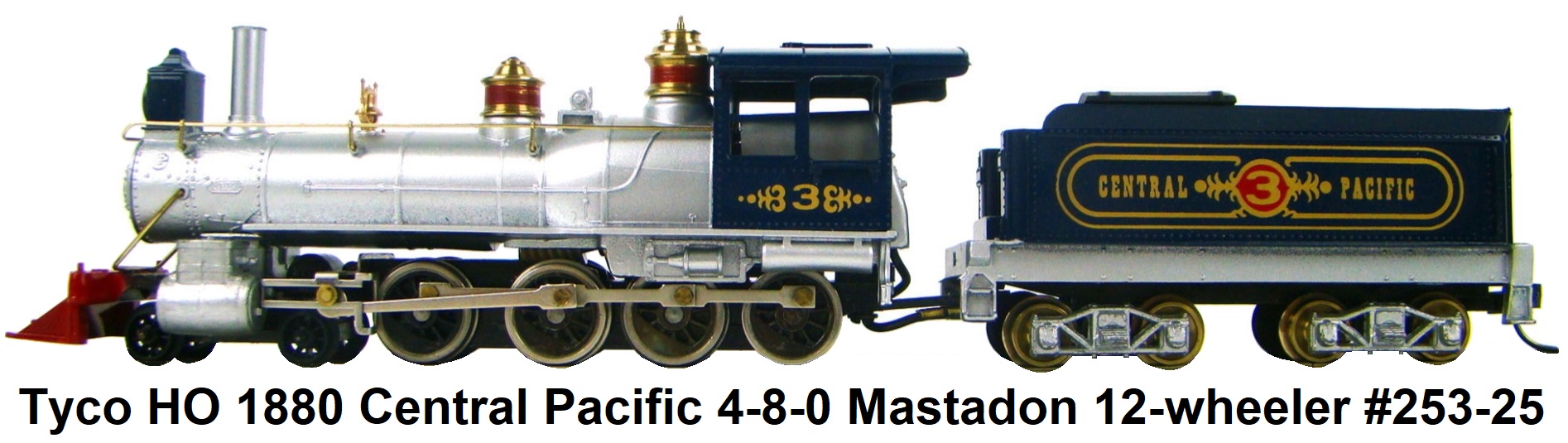
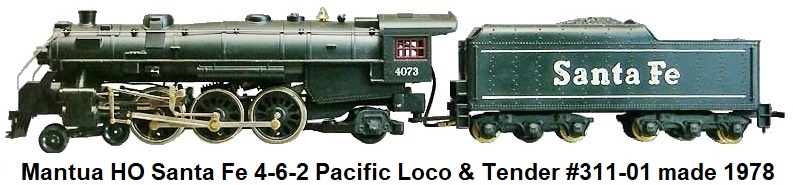
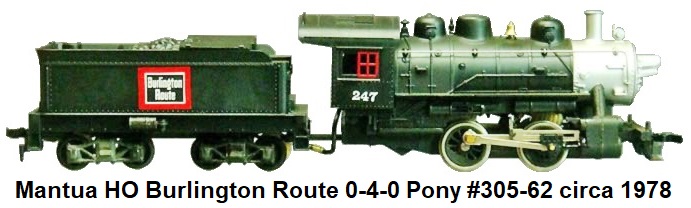 4-8-0 1880 12-wheeler loco and tender, the #311 series 4-6-2 Pacific loco and tender, the #312 series 2-8-2 Mikado loco
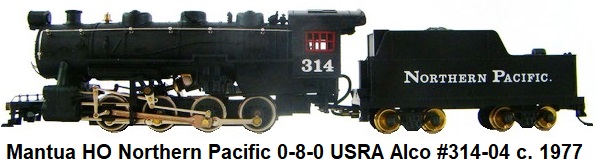
and tender, the #313 series 2-6-0 Mogul loco and tender, and finally the big #314 series 0-8-0 USRA
Alco loco & Tender. Unlike the Tyco 0-8-0, where the electric motor was located in the tender, the Mantua 0-8-0 had the
electric motor placed in the locomotive shell. By 1979, Mantua had added 4 more steam outline locomotives to the
catalogue. These were the #315 series 2-8-0 Consolidation loco and tender, the #316 series 4-6-4 Hudson loco and tender,
the #317 series 2-8-4 Berkshire loco and tender, and the #318 series 2-10-0 Decapod loco and tender.
4-8-0 1880 12-wheeler loco and tender, the #311 series 4-6-2 Pacific loco and tender, the #312 series 2-8-2 Mikado loco
and tender, the #313 series 2-6-0 Mogul loco and tender, and finally the big #314 series 0-8-0 USRA
Alco loco & Tender. Unlike the Tyco 0-8-0, where the electric motor was located in the tender, the Mantua 0-8-0 had the
electric motor placed in the locomotive shell. By 1979, Mantua had added 4 more steam outline locomotives to the
catalogue. These were the #315 series 2-8-0 Consolidation loco and tender, the #316 series 4-6-4 Hudson loco and tender,
the #317 series 2-8-4 Berkshire loco and tender, and the #318 series 2-10-0 Decapod loco and tender.
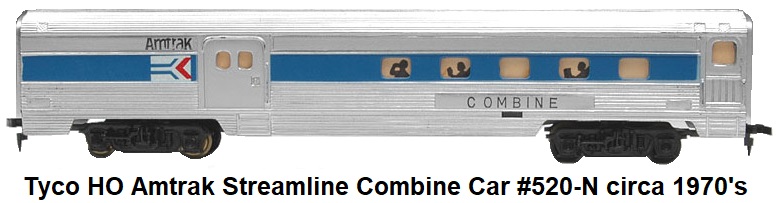
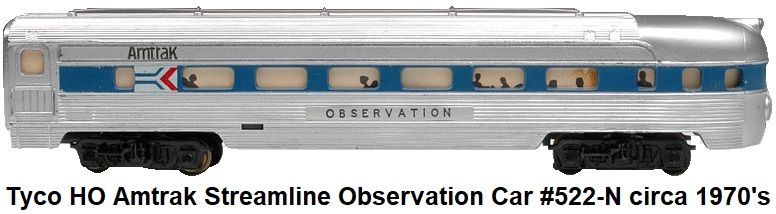
In 1979 the Mantua freight lineup consisted only of the 1860/1890 Vintage Old-time Car kits
and the passenger cars issued were the same extruded aluminum streamliners that were the mainstay of the Mantua line for many
years in the 1950's, before the change to plastic was made. Initially only Santa Fe and Pennsylvania road names were
available as ready-to-run, along with undecorated kits. The six streamline car styles offered were the diner, combine, room
car, coach, baggage car and observation car. In 1980 ready-to-run versions in Union Pacific, New
York Central, Pennsylvania (maroon or silver), Santa Fe, Baltimore & Ohio, Amtrak, Chicago & Northwestern, Milwaukee Road,
VIA Canadian National, and Great Northern (green) road names were added. Only the body shells and floors were
aluminum.
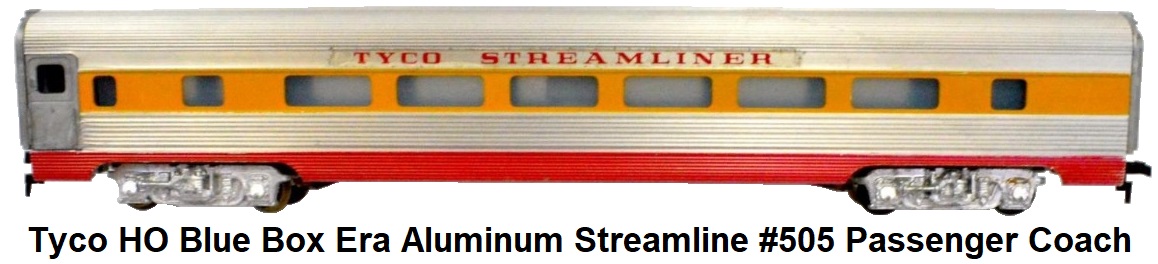
Mantua HO Aluminum Streamline Passenger Cars
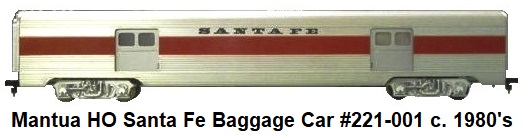
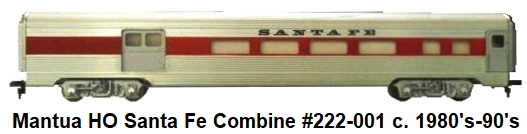
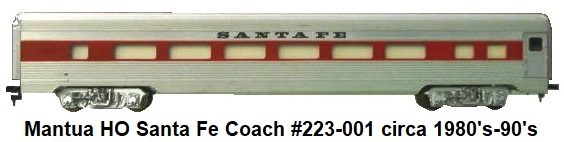
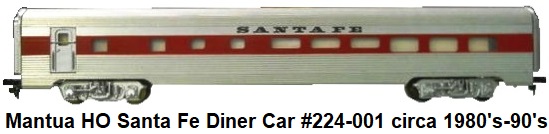
The streamline passenger car ends, doors, and truck side frames were pressure molded plastic. The cars
featured dual lighted interiors and were packaged in orange and yellow boxes with black lettering for Mantua. Later on in
1985 a vista-dome car was added, and in 1989 a vista-dome observation car joined the lineup. In 1985 Northern Pacific,
Southern Pacific, New Haven, Southern, and Great Northern (classic) road names were added. In 1992 a 4-car set labeled Golden
State Limited appeared in the catalogue, and by 1993 it was expanded to a 6-car set. By 1995 the aluminum passenger cars
disappeared from the Mantua catalogue. Employment went from a skeleton crew in 1977 to 80 employees in 1984. Many of the
former Tyco model train products were produced by Mantua and by International Hobby Corporation (IHC) in the 1990's after
Tyco completely ceased model train production.
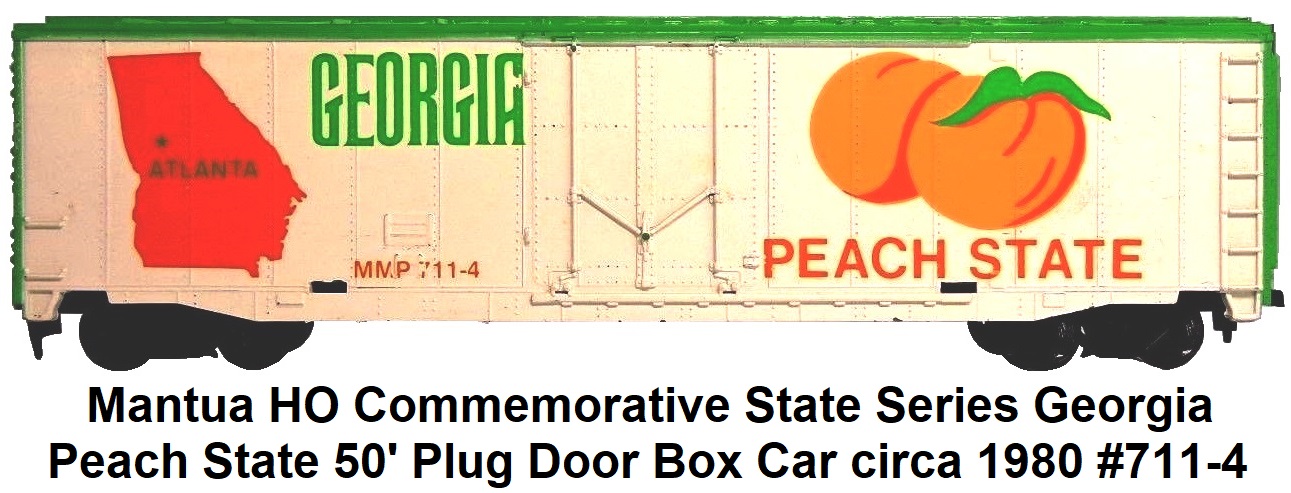
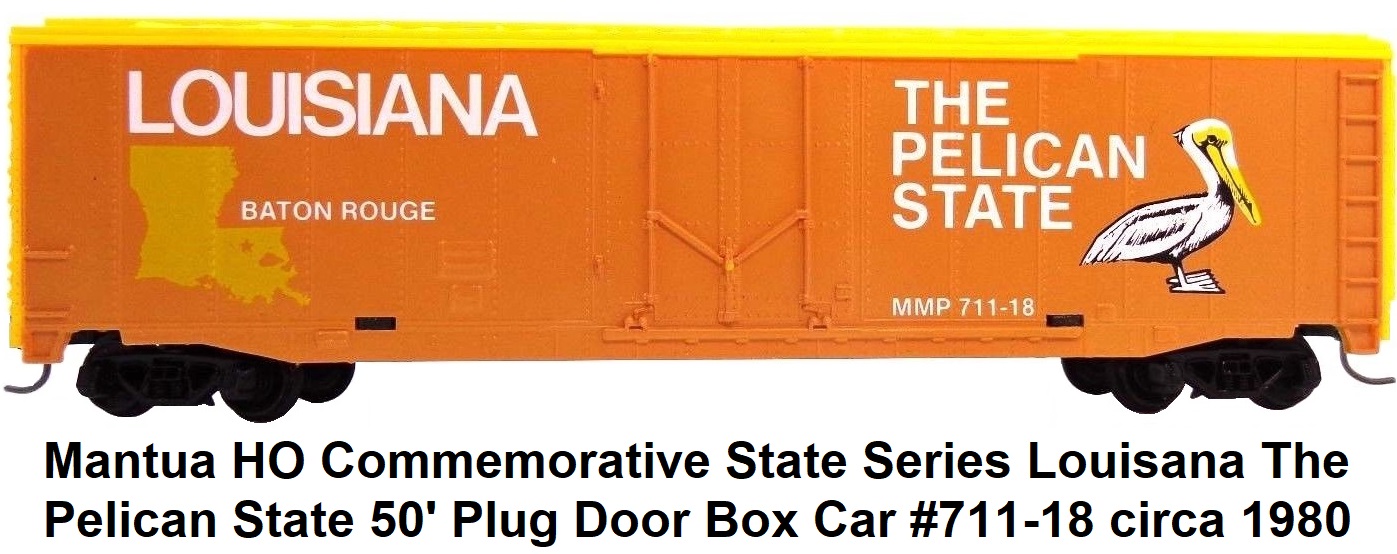
Mantua HO Commemorative State Series 50' Plug Door Box Cars 1980-81
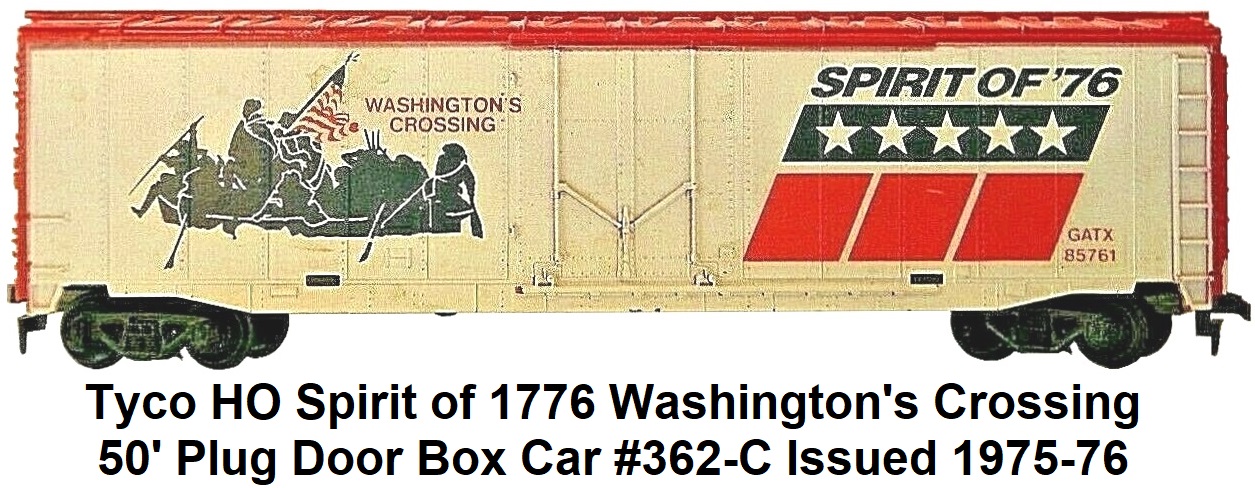
Tyco HO State of the Union Commemorative Series & Bicentennial Series 50' Plug Door Box Cars 1975-76
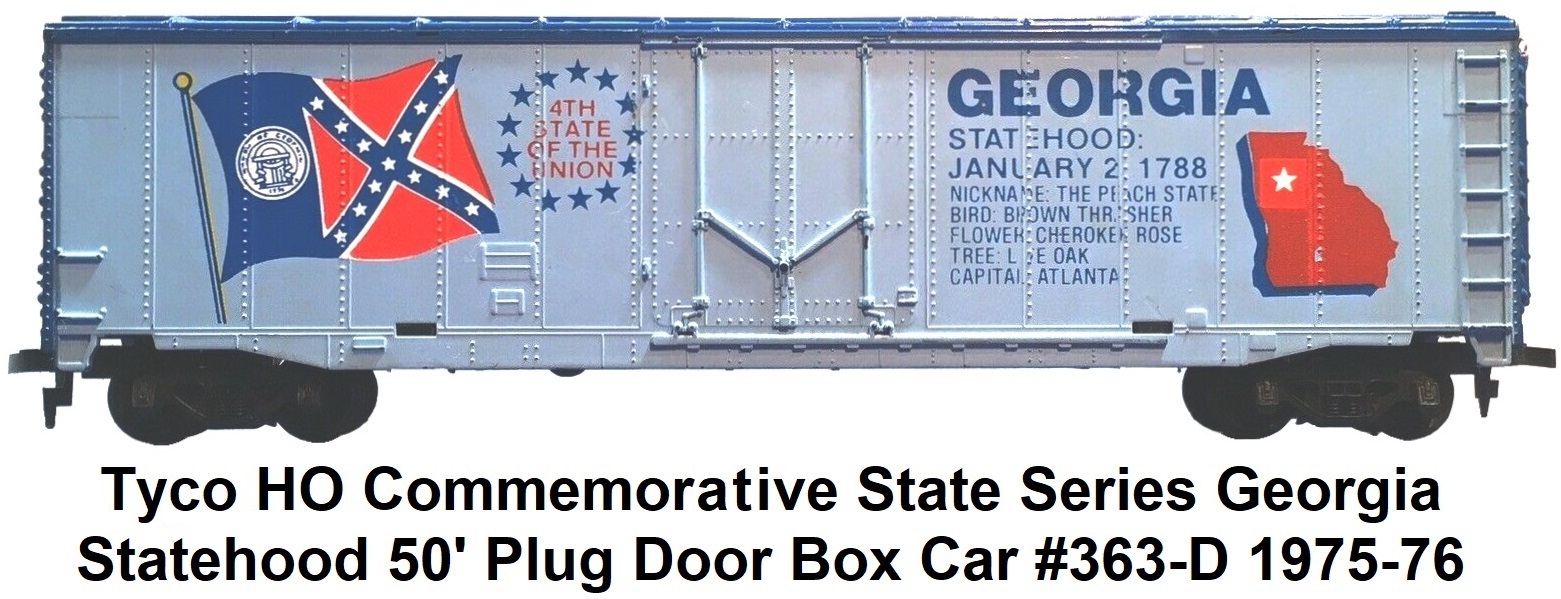
In 1980 Mantua issued its first 24 cars in its Commemorative State Box cars set. These cars utilized the
same bodies as the original Tyco 50' plug door box cars first released in the 1960's. Each car in the Commemorative State
Box car set was decorated for a different US state. In 1981 the remaining 26 US state cars were released to complete the
full set of all 50 US states. These cars were only shown in catalogues through 1984. These Mantua cars are often mistaken
with a set of the same 50' plug door box cars issued by Tyco in 1975 to commemorate the American Revolution and the 200th
birthday of the United States. Tyco intended to issue 13 cars in that series to honor the original 13 US colonies, however
only 6 state's cars were ever made, and this series disappeared from catalogues after 1976. Tyco referred to this #363 series
as Commemorative Box Cars in catalogues, but offered the cars in 3-pack sets that were called State of Union Cars. To add to
the confusion, in the mid-1970's Tyco also issued a US Bicentennial set of 50' plug door box car offerings. That set featured
3 cars decorated to commemorate the American Revolution. They were the Minuteman car, Paul Revere's Ride car and the
Washington's Crossing car.
Mantua HO 41' Steel Box Cars Made from Acquired Lindberg Tooling
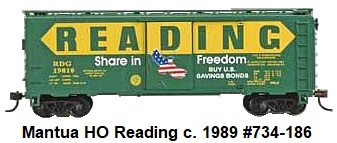
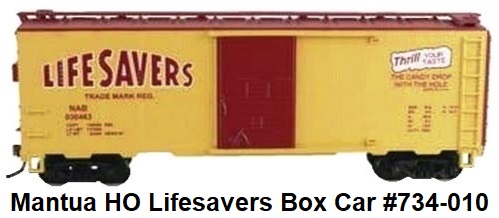
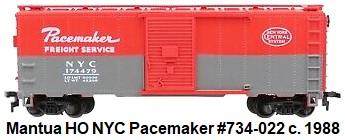
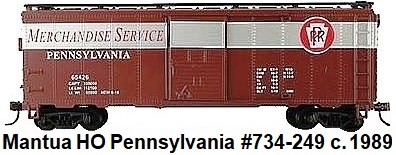
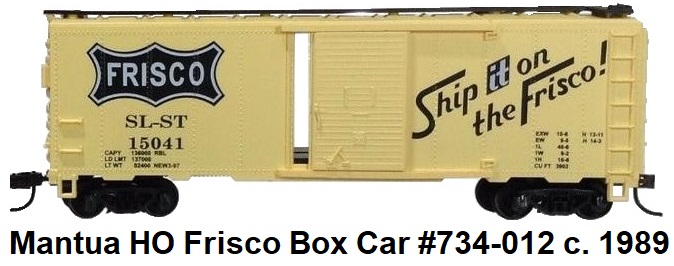
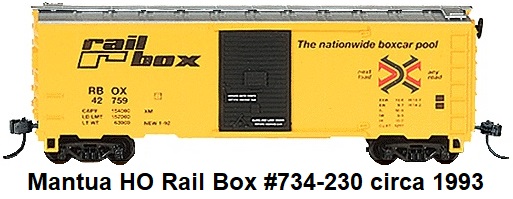
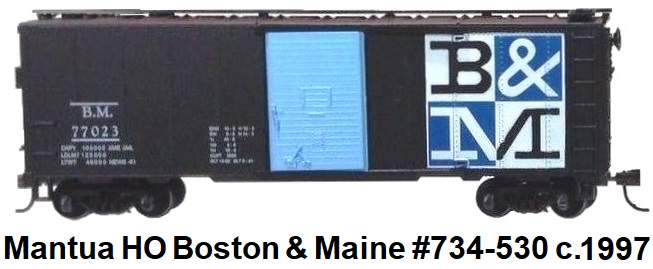
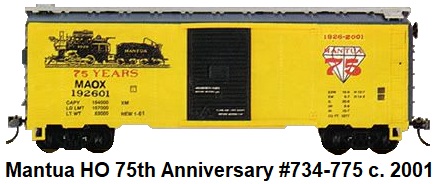
In the early 1980's, Mantua began offering a selection of HO scale freight cars to expand its
line beyond just locomotives. These freight cars came from Lindberg’s train line and date originally to the early 1960's.
The offerings included a 41' steel box car that debuted in 1984 in kit form. Ready to run versions came out in 1987. By
1989 the kit versions of the steel box cars are gone from catalogs. The 40' stock car, 43' Gondola and 36' center cupola
New England-style Caboose are other freight cars added to the Mantua line from the former Lindbergh offerings.
Mantua 43' HO Gondolas Made from Acquired Lindberg Tooling
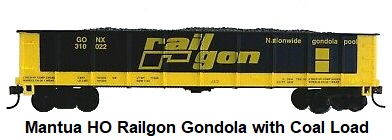
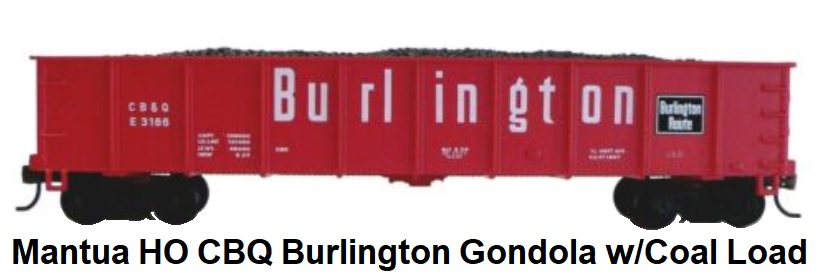
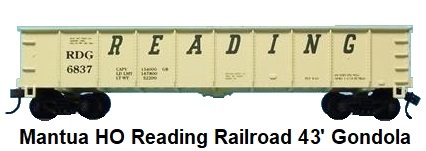
Mantua 41' HO Stock Cars Made From Acquired Lindberg Tooling
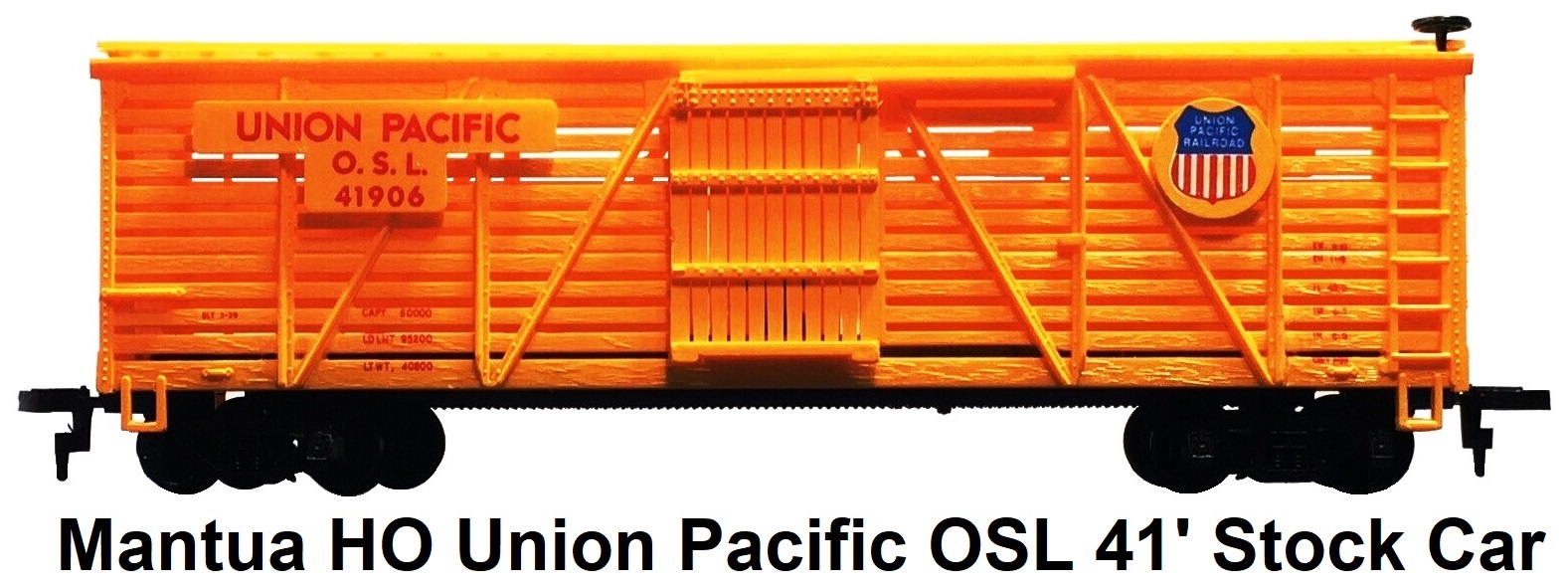
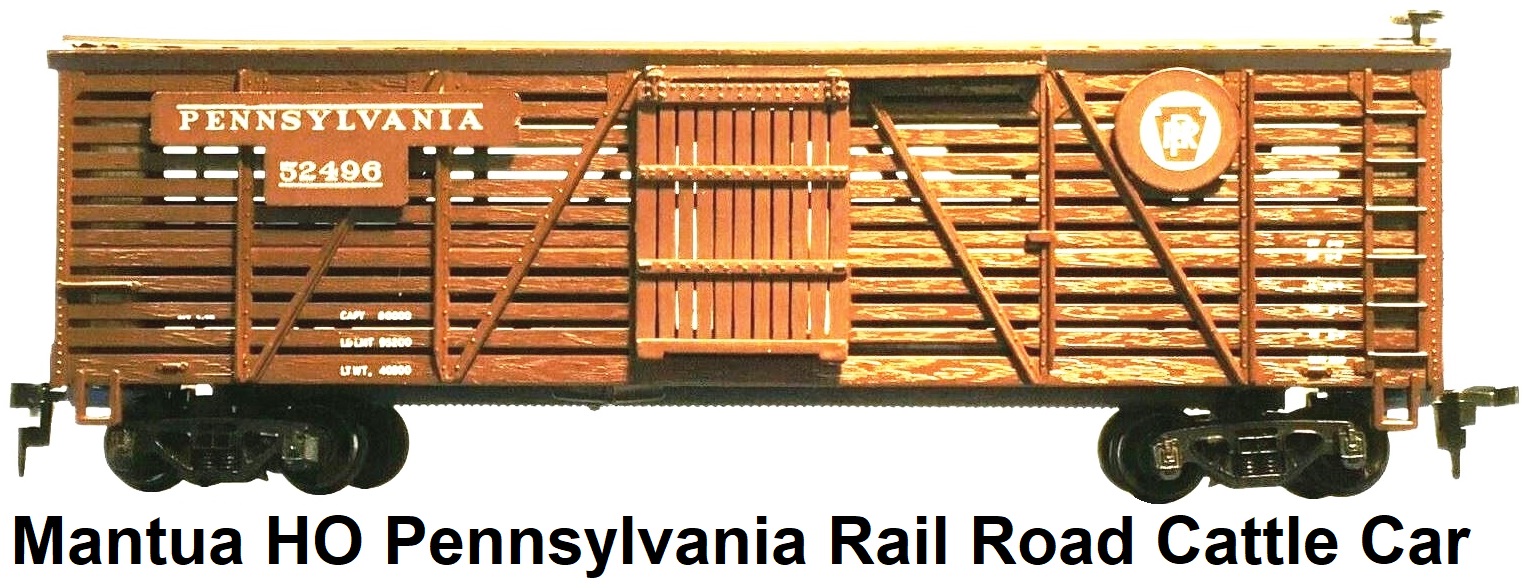
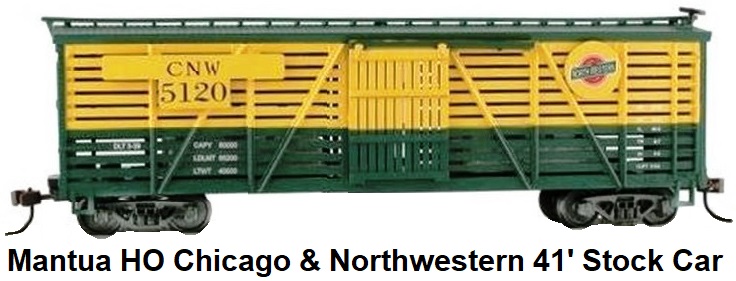
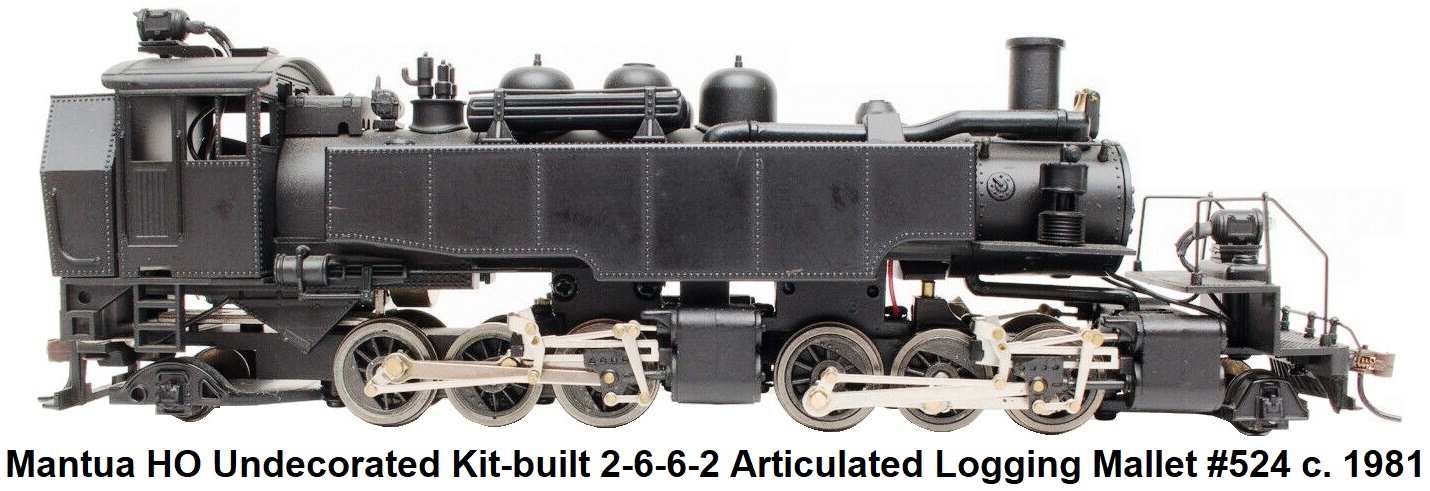 Also in the early 1980's, Mantua produced an HO scale model in die-cast metal and plastic of the 2-6-6-2
Mallet articulated logging locomotive. It was made available in both kit and ready-to-run versions, as well as with two
different options for cylinder types (slide valve, and piston valve types). The loco was powered by an open frame motor
through the 1990's when Mantua switched to can motors. This loco remained in the Mantua line throughout the life of the
company and appeared in 6 different configurations covering 14 road names, including Booth Kelly, Uintah Railway,
Weyerhaeuser, Virginian Railway, Long Bell, White River, Rayonier, Meadowood Logging Co., Sumpter Valley, Sierra Railway,
Great Northern, Cherry Valley, and Deep River Logging Co., resulting in 21 different models.
Also in the early 1980's, Mantua produced an HO scale model in die-cast metal and plastic of the 2-6-6-2
Mallet articulated logging locomotive. It was made available in both kit and ready-to-run versions, as well as with two
different options for cylinder types (slide valve, and piston valve types). The loco was powered by an open frame motor
through the 1990's when Mantua switched to can motors. This loco remained in the Mantua line throughout the life of the
company and appeared in 6 different configurations covering 14 road names, including Booth Kelly, Uintah Railway,
Weyerhaeuser, Virginian Railway, Long Bell, White River, Rayonier, Meadowood Logging Co., Sumpter Valley, Sierra Railway,
Great Northern, Cherry Valley, and Deep River Logging Co., resulting in 21 different models.
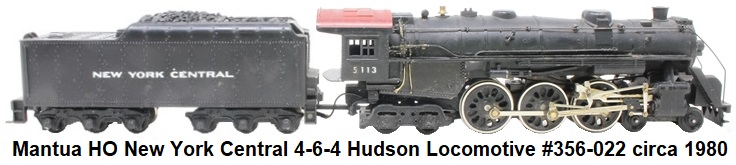
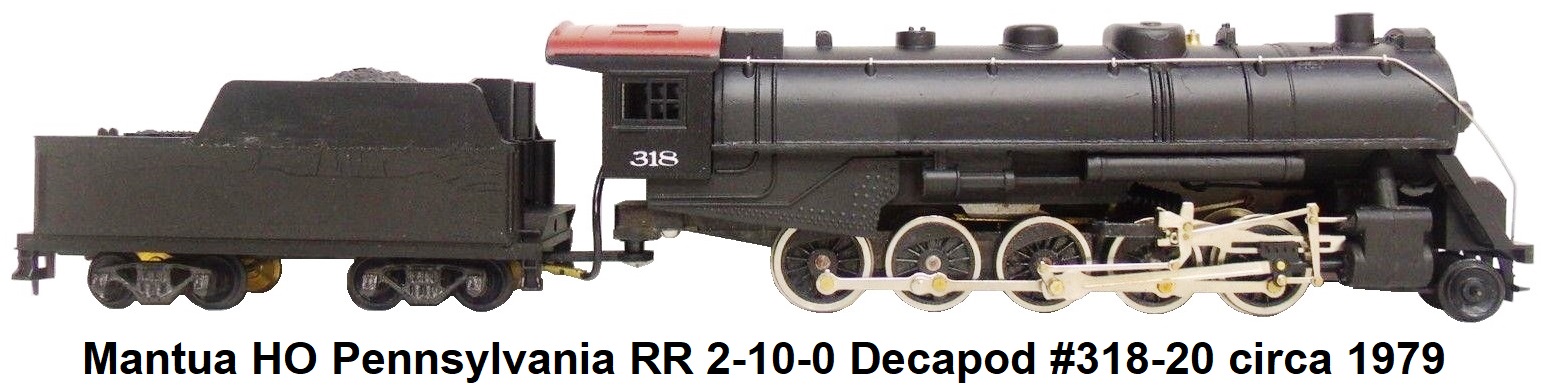
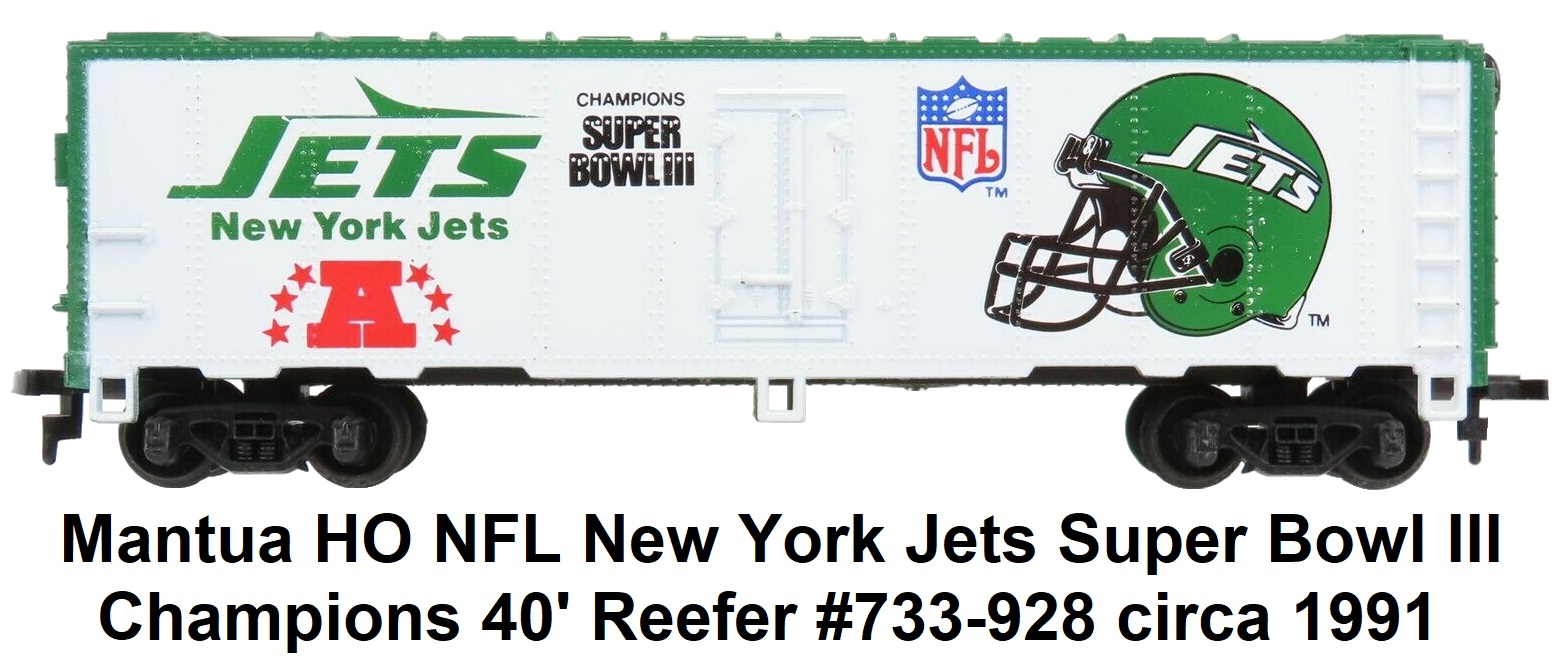 Mantua continued to offer an expanding line of model trains in the 1980's and 1990's.
Eric Tyler, grandson of Norman Tyler, became vice-president of Mantua and oversaw the introduction of a line of
ready-to-run train sets in 1990. In 1991, through a licensing agreement with the National Football League (NFL),
Mantua issued a Super Bowl Express freight set in HO scale. The set featured a GP-20 locomotive, caboose and 12 box cars
commemorating past Super Bowl Champions. The set was sold at major retail outlets such as Sears and JC Penny.
Additional non-Super Bowl Winner cars were eventually also issued. Mantua added an N-scale Superbowl Express freight train
set in 1993. The N scale Superbowl set was actually produced by Life-Like. In 1996, Mantua issued
a 30th Anniversary Superbowl Express edition. Mantua also offered a yearly team update, however the last issue was the 1999
Super Bowl Champion Denver Broncos.
Mantua continued to offer an expanding line of model trains in the 1980's and 1990's.
Eric Tyler, grandson of Norman Tyler, became vice-president of Mantua and oversaw the introduction of a line of
ready-to-run train sets in 1990. In 1991, through a licensing agreement with the National Football League (NFL),
Mantua issued a Super Bowl Express freight set in HO scale. The set featured a GP-20 locomotive, caboose and 12 box cars
commemorating past Super Bowl Champions. The set was sold at major retail outlets such as Sears and JC Penny.
Additional non-Super Bowl Winner cars were eventually also issued. Mantua added an N-scale Superbowl Express freight train
set in 1993. The N scale Superbowl set was actually produced by Life-Like. In 1996, Mantua issued
a 30th Anniversary Superbowl Express edition. Mantua also offered a yearly team update, however the last issue was the 1999
Super Bowl Champion Denver Broncos.
Mantua HO 40' Wood-side Refrigerator Cars
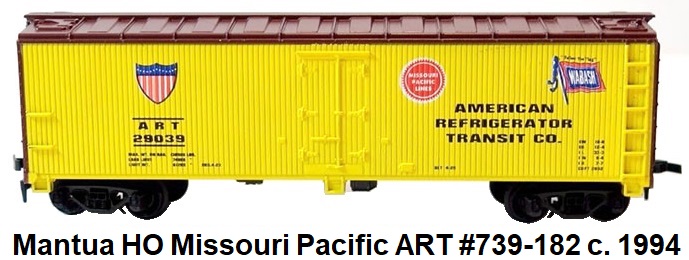
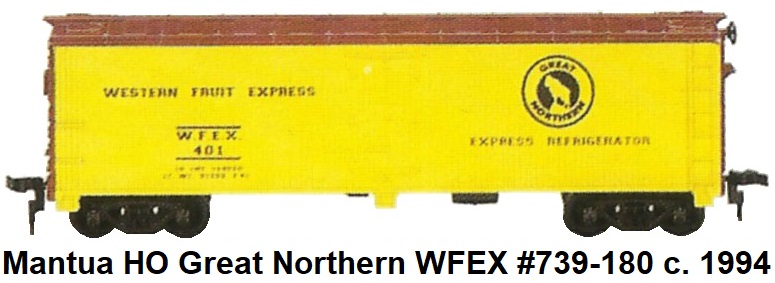
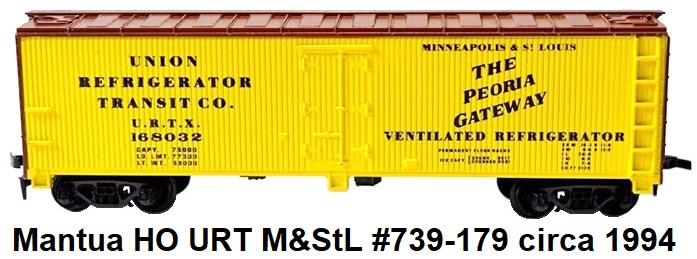
In 1993 Mantua issued its version of the 40' Wood-side refrigerator cars. The original Tyco version
had featured stirrup steps that were either open or filled in, but the Mantua version of this ice-hatch style reefer were all
completely filled in and solid. This change was in answer to several complaints received from customers about cracked or
broken off steps. These Mantua reefers are differentiated from the Tyco versions as they featured die-cast underframes and
a separate brake wheel. The earlier Tyco reefers had a plastic underframe. These cars continued in the Mantua line through
2000. Mantua also made a rivet side steel 41' refrigerator car in HO that came from the Lindberg tooling. It was introduced
in 1983 along with the other former Lindberg freights.
Mantua HO 41' Steel Refrigerator Cars Made From Lindberg Tooling
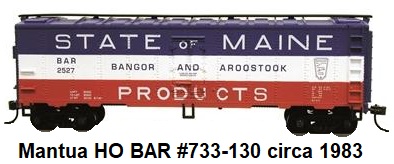
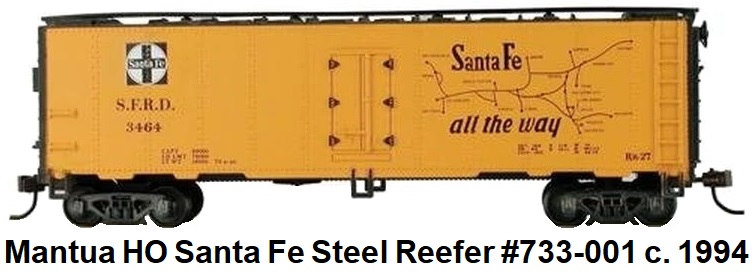
The Mantua Collectibles line of steam engines began appearing in 1996. The Collectibles series was a limited edition
production run of 2500 models of each designated locomotive. The locos came with a wood base made of walnut fitted with a
straight section of HO track that the loco sat on, and there was a brass nameplate on the wood plaque base that identified
each locomotive. Mantua issued a separate 16 page color catalogue for the Collectibles line. Each locomotive issued in the
series was patterned after its actual prototype and was adorned with significantly more boiler detail and glossier paint jobs
than the regular run versions of these same locomotive types. Each model was priced at $195. The lineup included the Southern
Crescent Limited Pacific, the B&O President Adams Pacific, the B&O President Washington Pacific, the B&O Royal Blue Pacific,
the PRR Lindberg Special Atlantic, the New York Central Hudson and the Union Pacific Grey Goose Pacific.
Mantua Collectibles HO Limited Edition Locomotives
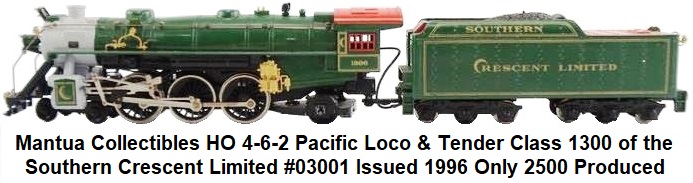
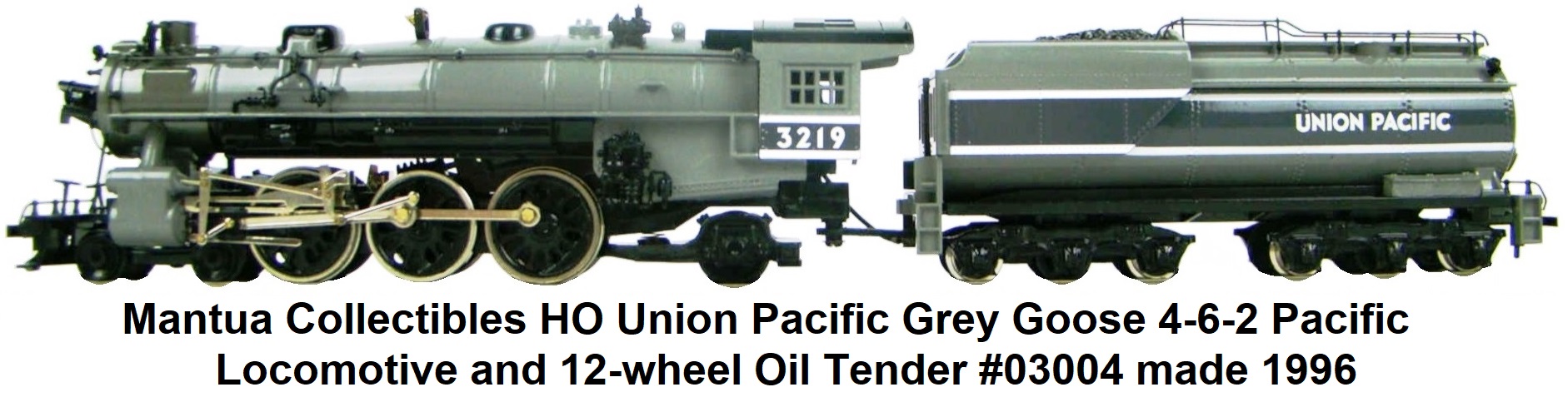
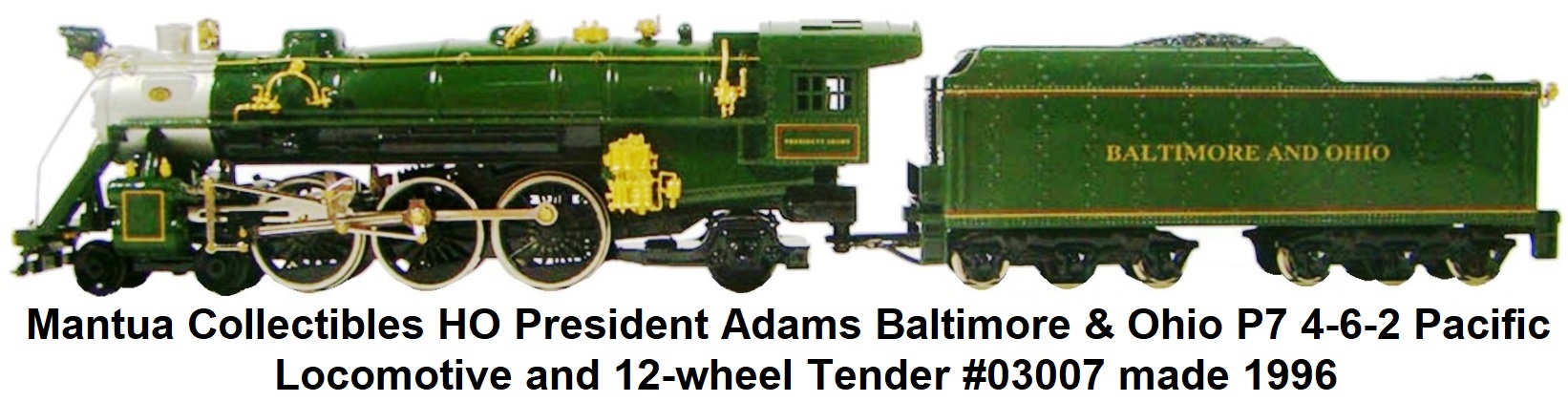
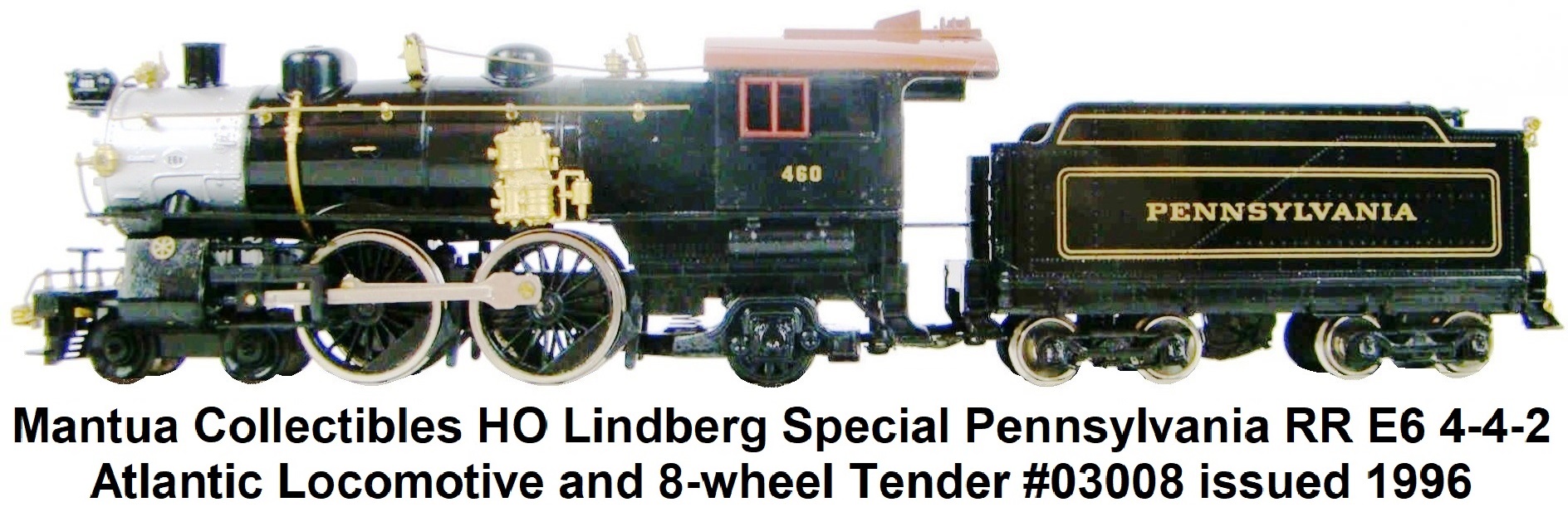
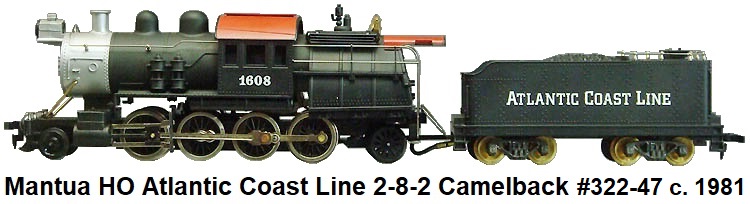 In the late 1990's, Mantua steam locomotives
underwent a transformation. They used to offer the following wheel arrangements: 0-4-0, 0-6-0, 2-8-2, 4-4-2, 4-6-2, 4-6-4
(two versions, one with Pacific boiler and one with Mikado boiler), and a 2-6-6-2 articulated logging locomotive. They were
all powered by an open frame motor. The newer incantation of these locomotives included more wheel arrangements including
several Camelbacks. The newer models also came in a variety of road names and had Sagami can motors and improved gearing.
The new can motors made a considerable difference in locomotive performance. Mantua made steam locomotives in the small to
medium size range. The switcher is a fairly accurate model of a Reading 0-4-0, except that it scales out about a foot too
high. The 0-6-0 version is not a model of anything other than an 0-4-0 body on a 0-6-0 chassis. The switchers come with a
rubber tire on one wheel. Mantua applied two versions of a larger boiler to different chassis to produce both light and heavy
USRA designs of both the 4-6-2 and the 2-8-2 wheel arrangements. The 4-6-2 is very close to a USRA light 4-6-2 or a B&O class
P-7 4-6-2. The 2-8-2 is very close to a Lehigh Valley 2-8-2 or CB&Q O-3. They also used it as a generic Camelback boiler.
In the late 1990's, Mantua steam locomotives
underwent a transformation. They used to offer the following wheel arrangements: 0-4-0, 0-6-0, 2-8-2, 4-4-2, 4-6-2, 4-6-4
(two versions, one with Pacific boiler and one with Mikado boiler), and a 2-6-6-2 articulated logging locomotive. They were
all powered by an open frame motor. The newer incantation of these locomotives included more wheel arrangements including
several Camelbacks. The newer models also came in a variety of road names and had Sagami can motors and improved gearing.
The new can motors made a considerable difference in locomotive performance. Mantua made steam locomotives in the small to
medium size range. The switcher is a fairly accurate model of a Reading 0-4-0, except that it scales out about a foot too
high. The 0-6-0 version is not a model of anything other than an 0-4-0 body on a 0-6-0 chassis. The switchers come with a
rubber tire on one wheel. Mantua applied two versions of a larger boiler to different chassis to produce both light and heavy
USRA designs of both the 4-6-2 and the 2-8-2 wheel arrangements. The 4-6-2 is very close to a USRA light 4-6-2 or a B&O class
P-7 4-6-2. The 2-8-2 is very close to a Lehigh Valley 2-8-2 or CB&Q O-3. They also used it as a generic Camelback boiler.
During this period the F-7 and GP-20 diesels saw a number
of improvements as well. A brass flywheel motor and full 8-wheel drive with a die-cast metal chassis greatly improved
the performance of the Mantua diesels during the 1990's. Also during the 1980's and 1990's, Mantua picked up many
former pieces of rolling stock that were once part of the Lindbergh line of HO scale trains. The 43' Gondola
and 36' center cupola New England-style Caboose are both examples of cars added to the Mantua line from the
former Lindbergh offerings.
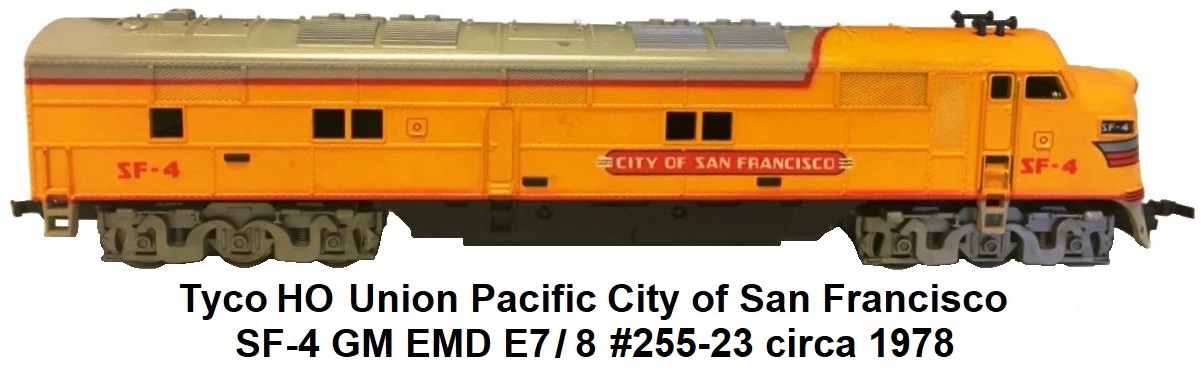 2001 marked Mantua's 75th anniversary. Sadly it was to be their last. Citing 'Market Conditions' as the reason, Mantua
announced that as of October 31st 2001, Mantua ceased production of its model railroad lines. Model Expo bought all of the
ready-to-run locomotive inventory and offered them for sale through their mail order catalog. The model railroad business
tooling and raw materials were sold to the Model Power company, which continued to sell a few items such as steam engines
as its Mantua Classics brand. On April 22, 2014, after 50 years of serving the hobby industry, the 3rd generation Model
Power/Tager family business closed down permanently. Model Power was then acquired in 2014 by Model Rectifier Corp (MRC),
and continued to produce the Mantua Classics products line. In August 2018 Lionel announced that it had agreed to a deal
with ATI Model Products Inc., doing business as Model Power, to acquire a broad range of model train tooling used to produce
the Model Power/Mantua product lines. Final details of the agreement were being worked through and tooling was expected to
transfer to Lionel in September of 2018. No previously produced product was contemplated in the transaction. This strategic
acquisition was intended to accelerate Lionel’s expansion in the HO category, while adding complementary products and
accessories to other portions of its business.
2001 marked Mantua's 75th anniversary. Sadly it was to be their last. Citing 'Market Conditions' as the reason, Mantua
announced that as of October 31st 2001, Mantua ceased production of its model railroad lines. Model Expo bought all of the
ready-to-run locomotive inventory and offered them for sale through their mail order catalog. The model railroad business
tooling and raw materials were sold to the Model Power company, which continued to sell a few items such as steam engines
as its Mantua Classics brand. On April 22, 2014, after 50 years of serving the hobby industry, the 3rd generation Model
Power/Tager family business closed down permanently. Model Power was then acquired in 2014 by Model Rectifier Corp (MRC),
and continued to produce the Mantua Classics products line. In August 2018 Lionel announced that it had agreed to a deal
with ATI Model Products Inc., doing business as Model Power, to acquire a broad range of model train tooling used to produce
the Model Power/Mantua product lines. Final details of the agreement were being worked through and tooling was expected to
transfer to Lionel in September of 2018. No previously produced product was contemplated in the transaction. This strategic
acquisition was intended to accelerate Lionel’s expansion in the HO category, while adding complementary products and
accessories to other portions of its business.
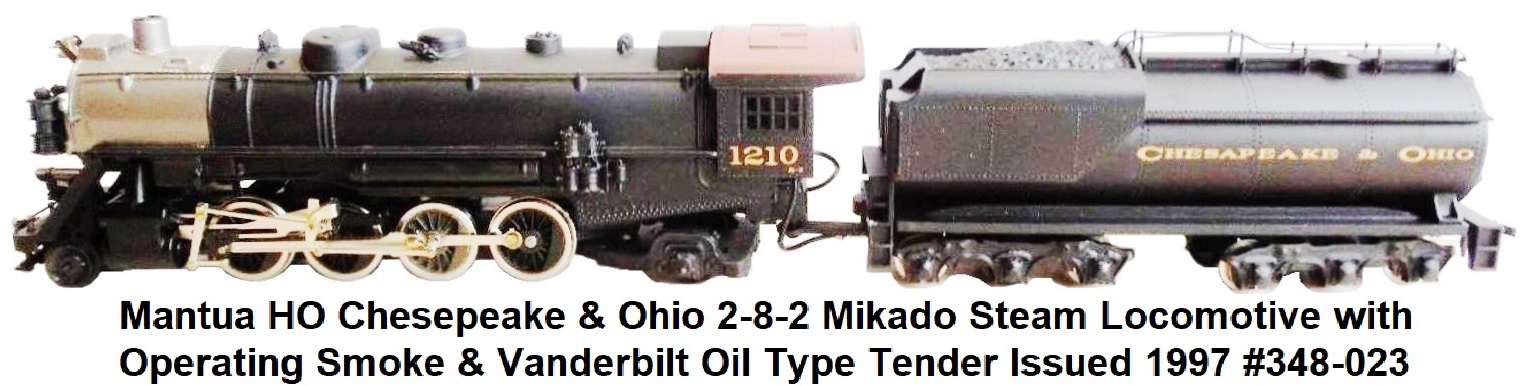
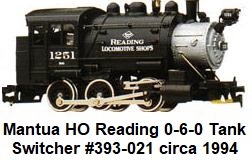 The collectibility of Mantua and Tyco model and toy trains is a subject of debate amongst antique
toy train collectors. HO and N scale trains are normally not considered to be collectible. Typically, they are worth
not more than half of their original retail value no matter how old they are. Exceptions are brass locomotives and some
limited run plastics. There are however those who had these toys, perhaps as their first exposure to model trains when they
were young, who still enjoy them and seek them out for the memories they hold. There are those who are on limited budgets to
exercise their hobby, and enjoy the hunt to complete a collection of inexpensive models, such as the plastic trains made by
Tyco. Then there are instances where some of these models actually do have collector value because of the limited quantities
manufactured and their scarcity today. The Tyco Gulf Mobile & Ohio GP20 #228-71 was only made for less than a year, and these
locomotives have been seen selling in the $200 range on eBay.com. Not bad for something that retailed for $16 in 1978
(adjusted for inflation, $16.00 in 1978 is equal to $66.21 in 2020). The
older Mantua metal kit-built locos, such as the pre-war era sheet brass 2-8-0 Consolidations are also in demand. While these
older brass and cast trains do not match up with the more modern HO locomotives readily avaiable today with far more scale
detail and on-board electronics, such as TMCC and sound, they do represent early milestones in the HO hobby. And they still
look good on a shelf or in a display cabinet, and many of them are still traversing layouts. There are also those
who are just starting out in the hobby and don't want to spend a lot of money to get going. Since the majority of Tyco trains
produced in the red box and brown box eras are available in greater numbers and at very affordable prices, hobbyists with
minimal funding can jump right in and get their railroad empire up and running quickly.
The collectibility of Mantua and Tyco model and toy trains is a subject of debate amongst antique
toy train collectors. HO and N scale trains are normally not considered to be collectible. Typically, they are worth
not more than half of their original retail value no matter how old they are. Exceptions are brass locomotives and some
limited run plastics. There are however those who had these toys, perhaps as their first exposure to model trains when they
were young, who still enjoy them and seek them out for the memories they hold. There are those who are on limited budgets to
exercise their hobby, and enjoy the hunt to complete a collection of inexpensive models, such as the plastic trains made by
Tyco. Then there are instances where some of these models actually do have collector value because of the limited quantities
manufactured and their scarcity today. The Tyco Gulf Mobile & Ohio GP20 #228-71 was only made for less than a year, and these
locomotives have been seen selling in the $200 range on eBay.com. Not bad for something that retailed for $16 in 1978
(adjusted for inflation, $16.00 in 1978 is equal to $66.21 in 2020). The
older Mantua metal kit-built locos, such as the pre-war era sheet brass 2-8-0 Consolidations are also in demand. While these
older brass and cast trains do not match up with the more modern HO locomotives readily avaiable today with far more scale
detail and on-board electronics, such as TMCC and sound, they do represent early milestones in the HO hobby. And they still
look good on a shelf or in a display cabinet, and many of them are still traversing layouts. There are also those
who are just starting out in the hobby and don't want to spend a lot of money to get going. Since the majority of Tyco trains
produced in the red box and brown box eras are available in greater numbers and at very affordable prices, hobbyists with
minimal funding can jump right in and get their railroad empire up and running quickly.
Link to Tyco Trains Resource Web Site.